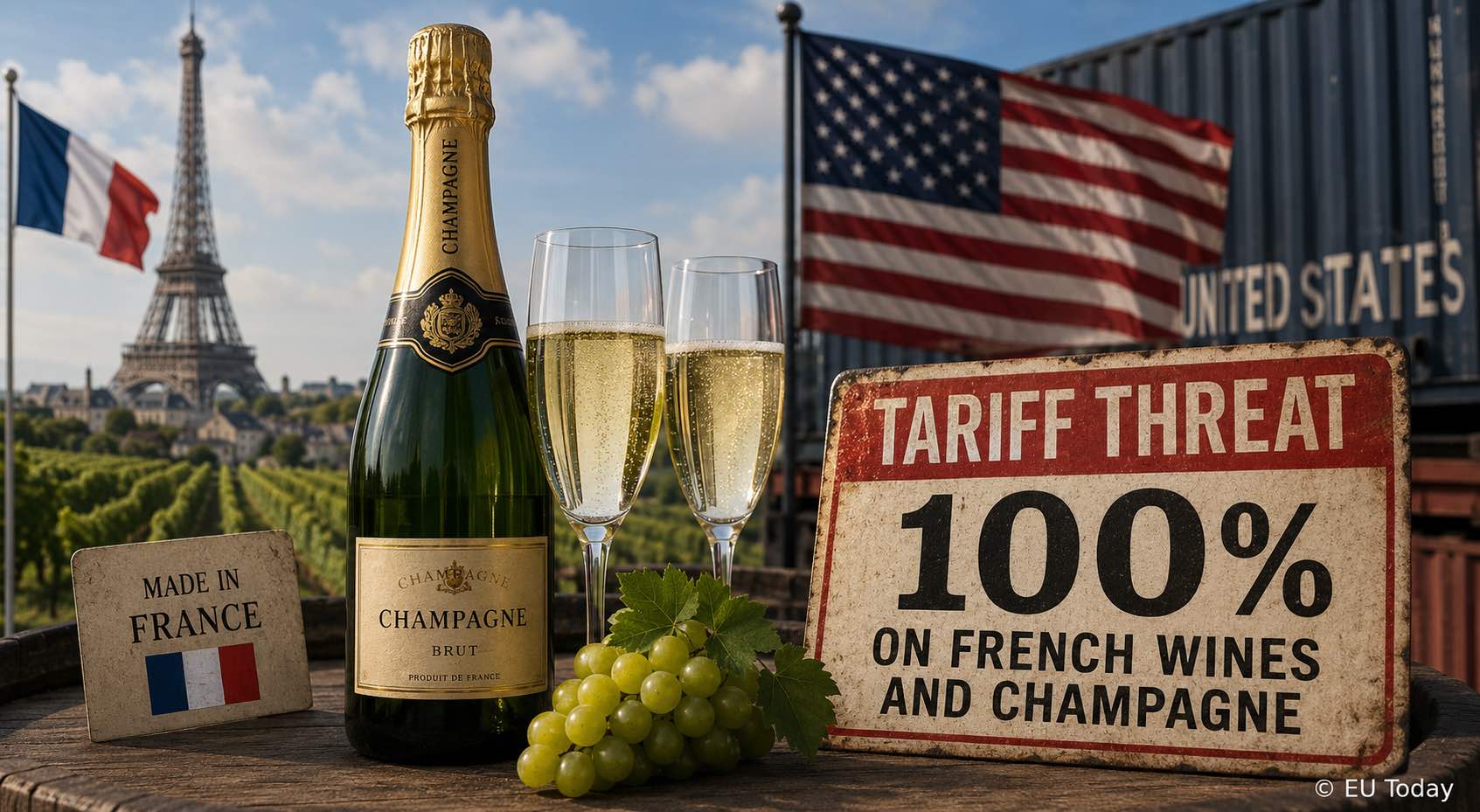
Donald Trump’s threat to impose a 100 per cent tariff on French wines has reopened a transatlantic dispute that many European policymakers had assumed belonged to an earlier chapter of global trade tensions.
The latest confrontation centres on France’s digital services tax, a levy introduced in 2019 that applies to the revenues generated in France by large technology companies. The measure affects a number of American groups, including Google, Amazon and Apple, although French officials have consistently argued that it is designed to address the mismatch between where digital companies generate revenues and where they pay tax.
According to reports from the United States, Mr Trump has privately warned President Emmanuel Macron that unless Paris abandons the tax, Washington could impose punitive tariffs on one of France’s most emblematic exports. “All Macron has to do is get rid of the sales tax,” Mr Trump reportedly said. Otherwise, the United States would have “no choice” but to act.
For French wine producers, the prospect is alarming. The United States remains the largest overseas market for French wines and spirits, accounting for more than one-fifth of exports. Industry representatives have warned that escalating trade disputes risk turning producers into collateral damage in battles over issues far removed from vineyards in Bordeaux or the cellars of Champagne.
Yet there is also a sense of déjà vu.
Mr Trump deployed similar tactics during his first administration, threatening tariffs against European products in disputes ranging from aircraft subsidies to digital taxation. More recently, he has raised the prospect of tariffs on French wines in unrelated diplomatic disagreements. In January, he reportedly floated duties of up to 200 per cent following tensions with Paris over a proposed international initiative.
This pattern has encouraged some observers to view such pronouncements less as settled policy and more as a negotiating instrument. Trump’s approach to international commerce has long relied on the creation of maximum leverage through public threats and dramatic opening demands. The objective is often to unsettle counterparts, shift the parameters of discussion and extract concessions before formal negotiations even begin.
Critics characterise the strategy as little more than economic bullying. Supporters describe it as hard-headed dealmaking. In practice, the record suggests a more complicated reality. Not all threats translate into action, and several have ultimately been softened, delayed or quietly abandoned once broader economic considerations come into play.
That distinction matters for investors and businesses seeking to assess the genuine risk of disruption. Financial markets have learned to distinguish between Trump’s opening positions and final outcomes, although not always successfully. Even when tariffs are never implemented, uncertainty itself can impose costs by delaying investment decisions and complicating long-term planning.
For Europe, the episode highlights a broader challenge. The continent increasingly seeks to regulate sectors — particularly technology — where American companies dominate. Efforts to tax digital revenues, enforce competition rules and strengthen consumer protections have repeatedly collided with Washington’s perception that European governments are unfairly targeting US corporate champions.
The danger lies in allowing these disputes to spill into unrelated industries. French winemakers neither designed digital tax legislation nor shaped the broader geopolitical tensions that increasingly define US-European relations. Yet they may once again find themselves on the frontline.
Whether this latest threat develops into a genuine trade conflict remains uncertain. What is clearer is that Trump’s negotiating style has changed expectations about the conduct of international economic diplomacy. Escalation is often the opening move.
The challenge for America’s allies is determining when such threats represent an imminent policy shift — and when they amount to little more than a familiar tactic intended to secure advantage through pressure, publicity and the politics of intimidation.
Click here for more News & Current Affairs at EU Today
Click here to check out EU TODAY’S SPORTS PAGE!
___________________________________________________________________________________________________________________