
The Sports category on EU Today offers comprehensive coverage of sporting events, news, and developments across Europe and the globe. From football leagues and tennis tournaments to niche athletic competitions, this section highlights key moments, profiles of prominent athletes, and insights into the role of sports in culture, economy, and international relations.
There are many ways for a governing body to embarrass itself. It can be corrupt, chaotic, pompous, incompetent or merely ridiculous. FIFA has managed, over the years, to explore all five.
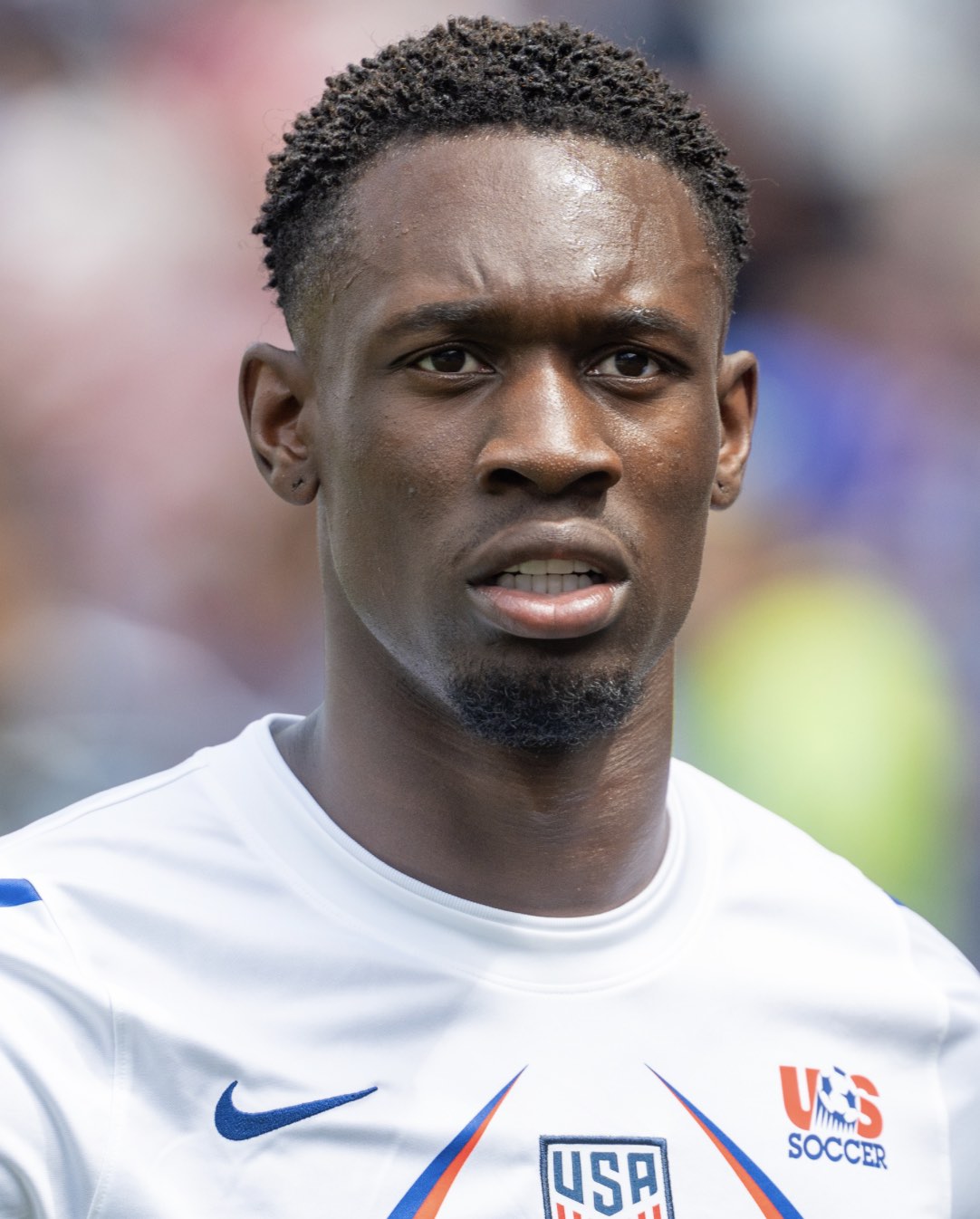
Its decision to clear Folarin Balogun for the United States’ last-16 tie with Belgium, after Donald Trump personally urged Gianni Infantino to revisit the striker’s automatic suspension, however, belongs in a category of its own.
This was not simply another administrative muddle, nor even the familiar FIFA cocktail of opacity and bad judgment. It was a public demonstration that when real political muscle is applied, the people running world football do not defend their own rules. They reach for the smelling salts and then start looking for a way to oblige.
Balogun had been sent off against Bosnia and Herzegovina after a VAR review of his challenge on Tarik Muharemovic. In a serious sporting competition, the consequences of that are not especially mysterious. A red card triggers a suspension. That is the point of an automatic ban: it removes scope for improvisation, lobbying and convenient reinterpretation. It says that, at least in this narrow corner of football life, the rulebook is supposed to be stronger than personalities.
Yet FIFA, invoking Article 27 of its disciplinary code, suspended the implementation of the ban for a year, allowing Balogun to face Belgium. Reuters reported that Trump had personally appealed to Infantino to review the case. One scarcely knows which is more damaging: the possibility that the White House can influence a World Cup disciplinary matter, or the fact that FIFA has left so little room for doubt about it.
The predictable defence is that FIFA was entitled to do this. Article 27 exists. Disciplinary bodies possess discretion. Mauricio Pochettino, understandably pleased to have one of his principal forwards restored to the teamsheet, has said there is precedent for suspensions being deferred. But this is the sort of legalistic refuge that institutions retreat to when they know perfectly well that the deeper case against them is unanswerable. The issue is not whether FIFA could do it. The issue is whether any serious governing body, with even a passing regard for its own credibility, would have chosen to do it in these circumstances.
Because the circumstances are everything. The host nation’s president personally lobbies the FIFA president during the World Cup on behalf of the host nation’s striker, who has just been sent off and faces missing a knockout match. Shortly afterwards, the suspension vanishes into a procedural cloud of “probationary” discretion. Even if one were willing to swallow the fiction that FIFA’s judicial apparatus is a pristine, hermetically sealed chamber into which outside influence cannot seep, the sequence of events alone is enough to make the decision stink. The optics are not a regrettable side issue. In sport, they are often the substance. Rules command obedience not because they are always wise or consistent, but because participants are asked to believe that they apply equally. Once that belief is punctured, all that remains is power.
And power, one suspects, is the only language FIFA still truly understands. Infantino has spent years presenting himself as the smiling master of ceremonies of a global entertainment empire, less a regulator than a peripatetic fixer in a dark suit. He has perfected the modern sports-administrator trick of confusing access with stature: endless photographs with presidents, princes and billionaires, endless speeches about football’s unity and reach, endless cultivation of the impression that the FIFA president is a statesman rather than the custodian of a game. There is something almost comic about the scale of the vanity involved. Yet the Balogun affair suggests that the vanity has consequences. Infantino has become so accustomed to hovering around power that he appears unable, or unwilling, to tell it no.
That is the truly corrosive lesson here. Trump’s behaviour is hardly surprising. Trump intervening on behalf of the United States, at a World Cup on American soil, to protect a player he regards as useful is not a breach of character; it is an expression of it. He views institutions as things to be leaned on, bent, personalised and, where possible, humiliated into compliance. The scandal is not that Trump behaved like Trump. The scandal is that FIFA behaved as though this were a perfectly normal basis on which to revisit a disciplinary sanction.
It is also impossible to ignore the broader atmosphere in which this has happened. This World Cup was already becoming a monument to the excesses of modern football governance: swollen in size, drenched in corporate self-regard and ruinously expensive for ordinary supporters. Fans have been gouged by ticket prices, accommodation costs and the broader economics of a tournament staged less as a sporting festival than as a travelling luxury expo. Into that landscape comes the Balogun reprieve: a neat little morality play in which the wealthy and well-connected once again discover that rules are for spectators, not principals. It is difficult to imagine a more efficient way to deepen public contempt for the people who run the sport.
FIFA’s defenders will insist that all this is overblown because the original red card may have been harsh. Perhaps it was. But that argument merely sharpens the point. If FIFA genuinely believed an injustice had been done, it had every opportunity to behave like a proper institution. It could have published the reasoning in full, explained the threshold for emergency intervention, identified the relevant precedents and set out clearly why this case merited exceptional treatment. Instead it has behaved as FIFA so often behaves: evasively, opportunistically and with the sort of instinctive deference to power that makes every appeal to “integrity” sound like a bad joke.
Belgium’s anger is therefore beside the point, though entirely understandable. The real damage is not to one fixture, nor even to one tournament. It is to the increasingly threadbare idea that FIFA is something more than a broker between money, politics and spectacle. Once it becomes plausible that a president’s phone call can soften an automatic ban, every future disciplinary decision acquires a question mark. Which federation matters enough to get a hearing? Which host is important enough to warrant flexibility? Which star is sufficiently marketable to deserve a second look? The rulebook ceases to be a framework and becomes a menu.
That is the trap Infantino has set for himself and for FIFA. The organisation has spent years trying to drape itself in the language of governance while behaving, at crucial moments, like a concierge service for the influential. It wants the authority of an independent regulator and the social habits of a court. It wants to be feared by the weak and useful to the strong. The Balogun affair has exposed the contradiction in unusually stark form.
By the time the United States kick off against Belgium, the practical football question will be whether Balogun makes the difference. The larger question has already been answered. FIFA has shown that its authority is not a principle but a performance, something to be put on when convenient and quietly discarded when a sufficiently important man asks for a favour. Institutions do not survive many moments like that. They become parodies of themselves. FIFA, in truth, has been edging towards that condition for years. Trump’s intervention merely stripped away the costume.
Main Image: – Own work, via Wikipedia.
__________________________________________________________________________________________________________________
Click here for more News & Current Affairs at EU Today
Click here to check out EU TODAY’S SPORTS PAGE!
___________________________________________________________________________________________________________________

