
Trending Now highlights the stories drawing the most attention on EU Today, updated throughout the day. It combines most-read and fast-rising pieces across policy, politics, business, security, culture and world, including breaking updates and live coverage. Rankings reflect readership, recency and engagement signals.
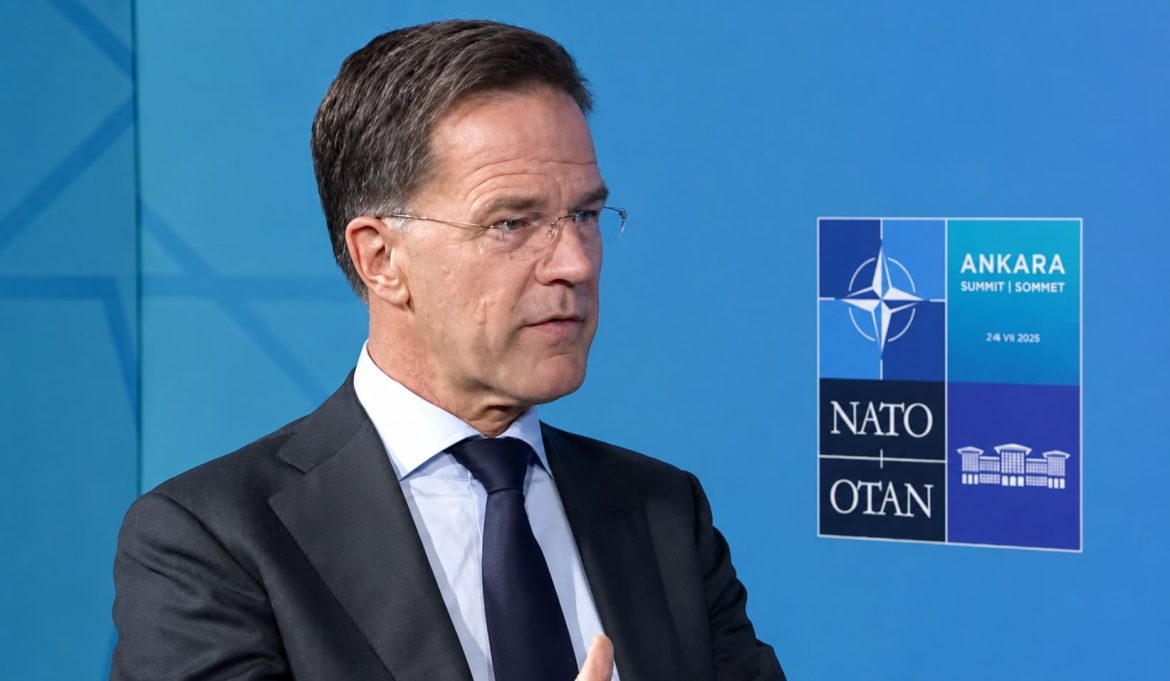
European defence shares did not respond uniformly to Ankara’s procurement showcase, suggesting investors are distinguishing between funded contracts, long-term initiatives and companies whose rearmament prospects are already reflected in valuations.
NATO’s announcement of tens of billions of dollars in defence agreements did not produce a simple market-wide rally in European arms manufacturers, underlining the distance between political procurement headlines and company earnings.
European equities were broadly flat on 7 July as weakness in technology shares offset gains in consumer sectors. Defence stocks were marginally higher rather than uniformly falling, while Saab gained strongly after a brokerage upgrade and as NATO advanced negotiations for its GlobalEye surveillance aircraft.
The mixed market session provides a more useful signal than a broad claim that investors rejected the summit. Markets appear to be separating companies with immediate order prospects from those exposed mainly to long-term spending promises.
The sector has already repriced
European defence shares have risen sharply since Russia’s full-scale invasion of Ukraine and again as governments committed to higher NATO spending. That makes each new announcement less likely to produce an automatic jump.
Investors now ask whether an initiative is a signed contract, a memorandum, a letter of intent or a political framework. They also examine delivery schedules, margins, production costs and how much capital a manufacturer must invest before recognising revenue.
An announced multinational fleet may represent substantial future business without affecting near-term earnings. A company awarded a funded production contract with advance payments is in a different position.
Saab illustrates company-specific pricing
Saab shares rose after Morgan Stanley upgraded the stock and NATO confirmed movement towards acquiring GlobalEye airborne surveillance aircraft. The combination of analyst reassessment and a credible procurement path produced a clearer company signal than the summit’s aggregate value.
Other announced projects involved Airbus, Lockheed Martin, Northrop Grumman and Rheinmetall. Their market impact will vary because defence is only one part of some groups’ business and because the commercial structure of several initiatives remains incomplete.
EU Today has previously noted that higher defence expenditure does not guarantee immediate weapons availability. The same principle applies to equity valuation: larger public budgets do not automatically translate into higher profit at every listed supplier.
Contracts contain execution risk
Defence manufacturers face capacity constraints in skilled labour, energetic materials, electronics and specialised components. Expanding production requires factories, certification and long-term orders. Costs can rise before increased output generates revenue.
Governments also negotiate aggressively over price, local production and intellectual property. Programmes can be delayed by parliamentary approval, export licences or disagreement over national workshare.
Investors therefore discount political announcements according to execution risk. A €10 billion programme divided over many years and suppliers has a different value from a near-term single-company order.
Procurement policy can redistribute value
Ankara also exposed the competition between European autonomy and reliance on US systems. Purchases from American manufacturers may improve NATO capability while directing part of Europe’s defence expansion to US shareholders and supply chains.
European local-content requirements, joint production and maintenance facilities can redistribute that value. The details matter: final assembly in Europe is not equivalent to European control of critical components, but it can still create jobs and industrial capacity.
This is why stock-market performance can offer a rough verdict on which companies investors expect to capture procurement spending. It is not a verdict on the military value of the summit itself.
A mature market response
The restrained sector move should not be interpreted as evidence that Europe’s rearmament cycle is ending. NATO’s spending trajectory, replenishment needs and security environment support multi-year demand.
It does show that the easy phase of the defence-stock trade may be over. Investors increasingly require evidence of orders, capacity and margins rather than treating every government pledge as an equal buy signal.
Ankara was designed to demonstrate that promises are becoming contracts. The market response adds a further test: which contracts are real, which companies can deliver them, and how much of the expected growth is already priced in.
For policymakers, that selectivity is healthy. It rewards credible industrial delivery rather than rhetoric. For companies, it means that political urgency will no longer excuse weak execution. Europe’s defence budgets are rising, but the financial winners will be determined programme by programme.

