For a casual observer of the current historical grievance controversy between Poland and Ukraine, the controversy may seem more than a bit bizarre.
In terms of the present and the foreseeable future, it appears obvious that Poland’s and Ukraine’s geopolitical interests could not be more closely aligned: it is in the interest of both that Ukraine defeat Russia’s aggression and then that it along with Poland check and withstand any future Russian attempts at imperialist subversion, expansion or related mischief. And yet the obvious seems to escape notice, at least in Poland.
The controversy arose when the Ukrainian Army’s Special Operations Center North chose to adopt the name “Heroes of UPA” (the Ukrainian Partisan Army). As has happened in the case of countless other units of the Ukrainian army that have during the last several years of war elected to adopt a historical name, Special Operations Center North had to ask Ukraine’s president for a formal decree of name designation, which President Zelensky issued in a brief ceremony with that Center’s officers and soldiers. That simple act was then used in Ukraine’s neighbor to the west to create what some have called a tsunami of grievance and offense.
Everyone from Poland’s president Karol Nawrocki to Prime Minister Donald Tusk to innumerable politicians and public figures, including former president Lech Walesa, have joined in the chorus of condemnation and denunciation of “UPA bandits and killers.” Nawrocki has stated that since Ukraine is glorifying the UPA killers (of Poles), it is not mentally ready to become a part of the European family of nations. Tusk has said that since Ukraine has created the problem, it is Ukraine that needs to fix it. And Marcin Przydacz, head of the Polish president’s International Policy Bureau, has stated that Ukrainian President Volodymyr Zelensky needs to call the president of Poland and ask for forgiveness.
The Ukrainian government, as represented by the Ministry of Foreign Affairs, has explained how the name adoption came to be and has insisted that neither the Special Operations unit nor President Zelensky had any intention of offending any Polish sensibilities. And as reflected by statements and comments found during Ukrainian political talk shows and in articles in the electronic media as well as comments in social media, Ukrainians are some combination of bewildered, confused and angry at what is viewed as the manufacture of phony grievance and offense.
Why phony? Relations between Poles and Ukrainians go back six or more centuries. Poles colonized Ukrainian lands mainly after the 1569 Treaty of Lublin when Polish nobles flooded into Ukraine to establish highly lucrative agricultural estates. Towards the end of the 16th century Poles and Polonized Ukrainian nobles imposed serfdom upon Ukrainian peasants and until the middle of the 19th century enriched themselves at the expense of their serfs.
Under Polish rule, Ukrainian serfs possessed almost no personal or legal rights and were subjected to forced labor. The difference between a slave in, for example, the American South and a Ukrainian serf was that slaves were considered personal property and could individually be sold or transferred as pieces of such property whereas serfs were considered part of the real property on which they lived. So if the estate on which they lived were sold or transferred, the serfs would thereby go with that estate as would pieces of furniture or farm animals.
At the end of the 18th century, Poland was forcibly partitioned among the Russian Empire, the Kingdom of Prussia and the Austrian Empire and ceased to exist as a state, but Polish nobles were nonetheless allowed to continue to own their estates and their serfs. Northwest Ukrainian lands, carrying the ancient name of Volyn, went to Russia along with Ukraine’s west-central territories.
The French historian Daniel Beauvois has written about how in the lands newly incorporated into Russia and as late as the 19th century, Polish administrators of estates could with virtual impunity whip Ukrainian serfs to death, and how the abuse and exploitation of these serfs caused some of these deeply religious people even to commit suicide, despite their Orthodox faith’s extremely strict proscriptions against such actions.
Despite the formal cessation of serfdom in Russia in 1861, Polish landowners mostly continued to own their large estates without interruption. Thus at the turn of the 20th century, whereas Poles constituted some 6% of the population of Volyn, they owned about 50% of the land there.
Towards the end of WW I, the Russian and Austrian empires collapsed and, among other nations held within those empires, Poland renewed its independent statehood. Ukrainians living in western Ukraine, where they constituted a majority, proclaimed an independent Western Ukrainian Peoples Republic in Lviv in November 1918. Included in that proclamation was a declaration of equal rights for all minorities, specifically Poles and Jews. Despite that, the Polish minority almost immediately rebelled against the Ukrainians.
The Poles felt entitled to continue to dominate and rule the Ukrainian majority who, they claimed in typical colonial fashion, were incapable of ruling themselves. This rebellion was aided by the newly constituted so-called Polish Blue Army led by General Josef Haller that was created and outfitted by the French, who happened to have an interest in the oil fields in western Ukraine. The invading Polish armies succeeded in defeating the army raised by the nascent Ukrainian state and resulted in western Ukraine, including Volyn, being incorporated into the interwar Polish Republic.
The interwar Polish Republic was a nationalizing state, that is, it viewed the state as essentially Polish and existing for the Polish nation. This also meant that, despite Poland having promised the Allies in Paris in 1923 that western Ukraine would have territorial autonomy and Ukrainians and others would have minority rights, Poland ignored those commitments and the Poles continued to dominate Ukrainians and other minorities politically, economically and culturally.
Ukrainians could not get a job in public service; private Ukrainian schools were closed; Ukrainian Orthodox churches in Volyn were closed or destroyed; initially under Polish rule the university in Lviv was closed to Ukrainians and then they were admitted but only under a limiting quota; and there were other forms of discrimination.
Polish priests applied the epithet “dzikie kabany” (wild boars) to Ukrainian peasants and a village lad could be beaten bloody by a Polish policeman for simply identifying himself as a Ukrainian. And, in Volyn the Polish state provided land to Polish veteran-settlers for free as a reward for, among other campaigns, their having helped Poland defeat Ukraine in 1919, which settlement was profoundly resented by the land hungry Ukrainians.
In 1939 at the beginning of WW II and pursuant to the Molotov-Ribbentrop Pact, Hitler and Stalin jointly attacked and dismantled Poland. Two years later in 1941, Germany turned against and invaded its ally the Soviet Union.
During the war at the end of 1942 and beginning of 1943, the local Volyn leadership of the Ukrainian nationalist organization the OUN, whose singular and overarching goal was Ukrainian independence and liberation from foreign occupation—Soviet, German and 20 years of Polish occupation—gradually assembled a guerilla force named the Ukrainian Partisan Army or UPA. By the beginning of the summer of 1943, Volyn’s majority Ukrainian population was under sustained attack from numerous quarters.
It was under a brutal form of German occupation that involved the theft or requisition of agricultural and other resources and having younger people forcibly impressed into forced labor and deported to Germany. Since a year earlier, Soviet partisans were operating in Volyn in order to provoke and disrupt the Germans and pull Ukrainians into their ranks. And after the local Ukrainian volunteers had deserted the German-administered police in the spring of 1943, they had been replaced by Volyn’s Poles. So the German army and the Polish-German police were at war with the local Ukrainian population.
In addition, Poland’s government in exile in London had in 1941 after Hitler’s invasion of the Soviet Union reached an agreement of cooperation with the Soviets. Thus both the Soviet partisans and the Poles in Volyn who were at least cooperating with these partisans were aligned against the Ukrainians and any Ukrainian quest for independence.
Most importantly, during the war the Polish government in exile and its underground units in Volyn and elsewhere at all times insisted on their purported right to reassert Polish rule over Volyn and the rest of western Ukraine. That insistence led to the failure of talks between the Ukrainian and Polish undergrounds about the possibility of a joint anti-German and anti-Soviet front as was proposed by the Ukrainians.
That Polish insistence on continued rule was not merely theoretical. As the Germans were retreating from Volyn in 1944, the Polish underground army the AK launched its long-planned Operation Tempest (“Burza” in Polish) to take over and control the cities in Volyn as well as launching similar operations to retake Vilnius in Lithuania.
Poland has multiple memorials, including busts and statues, to General Jozef Haller, the same General Haller whose troops in 1919 invaded and destroyed the Western Ukrainian Republic, consigning western Ukrainians to two additional decades of direct Polish rule. Should Ukrainians therefore get a vote on whether Poland should have memorials to Haller?
There are multiple memorials in Poland to the WW II Polish underground, the AK. The AK committed some of the same atrocities as had the UPA against the Poles, that is, it attacked and burned Ukrainian villages and killed the men, women and children residing there.
Those killings are excused by Poles as somehow being retaliatory for what the UPA had done in Volyn, but that dodge doesn’t hold any water. Killing men, women and children and burning down a village is an atrocity whether do you it 20 times or just a couple of times. And, the idea that men, women and children in some Ukrainian village unrelated to Volyn could somehow be guilty of what the UPA had done just because both were Ukrainian is just silly on its face. So, should Ukrainians get a vote on whether Poland should have memorials to the AK? Following the Polish logic flowing from the current controversy, the answer is clearly yes.
Could today’s Poland have any legitimate complaints against Ukrainian historical memory? It could if, for example, Ukrainian officials were to deny that the killings of Poles in Volyn in 1943 had taken place, but I am not aware of any Ukrainian official ever having done that. The killings can best be described as their perpetrators in all likelihood saw them: a defensive ethnic cleansing to prevent yet another attempt at the reassertion of Polish dominance over Ukrainians. Today Ukrainians not only recognize that these events in Volyn took place but, importantly, view them as a tragedy rather than some sort of triumph.
Some or many Ukrainians admire the UPA and the whole liberation movement of the 1940s and 1950s. The reasons are for this admiration are compelling. First, the nationalist movement was 100% right that for Ukrainian national survival, an independent state was essential. Second, many of the participants of this movement exhibited extraordinary courage, dedication, skill and sacrifice. They, like most other movements, made mistakes, but they are not defined by those mistakes.
In the currently manufactured controversy, there is no evidence, none whatsoever, that either President Zelensky or anyone else had any intent to offend Poles or Poland. So what is at issue is not some act actually committed by President Zelensky or the Ukrainian government but the Polish pretension that, perhaps based on Poland’s historical domination of Ukraine, it is even today entitled to define and pass judgment about how Ukraine ought to treat its, not someone else’s but its own, historical figures.
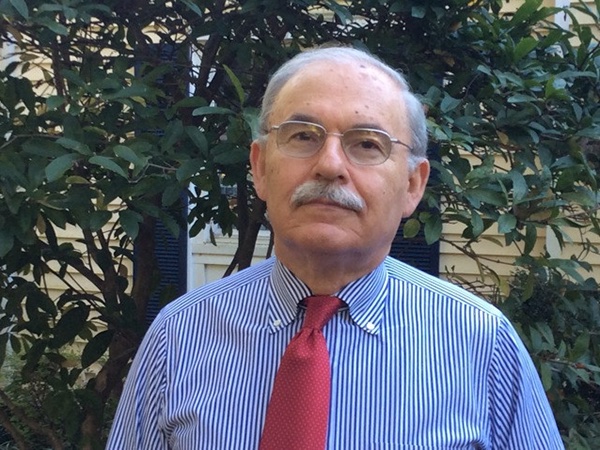
Dr. Bohdan Vitvitsky is a retired federal prosecutor and a former U.S. diplomat who holds a Ph.D. in philosophy.
___________________________________________________________________________________________________________________
Click here for more News & Current Affairs at EU Today
Click here to check out EU TODAY’S SPORTS PAGE!
___________________________________________________________________________________________________________________