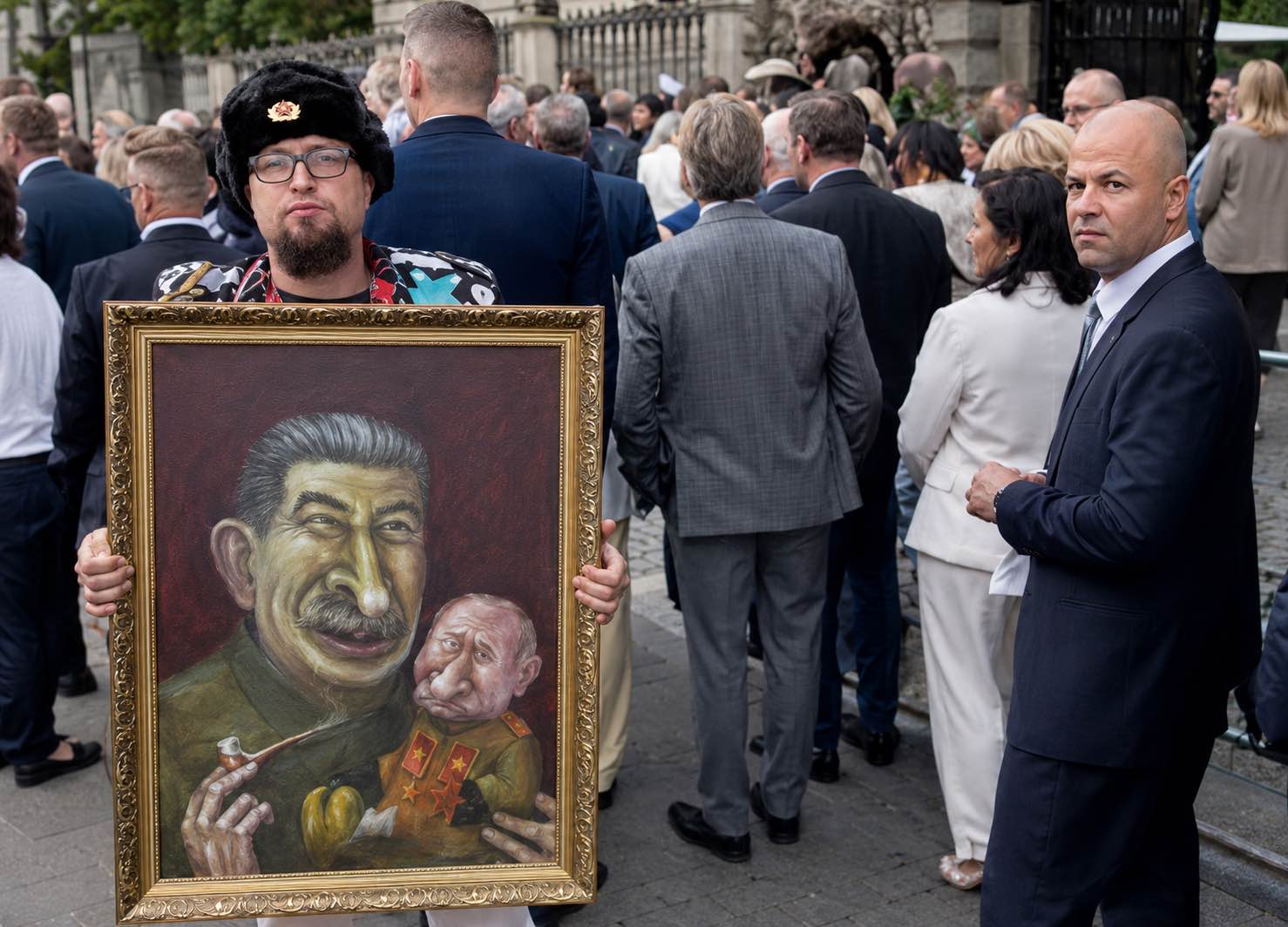
The fatal shooting of Russian artist Semyon Skrepetsky in eastern Poland has once again cast a spotlight on the dangers confronting dissidents who have sought refuge beyond Russia’s borders.
Skrepetsky, a 44-year-old artist known for his acerbic portrayals of President Vladimir Putin and other figures associated with the Kremlin establishment, was shot dead near his home in the Polish city of Biała Podlaska. Polish prosecutors said multiple shots were fired, including one to the head, in what local media have described as a targeted attack. Two Belarusian nationals have been detained as part of the investigation, although no charges had been brought at the time of writing.
The circumstances surrounding the killing remain unclear. Polish authorities have stopped short of attributing responsibility to any state actor, and investigators continue to examine potential motives. Yet the incident inevitably revives uncomfortable memories of previous attacks against Kremlin critics, defectors and political opponents on European soil.
Skrepetsky had built a reputation through provocative and often darkly humorous artwork aimed at Russia’s political elite. His paintings and public performances ridiculed authoritarianism and the cult of personality surrounding powerful leaders. According to reports, he had recently staged demonstrations critical of Moscow’s policies and had become an increasingly visible figure within Russia’s expatriate opposition community.
The broader context cannot be ignored. Since Russia’s invasion of Ukraine in 2022, European security agencies have repeatedly warned of a heightened threat environment involving espionage, sabotage and alleged plots targeting individuals perceived as enemies of the Russian state. While each case has its own distinct facts, the cumulative effect has been to create an atmosphere of unease among exiled activists, journalists and artists.
For Poland, the case carries particular sensitivity. Sharing borders with both Belarus and the Russian exclave of Kaliningrad, Warsaw has become one of Kyiv’s staunchest allies and a destination for political exiles from across the former Soviet sphere. Polish authorities have invested heavily in counter-intelligence capabilities amid growing concerns over hybrid threats emanating from the east.
The murder of an outspoken artist also underscores a deeper truth about authoritarian systems: creative expression can represent a form of resistance every bit as potent as formal political opposition. Satire strips away the mystique of power. Art challenges official narratives by exposing contradictions and absurdities that propaganda struggles to conceal.
Throughout history, painters, writers and musicians have often found themselves at odds with governments intolerant of dissent. In contemporary Russia, where independent media have been curtailed and critics frequently marginalised, cultural figures who continue to speak out occupy an increasingly precarious position.
The investigation into Skrepetsky’s death must proceed on the basis of evidence rather than speculation. Establishing the facts will be essential not only for delivering justice to his family but also for reassuring those who have sought safety within the European Union.
Whatever conclusions investigators ultimately reach, the killing serves as a stark reminder that the fault lines created by geopolitical conflict rarely stop at national borders. For many Russian dissidents living in exile, physical distance from home has not necessarily translated into peace of mind.
The canvases Skrepetsky leaves behind may now assume an unintended significance: not simply as acts of artistic expression, but as testimony to the enduring power — and potential peril — of speaking truth to power.
Click here for more News & Current Affairs at EU Today
Click here to check out EU TODAY’S SPORTS PAGE!
___________________________________________________________________________________________________________________