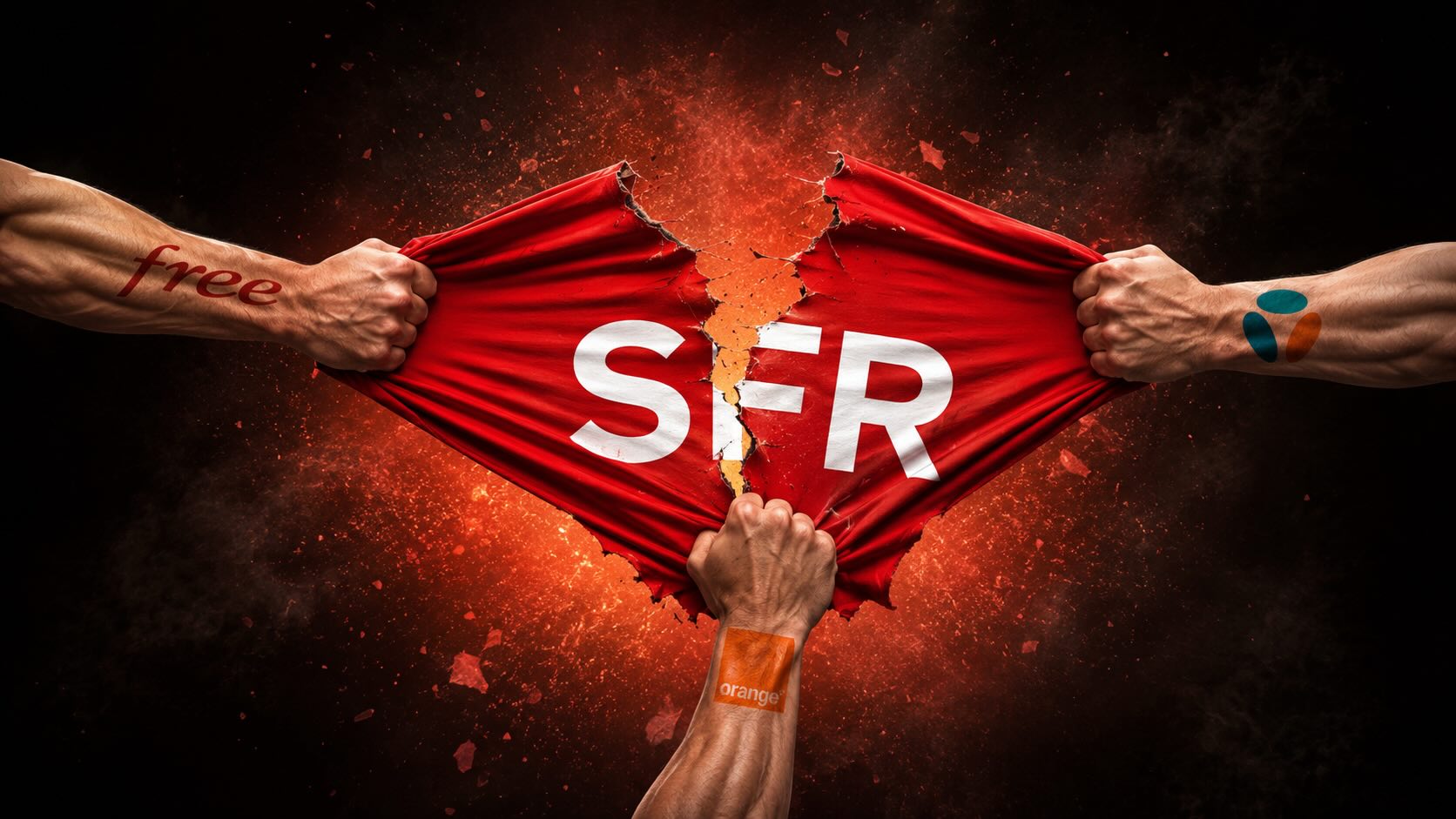
The review of the Orange-Iliad-Bouygues bid for SFR will test whether Europe is becoming more open to telecoms consolidation, and how far regulators will go to protect consumers from higher prices.
France’s competition authority is set to take the lead role in scrutinising the planned break-up and sale of SFR to rival operators, placing one of Europe’s most closely watched telecoms deals under national review.
The transaction, valued at €20.35 billion, would see Bouygues Telecom, Iliad’s Free and Orange acquire and divide much of SFR from Altice France. A national review would put the French regulator at the centre of a case that could reduce France’s principal mobile market from four network operators to three, a structure that competition authorities have traditionally treated with caution.
The deal has already become a benchmark for whether merger policy is shifting in response to Europe’s competitiveness debate. Earlier analysis of the SFR break-up and EU telecoms consolidation noted that operators increasingly argue that scale is needed to fund investment in fibre, 5G, cybersecurity and artificial intelligence infrastructure.
Consumer-price concerns remain the main obstacle. Benoit Coeure, president of France’s Autorite de la concurrence, told Le Monde last month that a move from four to three operators was not automatically anti-competitive, but that the authority would examine the risk of higher subscription prices and coordinated behaviour.
The problem for regulators is that both sides of the argument are plausible. Telecoms companies say the European market is too fragmented to generate returns sufficient for next-generation network investment. Consumer advocates and competition officials warn that reducing the number of operators can weaken price pressure, particularly in mobile markets where switching and network quality vary by region.
The SFR case is especially complex because it is not a conventional takeover by a single buyer. The planned division of assets among three existing competitors raises questions about how customers, business services, infrastructure and commercial data would be handled during the transition. A temporary structure that holds SFR assets while they are divided could itself become a focus of regulatory scrutiny if it creates opportunities for coordination.
France’s review will also be watched in Brussels. The Commission has been consulting on new merger guidelines that may give more weight to investment, innovation and productivity gains, but it has not abandoned the traditional concern that consumers should not pay the price for consolidation. A national authority handling the SFR case will still be operating in that wider EU policy environment.
For Altice and Patrick Drahi, the sale is tied to a broader effort to manage debt and simplify a telecoms empire that has faced creditor pressure. For Orange, Bouygues and Iliad, the attraction is strategic: SFR’s customer base, business lines and network assets could strengthen their positions in a market where margins have been under pressure for years.
The final decision may depend on remedies. Regulators could demand asset sales, commitments on pricing, safeguards against coordination, or guarantees for wholesale and business customers. Whether such remedies would be enough is uncertain, particularly if the authority concludes that a four-to-three reduction would materially weaken competition.
The SFR review will therefore be more than a French telecoms case. It will indicate how Europe’s competition authorities intend to balance industrial scale against consumer protection in sectors where investment needs are rising and political pressure for “European champions” is growing.