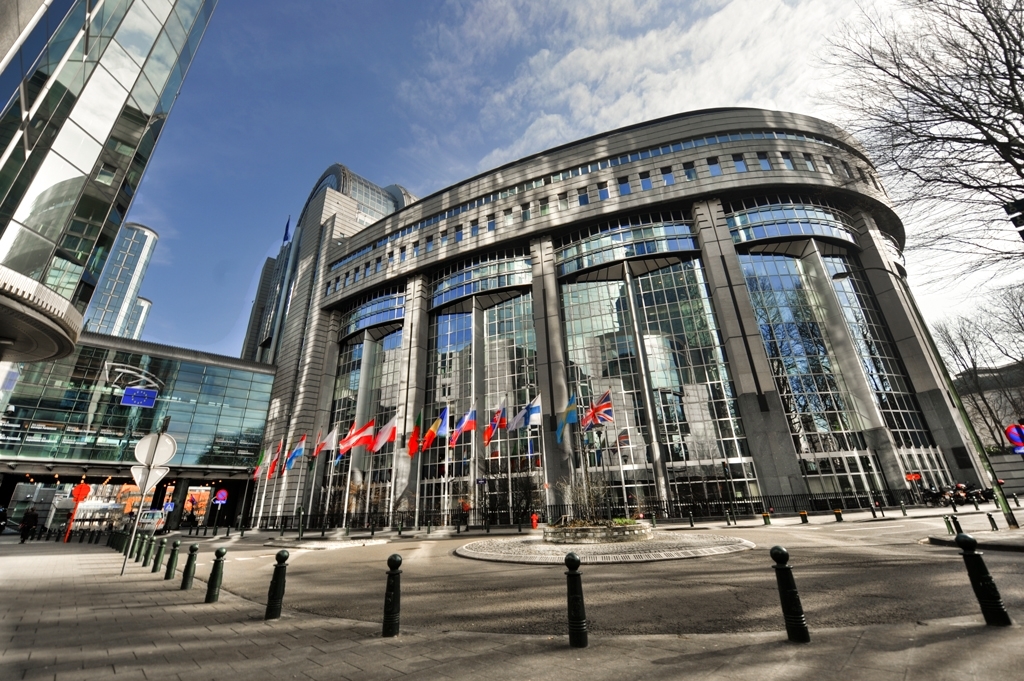
Brussels is facing a showdown between the European Parliament and the European Commission after senior MEPs warned against any attempt to water down the bloc’s flagship digital legislation in exchange for favourable trade terms with the United States.
The growing unease comes amid intense negotiations between the European Commission and Washington to avoid the reimposition of tariffs threatened by Donald Trump’s administration, which returned to the White House in January pledging a more aggressive stance on trade.
At the heart of the controversy lies the Digital Markets Act (DMA), the EU’s flagship law designed to rein in the dominance of Big Tech platforms such as Apple, Amazon, Meta and Google. The US has repeatedly criticised the law, claiming it unfairly targets American firms, and is pressing for “regulatory flexibility” as part of the broader trade talks.
However, MEPs from across the political spectrum have now drawn a red line.
“We cannot allow core principles of European digital sovereignty to be treated as bargaining chips,” said Andreas Schwab, a German MEP from the centre-right European People’s Party and one of the architects of the DMA. “This Parliament will not rubber-stamp any backdoor weakening of the rules under pressure from Washington.”
The warning comes just days after Commission officials confirmed that digital regulations were “on the table” in discussions aimed at avoiding a transatlantic tariff spiral, particularly in the automotive and agricultural sectors, which remain highly sensitive on both sides of the Atlantic.
Trump’s Hardball
President Trump, returning to the Oval Office on a promise to rebalance America’s trade relationships, has made no secret of his disdain for what he sees as European “protectionism in digital disguise.” He has demanded that Brussels halt the “discriminatory enforcement” of digital rules, or risk a new round of tariffs on EU cars and machinery.
Sources familiar with the talks say the US side is seeking a formal “interpretative agreement” that would delay or dilute certain enforcement provisions of the DMA in return for tariff relief.
While European Commissioner for Economy and Productivity Valdis Dombrovskis has insisted that “no compromise will be made on fundamental values,” internal briefings suggest that a more “pragmatic calibration” of the law’s rollout is under discussion. Critics in Parliament say this would be tantamount to buckling under American pressure.
A Test of European Resolve
The dispute is shaping up to be an early test of whether the EU institutions are willing to defend the legislative achievements of the previous Parliament in the face of resurgent US pressure.
“Donald Trump is back, and so are the trade threats,” said Stéphanie Yon-Courtin, a French liberal MEP who sits on the Committee for Economic and Monetary Affairs. “But the EU is not a junior partner. We have our own laws, made democratically, and we must defend them. If we concede now, what signal does that send?”
Socialist MEP Christel Schaldemose echoed the concern, warning that “the United States would never rewrite its antitrust laws because of European threats – and nor should we.”
Behind the scenes, tensions are reportedly simmering between Parliament and the Commission. Several MEPs have demanded greater transparency from the EU’s executive arm, which has so far kept the details of its negotiations with the Trump administration under wraps.
There is particular concern that any “adjustment” to the enforcement timetable of the DMA could be slipped through in non-legislative formats, avoiding Parliamentary scrutiny.
“If this is done by stealth, it will blow up in the Commission’s face,” warned one senior Green MEP, speaking on condition of anonymity.
Business Caught in the Middle
The prospect of renewed tariffs – and the accompanying uncertainty – has alarmed business leaders on both sides of the Atlantic.
German carmakers, in particular, fear being caught in the crossfire. Exports of luxury vehicles to the US remain a key pillar of Germany’s industrial economy, and the Trump administration has threatened a 25% tariff unless “fairer digital terms” are offered.
“Europe must be firm, but it also needs to be smart,” said Markus Beyer, head of BusinessEurope, the continent’s largest industry lobby. “We cannot ignore the risks of a trade war, especially at a time of economic fragility.”
At the same time, European tech firms warn that a rollback on the DMA would damage their chances of fair competition.
“The DMA was a long-overdue correction to years of market distortion by Big Tech,” said Monique Goyens, director-general of the European Consumer Organisation (BEUC). “Any delay or softening would be a betrayal of European consumers and businesses.”
Political Stakes Rising
The timing could hardly be more delicate. For Ursula von der Leyen the outcome could determine how credible her mandate appears. Already, her critics accuse her of being too accommodating to US demands during her first term.
With Trump’s trade negotiators playing hardball and European lawmakers increasingly restive, Brussels faces a dilemma: how to avert an economically damaging tariff war without sacrificing hard-won regulatory gains.
The answer, for now, remains elusive. But what is clear is that Europe’s digital rules – once hailed as a symbol of strategic autonomy – are now the frontline in a much broader contest of will.