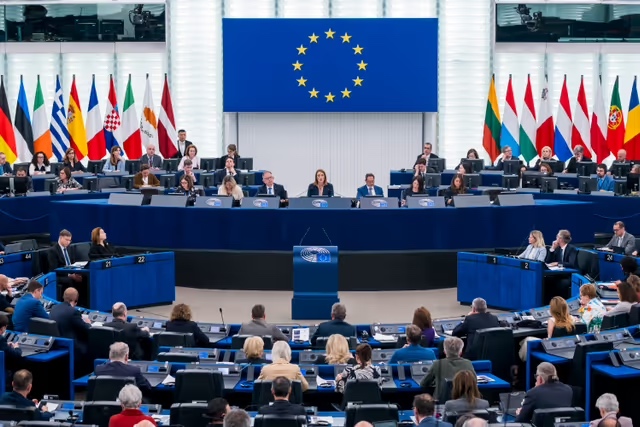
The European Parliament has set out an ambitious, and in some respects uncompromising, vision for the European Union’s next long-term budget, framing it as nothing less than a test of the bloc’s political seriousness in an era of mounting crises.
Members of the European Parliament argued that the post-2027 Multiannual Financial Framework must be reshaped to reflect the realities of a more volatile world—one defined by war on the continent, economic uncertainty, technological rivalry, and intensifying environmental pressures. The message from Strasbourg is clear: incrementalism will no longer suffice.
At the heart of the Parliament’s position lies a demand that the EU budget remain, above all, an investment instrument. It must support citizens, regions, businesses, and small and medium-sized enterprises, while delivering “EU added value” that national spending alone cannot achieve. In other words, the budget is not merely an accounting exercise but a strategic lever for shaping Europe’s future.
This insistence reflects a growing recognition that the EU’s traditional spending priorities—agriculture and cohesion—are no longer sufficient on their own. While these areas remain politically sensitive, particularly among member states that rely heavily on structural funds, the Parliament is pressing for a rebalancing towards newer priorities: defence, competitiveness, and resilience.
The geopolitical context looms large. Russia’s war in Ukraine and instability in neighbouring regions have exposed the limits of Europe’s preparedness. MEPs argue that the next budget must equip the Union with the capacity to respond swiftly to crises, whether military, economic, or environmental. This includes strengthening defence capabilities, enhancing civil protection mechanisms, and ensuring greater autonomy in critical technologies.
Equally pressing is the question of economic competitiveness. Europe faces an increasingly stark challenge from both the United States and China in advanced industries, from artificial intelligence to green technologies. The Parliament’s proposal underscores the need for sustained investment in innovation, industrial capacity, and digital infrastructure—areas where fragmented national efforts have often fallen short.
Yet the Parliament’s demands extend beyond mere spending priorities. There is also a call for structural reform of how the budget operates. Flexibility is a recurring theme. The current seven-year framework has been criticised for its rigidity, which left the Union scrambling to respond to unforeseen shocks such as the pandemic and the energy crisis. A more adaptable system, capable of reallocating resources quickly, is seen as essential for the next cycle.
Closely linked to this is the question of scale. MEPs have signalled that a significant increase in funding—reportedly in the region of 10 per cent—is the minimum required to meet the Union’s expanding ambitions. This is likely to prove contentious. Frugal member states, already wary of rising contributions and new joint borrowing mechanisms, are expected to resist any substantial expansion of the budget.
Indeed, the battle lines are already visible. Wealthier northern countries tend to favour a leaner, more focused budget, while southern and eastern members emphasise the continued importance of cohesion funding. The Parliament, for its part, is attempting to bridge these competing visions by arguing that investment in common European priorities ultimately benefits all.
Another sensitive issue is the financing of the budget itself. The legacy of the pandemic-era recovery fund, with its unprecedented joint borrowing, continues to cast a long shadow. Servicing this debt will require new sources of revenue—so-called “own resources”—a topic that has long divided member states. Without agreement on this front, the scope of the next budget may be constrained.
The Parliament also places considerable emphasis on aligning the budget with citizens’ expectations. This is not mere rhetoric. Surveys consistently show that Europeans expect the Union to play a greater role in areas such as security, climate action, and economic stability. The challenge for policymakers is to translate these expectations into concrete programmes without overpromising or underdelivering.
Climate and biodiversity remain central to this agenda. While the Parliament supports continued investment in the green transition, it is also mindful of the political backlash that can accompany environmental policies perceived as economically burdensome. Balancing ambition with social fairness will be a delicate task.
Ultimately, the debate over the EU’s long-term budget is about more than numbers. It is a reflection of the Union’s evolving identity and its capacity to act collectively in a fractured world. The Parliament’s position represents a push towards a more assertive, strategically minded Europe—one that is willing to match its ambitions with the necessary resources.
Whether this vision will survive the negotiations with member states remains uncertain. Budget talks in Brussels are rarely straightforward, and the competing interests at play are formidable. Yet the stakes are unusually high. As one parliamentary document put it, the next budget must be sufficient to “meet commitments, respond to citizens’ expectations, and address major challenges.”
Click here for more News & Current Affairs at EU Today
Click here to check out EU TODAY’S SPORTS PAGE!
___________________________________________________________________________________________________________________