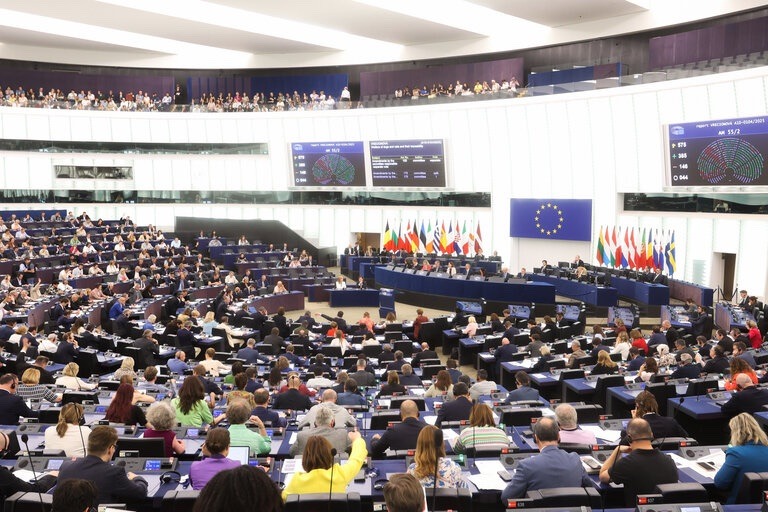
Europe’s dash for decarbonisation has too often been framed in grandstanding targets and green slogans, however in the corridors of the European Parliament this week, the mood was more grounded – and arguably more serious.
On Thursday, MEPs passed a raft of proposals aimed at modernising the EU’s electricity grids, a step that, while lacking headline glamour, may ultimately determine whether the continent’s energy transition succeeds or fails.
The report, adopted on 19th June, calls for urgent implementation of the European Commission’s Grid Action Plan – a framework intended to break down long-standing barriers to energy integration across borders and between regions.
MEPs demanded not only sweeping upgrades to existing infrastructure but also the development of new cross-border interconnectors, all in the name of resilience, efficiency, and the integration of renewables.
“Europe’s energy transition will fail unless we invest just as strategically in infrastructure as in renewables,” said Anna Sturgkh, the Austrian MEP leading the file for the liberal Renew group. “The Iberian blackout was a painful demonstration of how vulnerable our grids remain.”
That incident, which left parts of Spain and Portugal without power for hours, loomed large over the debate. But rather than undermining the logic of the EU’s energy integration efforts, Sturgkh and others argued it reinforced the need for faster coordination and planning at the European level. It was only due to France’s rapid assistance via cross-border links that the lights came back on swiftly. The failure, in other words, was not one of overreach, but of under-preparation.
The message from Parliament is clear: Europe’s energy ambitions cannot be built on a 20th-century grid. Currently, national electricity networks often act as bottlenecks, unable to absorb or transfer the growing volumes of renewable energy being generated. This leads to “curtailment” – the deliberate reduction of output from wind and solar farms because the grid simply cannot handle the load. It is a scandalous waste, not just of clean energy, but of taxpayers’ money invested in that generation capacity.
To remedy this, the report urges a two-pronged approach: greater EU-level planning and more targeted investment. There is little point in installing solar panels in Spain if the energy cannot reach industry in Bavaria. Similarly, offshore wind from the North Sea is only as good as the wires that bring it inland. Europe, MEPs argue, must think as one when it comes to energy infrastructure.
At the heart of the Parliament’s position is the call for smarter investment rules. Private capital must be mobilised alongside public funds, with streamlined procedures and clearer tariff structures that reflect real costs. “Network tariffs must be fair and transparent,” the report notes – a reminder that without proper incentives, few investors will take on the complex task of building grids.
Equally important, say MEPs, is public acceptance. Resistance to new pylons and substations is not uncommon, especially in rural or scenic areas. The Parliament calls for improved communication with citizens, to make clear that these projects are not just about steel and cables, but about energy security, lower bills, and climate targets.
Whether the Commission takes these recommendations to heart remains to be seen. Sturgkh delivered a pointed warning: “The Commission must act decisively to prioritise planning and coordination on grids and storage – or we will keep lurching from one crisis to the next.” She also urged the executive to protect funding for the Connecting Europe Facility for Energy, which supports key trans-European energy projects, in its forthcoming budget proposals.
It is worth noting that while Parliament has little direct control over energy infrastructure, it does shape the legislative and financial frameworks that underpin it. The debate now moves to the Council, where member states – often more parochial in their energy thinking – will have to decide whether they are ready to act in the common interest.
Europe’s green future cannot rest solely on ambition. It needs cables, substations, digital sensors, and interconnectors – in short, it needs infrastructure. Without it, the energy transition risks becoming an elegant illusion, forever stuck in planning. But with it, the promise of a decarbonised, resilient, and competitive European energy system might just be within reach.
Main Image: Fred MARVAUX © European Union 2025 – Source : EP Usage terms: Identification of origin mandatory