
Europe cannot afford another lost decade. As global trade reconfigures and geopolitical storms gather, the European Union faces an existential question: reform or retreat.
The warning signs are already flashing red. Supply chains are fraying. Industrial competitiveness is waning. The world’s power centres are drifting apart. Meanwhile, Brussels still acts as though we live in the 1990s—drafting white papers while others impose tariffs, holding summits while others seize rare earths.
To meet this moment, the EU needs something it has long resisted: radical governance reform. That means trimming bureaucratic fat, rethinking institutional power, and embracing a model of decision-making that prizes strategy over process. The alternative is drift—until Europe becomes a rule-making island in a rule-breaking world.
Let us begin with the core dysfunction: the European Commission. This is the de facto executive branch of the EU, yet it is not directly elected, not meaningfully accountable to voters, and not designed for fast, high-stakes crisis response. Its 27 Commissioners—each chosen as a political sop to member states—operate more like ministers of a technocratic cabinet than leaders of a strategic bloc. Their remit spans everything from antitrust to beekeeping. Unsurprisingly, decision-making is slow, cumbersome, and often disconnected from the real world.
In an age of economic warfare, Europe needs agility. Yet the Commission’s instinct remains regulatory, not strategic. It responds to industrial decline with directives, to energy shocks with consultations. When the United States launched its Inflation Reduction Act to turbocharge domestic industry, Brussels eventually countered with… a policy “toolbox”. That is not a government—it is a seminar.
The first reform, then, is obvious: slim down the Commission. Twenty-seven portfolios serve no one but national egos. A smaller, more focused body—modelled on real executives—would cut the fat and sharpen the mission. Let the Commission concentrate on core EU competences: trade, competition, the single market, and foreign affairs. Leave agriculture and regional development to member states. Brussels should stop trying to do everything, badly, and start doing a few critical things well.
Second, the balance of power must tilt back toward elected institutions. The European Parliament may be flawed—bloated, fragmented, and often toothless—but it is the only body in Brussels with a direct democratic mandate. It must be empowered to initiate legislation and, crucially, to hold the Commission to account. At present, MEPs can grill Commissioners and pass motions of censure, but the real policymaking power rests with the executive. That must change.
There is also a case for strengthening the role of national parliaments in EU oversight. The Lisbon Treaty made some gestures in this direction, but they were largely symbolic. If the EU is to retain legitimacy, particularly in the face of rising Euroscepticism, it must be seen to work with—not over—its member states. A permanent chamber of national parliamentarians could be one way to bridge the gap between Brussels and the public.
Third, and perhaps most urgently, the EU needs a genuine economic and industrial strategy—not more vision documents, but a hard-nosed plan to restore competitiveness, secure critical supplies, and ensure Europe is not left behind in the 21st-century global order.
This would mean tearing up some sacred cows. The EU’s current state aid rules, designed to prevent market distortion within the single market, are increasingly unfit for purpose. In a world where China and the US pump billions into domestic champions, Europe’s rigid rules stifle investment and handcuff innovation. Reform must allow flexibility—at least in strategic sectors such as semiconductors, energy storage, and AI.
Similarly, the EU must stop fetishising open trade at the expense of economic security. The last two decades of globalisation lulled Brussels into complacency. Now, with supply chains weaponised and global trade under siege, Europe needs to act. That means investing in reshoring essential production, building out strategic reserves of key resources, and developing a common framework for screening foreign investments—not just for security, but for long-term resilience.
Here again, governance matters. Trade and foreign policy remain intergovernmental, meaning unanimity is often required for decisions. That is unsustainable. The EU needs qualified majority voting for critical economic and foreign policy decisions, or it risks paralysis at the worst possible moment. When a single country can veto a sanctions package or block a trade shift that affects the entire continent, the system is broken.
The same applies to defence and security cooperation. While NATO remains the bedrock of European security, the EU cannot afford to be a bystander. The Strategic Compass initiative is a start, but without faster decision-making and joint procurement, it will remain toothless. Again, streamlining governance—reducing the number of veto points and shifting more authority to a core group of willing states—may be the only way forward.
The broader cultural shift must be this: Europe needs to think in terms of power again. For too long, the EU has viewed itself as a moral force, not a strategic one. It created institutions to manage trade, not to win contests. But the world has changed. The return of state-driven capitalism, the weaponisation of energy and technology, and the decline of multilateralism all demand that Europe becomes more Machiavellian—more focused on leverage, speed, and outcomes.
That does not mean abandoning liberal values. But it does mean recognising that rules must be backed by power—and that strategy cannot be outsourced to procedure.
There will be resistance, of course. National governments jealously guard their prerogatives. The Commission guards its turf. And many in Brussels still believe that the answer to any problem is another layer of bureaucracy. But the stakes are too high for incrementalism. Europe stands at a crossroads. One path leads to greater relevance, agility, and resilience. The other leads to decline.
The old model worked well enough in a world of low inflation, predictable trade flows, and benign geopolitical conditions. That world is gone. A new one is emerging—faster, rougher, less forgiving. If Brussels cannot keep up, it will fall behind.
And if Europe falls behind, no amount of climate goals, regulatory finesse, or institutional pride will save it.
____________________________________________________________________________________________________________________
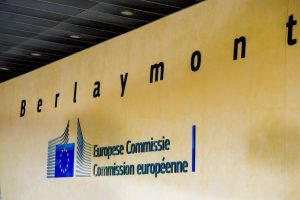
European Commission building in Brussels
Read Also: Rethinking Europe: Disestablishing the European Commission to Restore Sovereignty & Democracy.
Disestablishing the European Commission does not imply the abandonment of the European project. Rather, it offers an opportunity to revive it along more democratic, accountable, and pluralistic lines.
____________________________________________________________________________________________________________________



