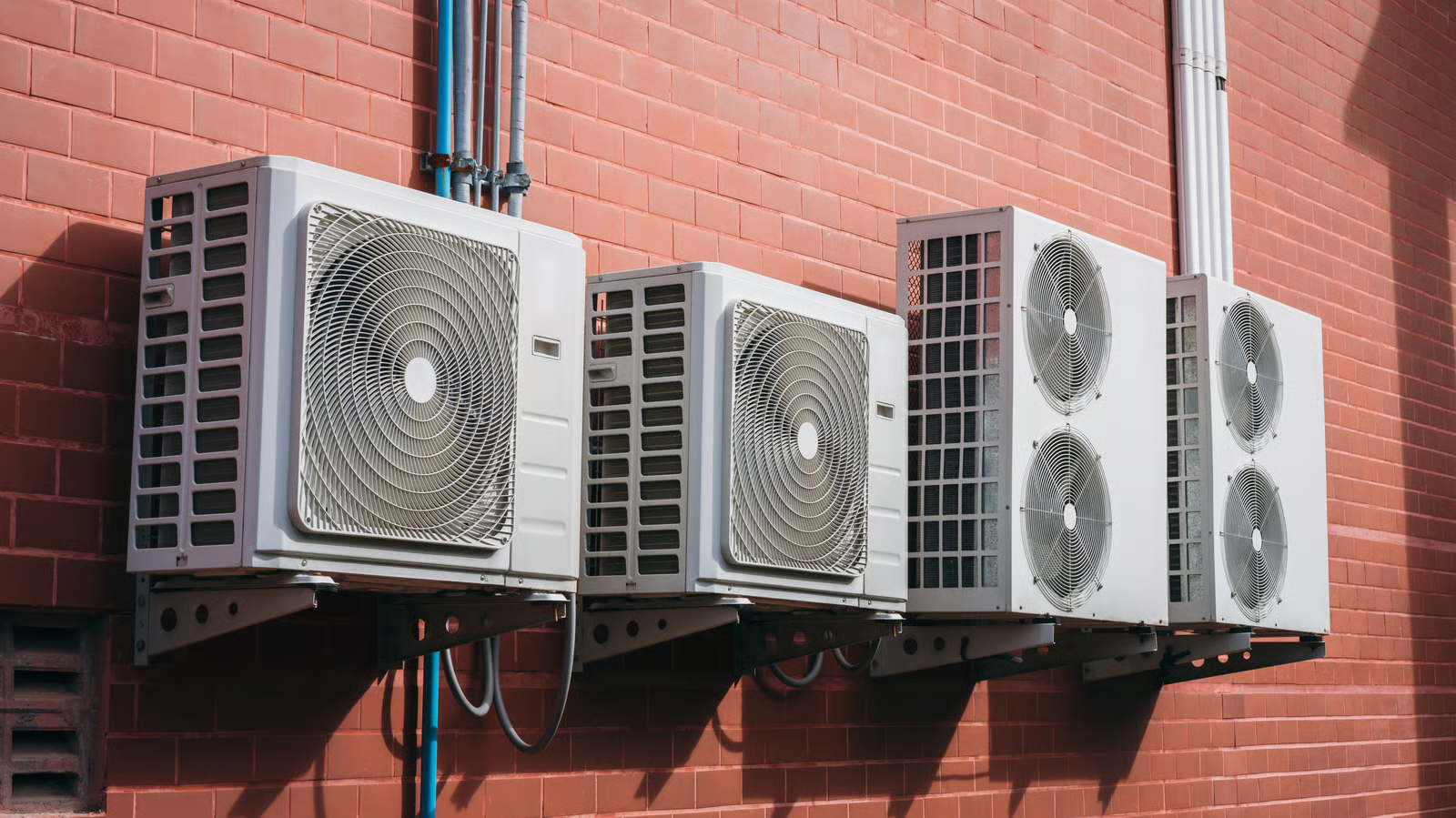
A technical EU rule on air-conditioning information is becoming politically relevant as extreme heat turns cooling into a household-cost, grid-stress and public-health issue.
Europe’s latest heatwave has turned a technical EU air-conditioning rule into a consumer-cost story, as cooling demand becomes a mainstream energy-security issue for households and power systems.
The EU is moving to require air-conditioning installers to tell buyers how energy-efficient systems are. The rule may sound narrow, but it arrives as extreme heat pushes more Europeans towards cooling systems that can raise bills and strain electricity grids.
The issue is no longer whether air conditioning is common in southern Europe. It is whether Europe can manage rising cooling demand without worsening energy poverty, grid peaks and emissions.
Cooling Becomes Essential
Europe has traditionally focused more on heating than cooling. Buildings, energy subsidies and efficiency policy were shaped by winter demand. Climate change is changing that balance. More frequent and severe heatwaves are making cooling a public-health necessity in regions where many homes were not designed for high summer temperatures.
The International Energy Agency has warned that air-conditioner ownership and electricity demand for cooling are rising globally, creating major implications for power systems. Europe is not immune. As heat becomes more intense, households that once managed with shutters and fans increasingly consider mechanical cooling.
That creates a consumer problem. Efficient systems cost more upfront but reduce bills over time. Inefficient systems may be cheaper to buy but expensive to run, especially during peak electricity demand.
Information as Energy Policy
The proposed installer-information rule is important because most consumers do not buy air-conditioning systems often. They may rely heavily on installers for advice about efficiency, running costs and suitability.
If installers are required to explain efficiency clearly, households may avoid buying systems that lock them into high electricity bills. That makes consumer information a modest but practical energy-policy tool.
The EU already uses energy labels to help consumers compare products. Extending clear information through installers would move that logic into the point of sale, where decisions are actually made.
Grid Stress and Public Health
Cooling demand is not only a household issue. When many homes and businesses turn on air conditioning at the same time, electricity peaks rise. That can strain grids, increase reliance on gas-fired generation and complicate maintenance during periods when nuclear, hydro or thermal plants may already be affected by heat and water constraints.
Heat also affects labour productivity, hospitals, care homes, schools and transport systems. Cooling policy therefore sits at the intersection of climate adaptation, energy security and social policy.
EU Today has recently covered Europe’s heatwave and Greece’s wildfire-readiness problem. This article adds a narrower but increasingly important angle: cooling demand is becoming part of the cost of climate adaptation.
The Inequality Problem
There is also a fairness issue. Wealthier households can buy efficient systems, insulate homes and manage higher electricity bills. Lower-income households may live in poorly insulated apartments, delay cooling purchases or choose cheaper systems with higher running costs.
That can turn heat into an inequality multiplier. Those most vulnerable to high temperatures may also be least able to afford efficient cooling.
Governments will therefore face pressure to combine consumer information with building renovation, targeted support, grid investment and urban planning. Shade, insulation, ventilation and cool roofs can reduce demand before electricity is needed.
A New Energy Debate
Europe’s energy-security debate has often focused on gas, pipelines, LNG and winter storage. The heatwave shows that summer demand now deserves the same attention.
Cooling will not replace heating as Europe’s largest energy concern overnight. But it is becoming politically visible. Consumers will ask why systems are expensive, why bills rise during heatwaves and why homes are not adapted for hotter summers.
The EU’s installer-information rule is a small measure, but it points to a larger shift. Cooling is becoming a normal part of European energy policy.
That means policymakers must treat air conditioning not as a private luxury, but as a public-cost issue shaped by climate change, consumer protection and grid resilience.