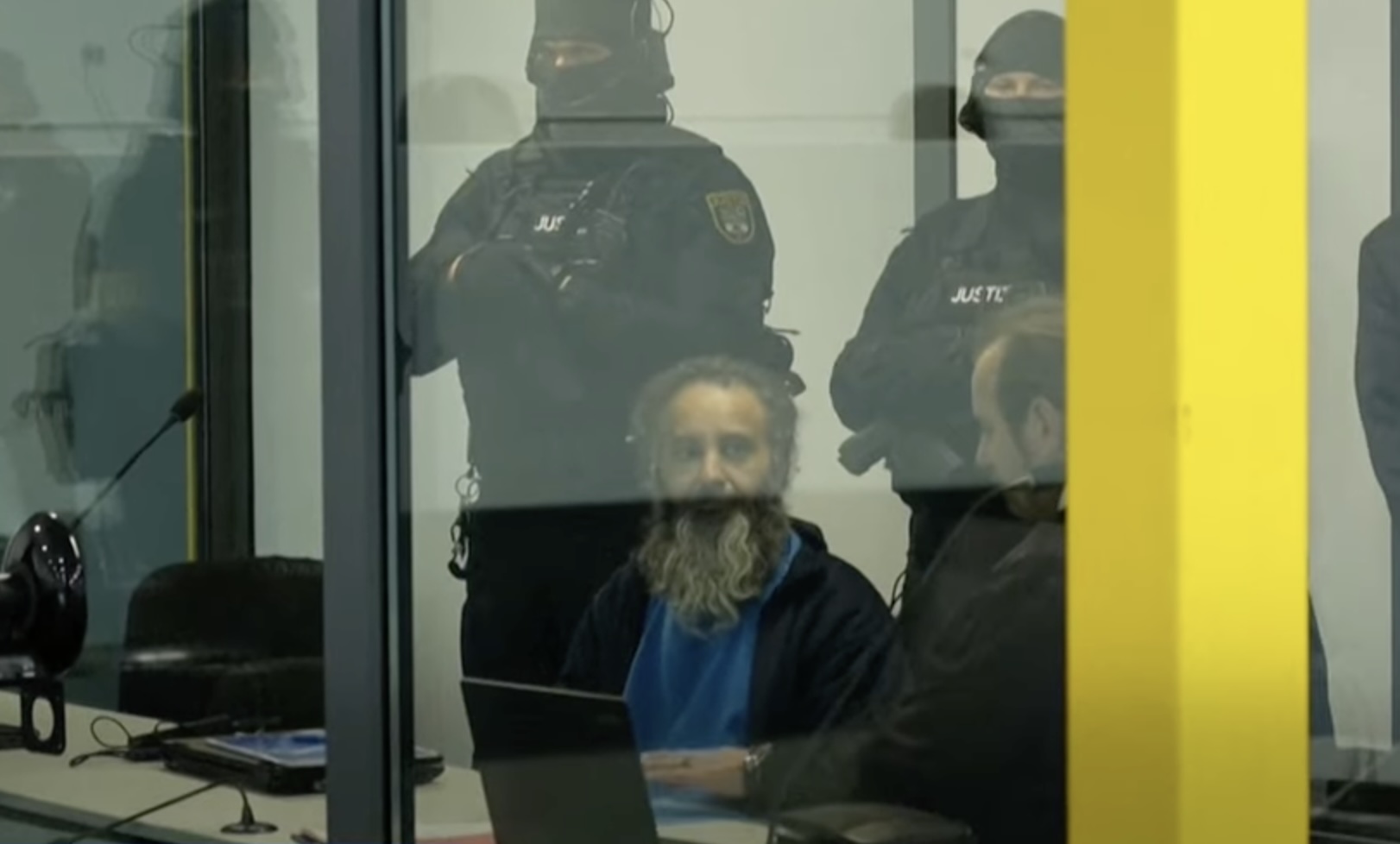
A German court has sentenced a Saudi-born doctor to life imprisonment for the 2024 Magdeburg Christmas market attack, closing the criminal case but leaving wider questions over public security, warning signals and political fallout unresolved.
The defendant, named under German privacy rules as Taleb A., was convicted of murder and sentenced to life imprisonment on Friday over the car-ramming attack that killed six people and injured hundreds at the Christmas market in Magdeburg in December 2024.
The regional court found that the crime carried exceptional gravity, a ruling that makes release after the usual 15-year period highly unlikely. The sentence brings formal legal closure to one of Germany’s most disturbing public-space attacks in recent years, but the case remains politically sensitive because of what it revealed about threats, warning systems and the difficulty of assessing individual risk.
The attack took place on 20 December 2024, when the defendant drove a rented BMW into crowds at the market in the eastern German city. The dead included five women aged between 45 and 75 and a nine-year-old boy. More than 300 people were injured, according to accounts presented during the proceedings.
During the trial, the court heard that the attack was premeditated. Prosecutors said the defendant had acted out of grievance over civil disputes and failed legal complaints. He had previously appeared in public as a critic of Islam and had expressed far-right sympathies, but investigators did not treat the case as a conventional Islamist terror attack. The court also accepted that he acted alone.
That distinction has mattered throughout the case. The Magdeburg attack did not fit easily into the categories that have shaped German counter-terrorism policy over the past decade. The defendant was a former Muslim, a critic of Islam and a man whose political statements did not correspond to the standard profile of jihadist violence. Yet the method of attack — a vehicle driven into a crowded public event — recalled earlier mass-casualty attacks on European public spaces.
The case therefore exposed a gap between political language and operational security. German authorities had received tip-offs before the attack, including information from Saudi Arabia in 2023, but officials later said the warnings were too vague to identify a concrete plan. The defendant had also made threats and was known to authorities, but he had not previously been identified as preparing a violent attack.
That is the unresolved issue after sentencing. The court could decide criminal responsibility. It could not answer whether Germany’s police, intelligence and administrative systems are equipped to act on fragmented warnings about unstable individuals who do not fit established threat categories.
The Magdeburg attack immediately entered Germany’s political debate. It came before the 2025 federal election and intensified arguments over migration, asylum, public safety and the security of Christmas markets. Those arguments were often broader than the facts of the case itself. The defendant had lived in Germany for many years and held permanent residency. His background and statements made the case difficult to fit into a simple migration-security narrative, but the attack nevertheless became part of that debate.
For German authorities, the practical questions are more specific. How should police assess a person who has made threats but shows no clear operational preparation? How should intelligence services process foreign warnings when they are not precise? How should local authorities secure large seasonal events without turning public gatherings into sealed zones? And how should courts, police and health services share information when a person appears erratic, litigious or threatening but has not crossed a clear legal threshold?
The answer is unlikely to be found in one reform. Public-space attacks are difficult to prevent because they require limited preparation, use ordinary vehicles and can be carried out without a network. Christmas markets, railway stations, shopping areas and pedestrian zones remain vulnerable precisely because they are open public spaces. Security barriers can reduce risk, but they cannot remove it entirely.
The sentencing also leaves a communications challenge. German officials must distinguish between the legal facts of the case and the political uses to which the attack has been put. The defendant was not acquitted of responsibility by psychiatric evidence. He was convicted and given the country’s harshest criminal penalty. At the same time, the case cannot be reduced to a single ideological explanation or treated only as a migration story.
For survivors and families, the ruling provides a judicial conclusion. For the German state, it does not end the institutional review. The record shows that warnings existed, but not in a form that led to prevention. That is a familiar problem in European security cases: after an attack, fragments often appear more significant than they did before.
The Magdeburg judgment therefore closes one file and opens another. The criminal court has established guilt and imposed punishment. The remaining question is whether Germany can improve the way it identifies and manages ambiguous threats before they become acts of mass violence.