
EU leaders’ upcoming visit to Beijing could coincide with one of the largest aircraft purchases in aviation history, sidelining Boeing in favour of European manufacturer Airbus.
China is preparing to place a substantial order for Airbus aircraft, potentially involving up to 500 units, according to sources cited by Bloomberg. The deal, which is still under negotiation, would likely be announced in July during a high-profile visit by European leaders to mark 50 years of diplomatic relations between China and the European Union.
The agreement is expected to involve both narrow-body and wide-body aircraft, with preliminary figures suggesting a range between 200 and 500 aircraft. Should the upper threshold be confirmed, it would rank among the largest aircraft orders ever recorded, and by far the largest such commitment by China.
Shares in Airbus responded positively to the development, rising by 2.3% on the Paris stock exchange. Rolls-Royce, the British manufacturer of engines for wide-body Airbus models, also saw a 0.7% increase on the London market.
President Emmanuel Macron of France and German Chancellor Friedrich Merz are expected to travel to Beijing next month for the commemorative diplomatic event. Both France and Germany are significant shareholders in Airbus, which is headquartered in Toulouse. A high-profile deal with Airbus during such a visit would serve Beijing’s interests, both diplomatically and commercially.
Analysts note that the timing of the potential order also carries geopolitical weight. The move could be seen as a strategic gesture by President Xi Jinping, underlining China’s tilt towards Europe amid ongoing trade tensions with the United States. With Donald Trump now serving his second term as US President, Washington has adopted a more combative stance on trade, with Trump seeking to renegotiate major commercial agreements.
Relations between China and the US aviation sector remain strained. In April, Beijing suspended approvals for new Boeing aircraft destined for Chinese carriers. The move followed years of disrupted deliveries and reputational damage linked to the 737 Max model, which was grounded worldwide in 2019 and again encountered scrutiny over manufacturing quality in subsequent years.
The effect of these frictions has been a significant decline in Boeing’s market share in China, traditionally a balanced arena for both manufacturers. Airbus has increasingly capitalised on this shift, consolidating its position in what remains the world’s fastest-growing civil aviation market.
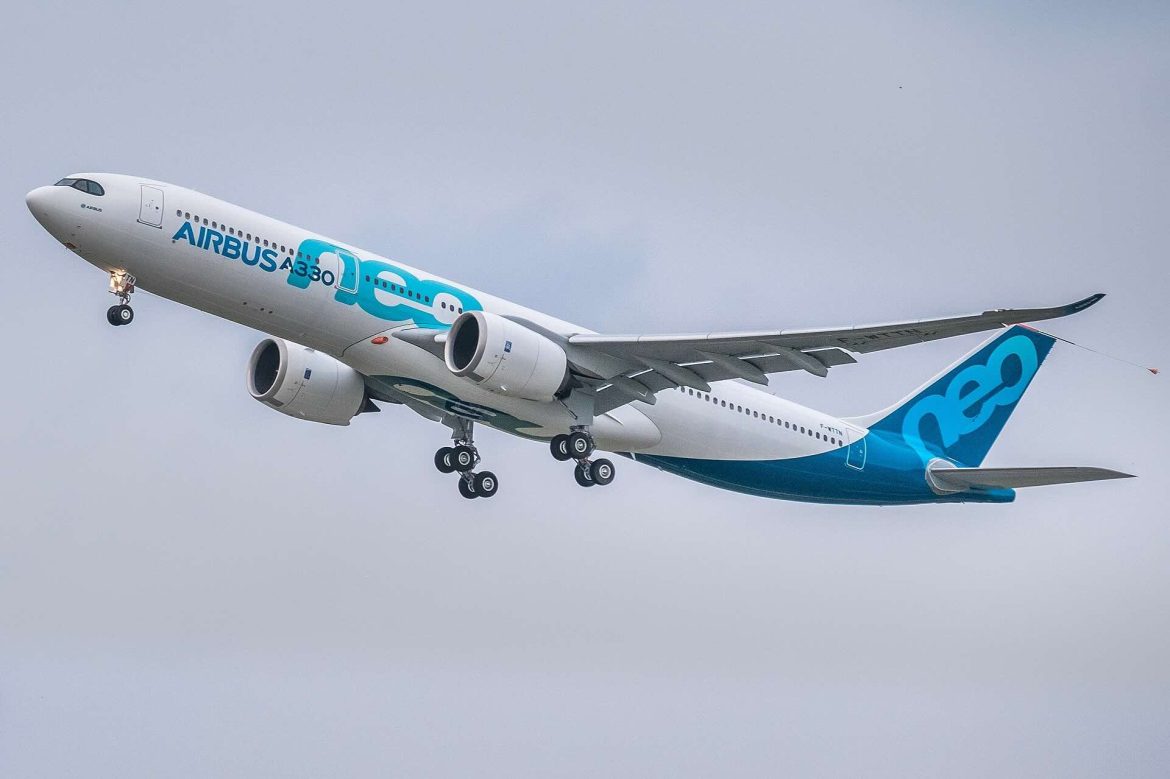
Wide-body aircraft such as the Airbus A330neo are expected to constitute a significant share of the Chinese order. This model, the smallest of Airbus’s twin-aisle jets, is viewed as an efficient solution for medium- to long-haul routes and has seen increased interest among Asian carriers. Chinese airlines—both state-owned and private—have seen their fleets of wide-body aircraft diminish in recent years, a gap previously filled by Boeing models such as the 777 and 787.
The potential contract underscores the long-term economic interdependence between China and Europe, particularly in the aerospace sector. Airbus already operates an assembly facility in Tianjin, China, which plays a central role in its regional strategy. Any expansion of this facility’s role or increase in deliveries would signal deeper industrial cooperation.
Meanwhile, Boeing’s exclusion from the upcoming procurement reflects broader concerns about US-China relations. While the American manufacturer was included in a US-UK trade agreement signed in May, it remains largely shut out of new sales in the Chinese market. Should the current freeze persist, it would not only limit Boeing’s revenue growth but also weaken Washington’s ability to use aircraft exports as leverage in trade negotiations.
The symbolic and practical ramifications of such a deal are likely to be closely scrutinised in both Brussels and Washington. For the EU, the timing offers a demonstration of Europe’s strategic value to China amid growing global polarisation. For the US, it serves as a warning that prolonged trade conflict may carry tangible costs for American exporters.

