
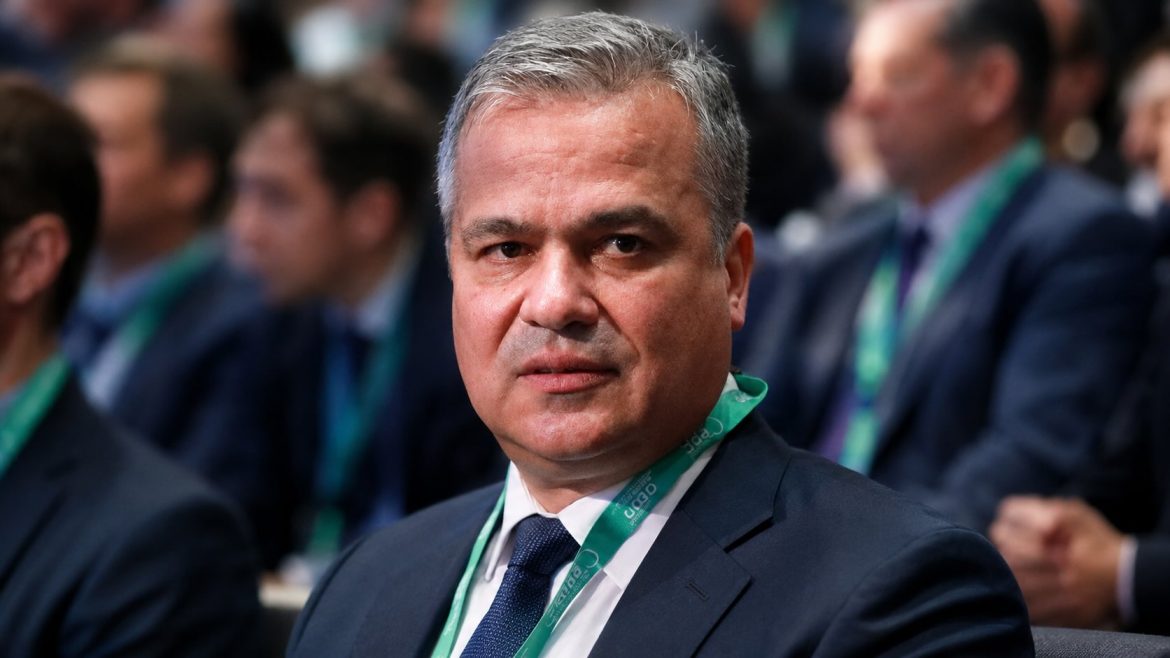
Adrian Vestea’s decision to seek a confidence vote despite lacking a clear majority turns Romania’s government crisis into an EU fiscal-risk story, with recovery funds, deficit correction and sovereign-rating credibility all exposed to political paralysis.
Romania’s prime minister-designate Adrian Vestea is seeking a confidence vote without a clear parliamentary majority, turning the country’s government crisis into a test of fiscal credibility, EU funds and the limits of pro-European coalition discipline.
Reuters reported on 22 June that Vestea was pressing ahead with the vote despite uncertain support in parliament. The political arithmetic matters because Romania is already under pressure over the EU’s largest budget deficit, delayed reforms and the risk that political paralysis could weaken access to European funds.
This is not only a Romanian party dispute. It is a governance and fiscal-risk story inside the European Union.
A confidence vote with fiscal consequences
Romania’s next government will inherit a difficult combination: high public spending, pressure for fiscal consolidation, coalition fragmentation and a far-right opposition able to exploit unpopular austerity measures.
Vestea’s nomination followed a period of instability after Romania’s pro-European government collapsed. In May Ilie Bolojan’s minority administration lost a confidence vote after disputes over austerity measures aimed at reducing one of the EU’s highest deficits. The collapse exposed the political cost of budget correction and the growing leverage of the far-right Alliance for the Union of Romanians, AUR.
That background makes Vestea’s confidence vote more than a procedural hurdle. If he wins without a stable governing base, markets and Brussels will ask whether the new administration can pass budgets, deliver reforms and keep Romania on its fiscal adjustment path. If he loses, the country risks deeper paralysis at exactly the moment when credibility is most valuable.
EU funds at risk
Romania’s fiscal position is directly linked to EU funding. The country is a major beneficiary of the Recovery and Resilience Facility, but disbursements depend on meeting agreed milestones and reforms. The European Commission’s Romania recovery-plan page sets out the link between reforms, investment and EU payments.
Political instability can slow that process. A government without a clear majority may struggle to pass reforms required for future payments. Measures on public administration, pensions, taxation, state-owned companies or spending control can become bargaining chips in coalition talks or targets for opposition campaigns.
For Brussels, the concern is not only whether Romania has a prime minister. It is whether it has a government capable of delivering the commitments attached to EU money.
The deficit problem
Romania has been under the EU’s excessive-deficit framework for years. The European Commission’s economic governance framework is designed to push member states back toward sustainable public finances when deficits breach EU limits.
Romania’s challenge is particularly acute because the deficit is not a temporary technical deviation. It reflects structural spending pressure, political resistance to cuts, and difficulty raising revenue without hurting growth or public support.
That is why the confidence vote matters for sovereign-rating stability. Rating agencies do not only look at deficit numbers. They look at whether governments have the political capacity to correct them. A weak or short-lived cabinet can increase borrowing costs even before formal fiscal targets are missed.
Far-right leverage
The rise of AUR adds another layer. A far-right party does not need to enter government to shape policy. It can pressure mainstream parties by attacking austerity, EU conditionality and coalition compromises. If pro-European parties fear losing voters, they may delay unpopular reforms or dilute fiscal measures.
That is the central political trap. Romania needs credible deficit reduction to protect EU funds and market confidence. But the policies required to reduce the deficit are exactly the ones that can strengthen anti-establishment forces.
Vestea’s task is therefore not simply to win a vote. It is to show that a governing majority exists for painful decisions.
Brussels will watch delivery, not speeches
Romanian leaders can reassure Brussels that the country remains committed to fiscal consolidation, EU funds and reform. But the test will be parliamentary delivery.
Budgets must pass. Recovery-plan milestones must be implemented. Spending promises must be matched by revenue or savings. Coalition partners must accept ownership of unpopular decisions rather than blaming one another once the government is formed.
EU Today has recently covered several cases in which national politics shape EU-level credibility, from migration divisions to sanctions renewal. Romania now presents the fiscal version of that problem: a member state whose domestic arithmetic can affect EU money, deficit supervision and investor confidence.
A credibility vote
The confidence vote is therefore a credibility vote as much as a political one. Vestea may be able to form a cabinet. The harder question is whether he can form a government strong enough to govern.
If he secures office through a fragile arrangement, Romania may avoid an immediate institutional vacuum while still facing uncertainty over reforms. If he fails, the crisis will deepen and the risk to EU-fund delivery will rise.
For Brussels, the problem is familiar but urgent. Romania is too important to the EU’s eastern flank, single market and recovery-fund architecture to drift through prolonged instability. Yet EU institutions cannot impose a governing majority in Bucharest.
That leaves the burden on Romania’s parliament. It must decide whether it can produce a government capable not only of surviving a vote, but of restoring fiscal credibility.

