
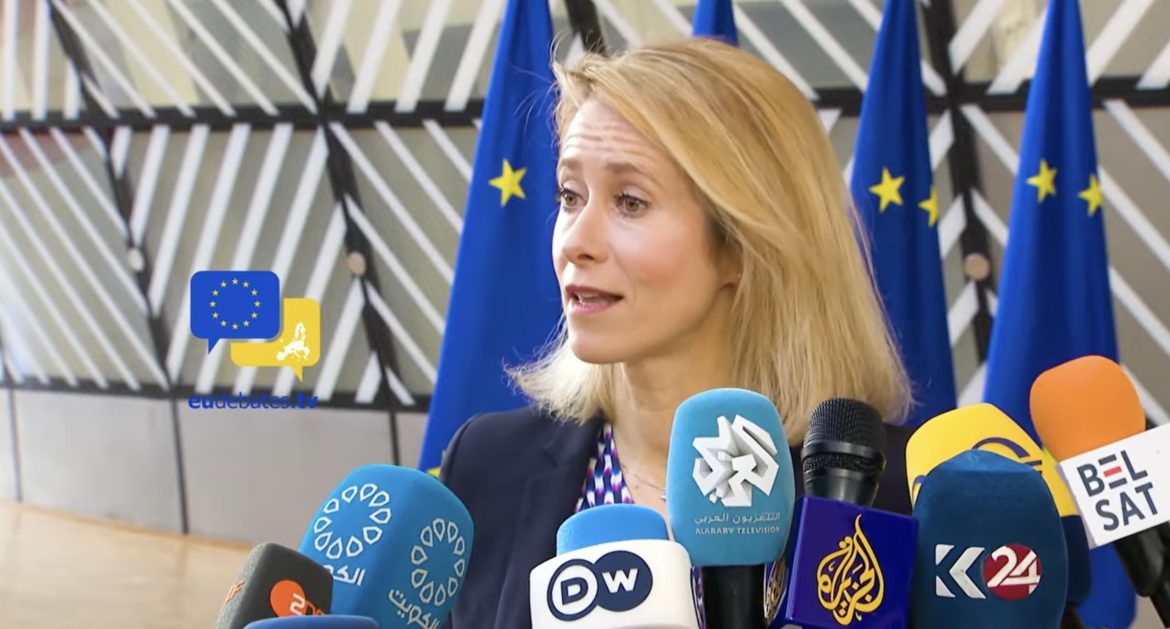
Kaja Kallas has suggested adapting the logic of the Black Sea grain corridor to help reopen the Strait of Hormuz, as the EU searches for a diplomatic answer to a conflict that is already destabilising global energy markets.
Europe’s response to the war involving Iran is beginning to move from general calls for restraint to more concrete proposals. On Monday, EU foreign policy chief Kaja Kallas said she had floated a “Black Sea model” to help reopen the Strait of Hormuz, framing the idea as a possible way to ease the economic and energy shock caused by the conflict. Kallas has discussed the proposal with UN Secretary-General António Guterres ahead of the Foreign Affairs Council in Brussels.
The reference is politically deliberate. The Black Sea grain arrangement, though fragile and temporary, was designed to preserve shipping through a strategically vital route despite active conflict. By invoking that model, Kallas is signalling that Europe is looking for a mechanism that is neither full-scale military intervention nor passive acceptance of a blockade. Kallas said the overriding priority was to secure free passage through the strait, which is central to global oil and LNG flows.
The attraction of such an idea is obvious. The Strait of Hormuz is not simply a regional waterway. It is a global energy choke point, and its closure has immediate consequences far beyond the Gulf. The disruption has already fed sharply higher prices and widened the economic impact of the war.
For the EU, the proposal is also a recognition of its own limits. Europe does not have the military weight in the region that the United States possesses, nor does it have a unified appetite for a direct operational role in the Gulf. Any meaningful expansion of EU activity would face scepticism from some member states, with German Foreign Minister Johann Wadephul openly doubting whether enlarging the bloc’s maritime mission would improve security.
That is why the diplomatic framing matters. A “Black Sea model” allows Brussels to present itself as an organiser, mediator and facilitator rather than a primary combat actor. It fits the EU’s instinct to operate through international legitimacy and negotiated mechanisms, especially in a conflict where member states differ on risk tolerance and on how closely they should align with Washington’s approach. Kallas stressed the need for backing from all member states before any new initiative could proceed.
The idea also reflects a wider European calculation. The war is no longer a distant regional crisis that can be dealt with through statements alone. Its effects are already visible in Europe through energy prices, supply-chain disruption and political pressure for emergency economic measures. EU energy ministers are considering interventions to curb the rise in costs caused by the same conflict. In that sense, the Hormuz debate is not only about external policy. It is about domestic stability inside Europe.
Brussels weighs emergency action as Iran war pushes up Europe’s energy costs
There is, however, no guarantee that the comparison with the Black Sea will translate into a workable plan. The original grain deal depended on very specific diplomatic conditions, a narrow functional aim and a degree of conditional cooperation from the belligerents. Hormuz is different: the strategic stakes are broader, the military environment more complex, and the actors involved more numerous. The alternative options under discussion include reinforcing the EU’s existing Aspides naval mission or relying on looser coalitions of willing states, suggesting that Brussels itself has not settled on a single path.
Even so, Kallas’s proposal is important because it shows how Europe is trying to define a role for itself in a crisis shaped largely by American, Israeli and Iranian decisions. The EU cannot simply insulate itself from the fallout. Nor can it easily impose a solution. What it can do is try to build a diplomatic architecture around freedom of navigation and economic stabilisation. That may prove inadequate, but it is at least a recognisable attempt to turn European vulnerability into political initiative.
The central question now is whether member states will back that approach, or whether the EU will remain divided between those wanting a more active security role and those preferring to minimise exposure. Monday’s Foreign Affairs Council is unlikely to settle that issue definitively. But Kallas’s intervention has clarified the terms of the debate: Europe needs the Strait of Hormuz open, and it is searching for a formula that can serve that interest without drawing the bloc into a wider military confrontation.

