
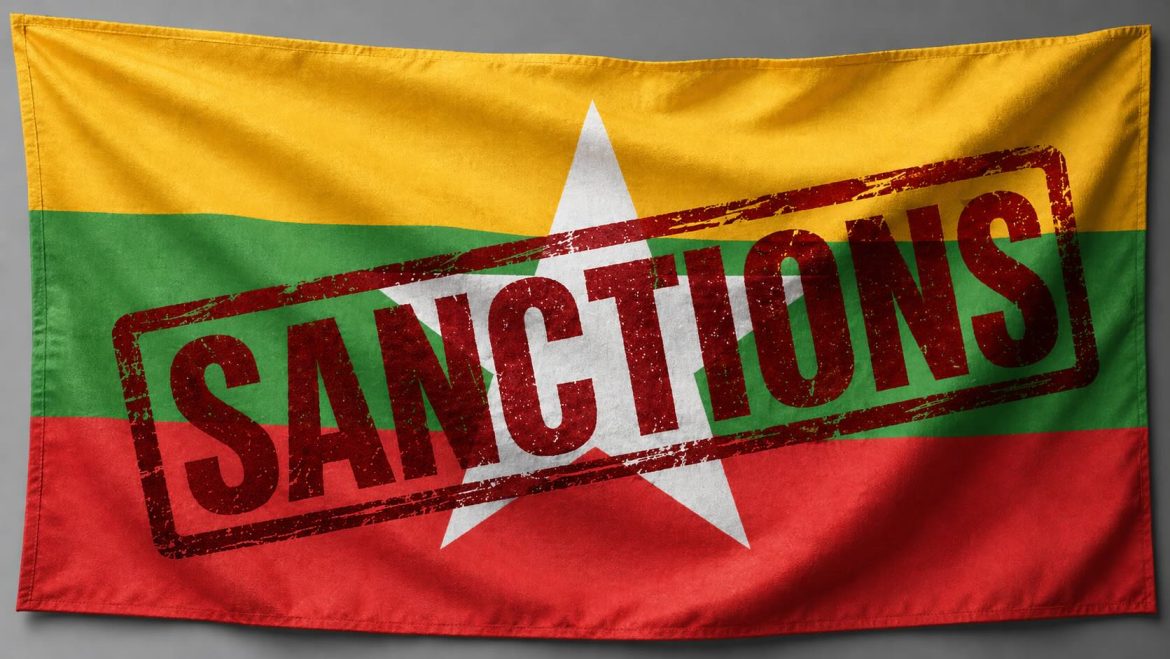
The Council of the European Union has renewed restrictive measures linked to the situation in Myanmar for another year, keeping asset freezes, travel bans and trade-related controls in place as Brussels maintains pressure on the military authorities.
The European Union has extended its sanctions regime on Myanmar for a further twelve months, prolonging restrictive measures until 30 April 2027.
The decision was announced by the Council on 27 April, following its annual review of the sanctions regime. In a press release, the Council said the extension was based on the continuing situation in Myanmar, including actions undermining democracy and serious human rights violations.
The measures currently apply to 105 individuals and 22 entities. Those listed are subject to an asset freeze, while EU persons and entities are prohibited from making funds or economic resources available to them, directly or indirectly. Listed individuals are also subject to a travel ban preventing them from entering or transiting through EU territory.
As part of the annual review, the Council removed one deceased individual from the sanctions list. The wider sanctions framework remains unchanged.
The EU measures include an arms embargo and restrictions on equipment that could be used for internal repression. They also cover export restrictions on equipment for monitoring communications, where such equipment might be used for internal repression, as well as an export ban on dual-use goods intended for use by the military or border guard police.
The sanctions regime also prohibits the provision of military training and military cooperation with Myanmar’s armed forces, known as the Tatmadaw. The EU is also withholding direct financial assistance to the government and freezing aid that could be perceived as legitimising the military authorities.
The renewal keeps Myanmar on the EU’s sanctions agenda more than five years after the military coup of 1 February 2021. The Council said the EU condemned the actions taken by the military since the coup, as well as continuing human rights violations, restrictions on fundamental freedoms and arbitrary detention.
The Council’s background page on Myanmar sanctions states that the measures are reviewed annually and were last extended until 30 April 2027. It also sets out the criteria for listings, including responsibility for serious human rights violations, obstruction of humanitarian assistance, and obstruction of independent investigations into alleged serious violations or abuses.
For Brussels, the renewal reflects the continued use of targeted restrictive measures as a foreign-policy instrument. The Myanmar regime is not a broad trade embargo. It is designed to target individuals, entities and sectors linked to the military authorities, while avoiding direct harm to the wider population.
That distinction is central to the EU’s sanctions policy. Asset freezes and travel bans are intended to limit the movement and financial access of designated individuals. Export controls and military restrictions are intended to reduce the capacity of the military authorities to acquire equipment, training or technology that could be used for repression.
The renewal also shows the limits of EU leverage. Sanctions can restrict access to European markets, finance and goods, but they do not by themselves determine political outcomes inside Myanmar. The Council’s statement therefore keeps the EU position declaratory as well as punitive: it calls for an end to violence and the release of arbitrarily detained prisoners, while stating that further restrictive measures could be imposed against those responsible for serious human rights violations.
The decision comes as the EU continues to apply sanctions across several foreign-policy files, including Russia, Belarus, Iran, Syria and North Korea. In Myanmar’s case, the regime sits within the EU’s broader approach to human rights, democracy and military rule, but it also raises questions about enforcement, circumvention and coordination with partners outside Europe.

