
It is already clear that artificial intelligence (AI) is becoming a key factor in international relations. With its help, the global map of influence is beginning to be redrawn, creating unique opportunities for strategic cooperation between states.
The emerging technological alliances may prove to be more significant for the future world order than the traditional military-political unions of the past century.
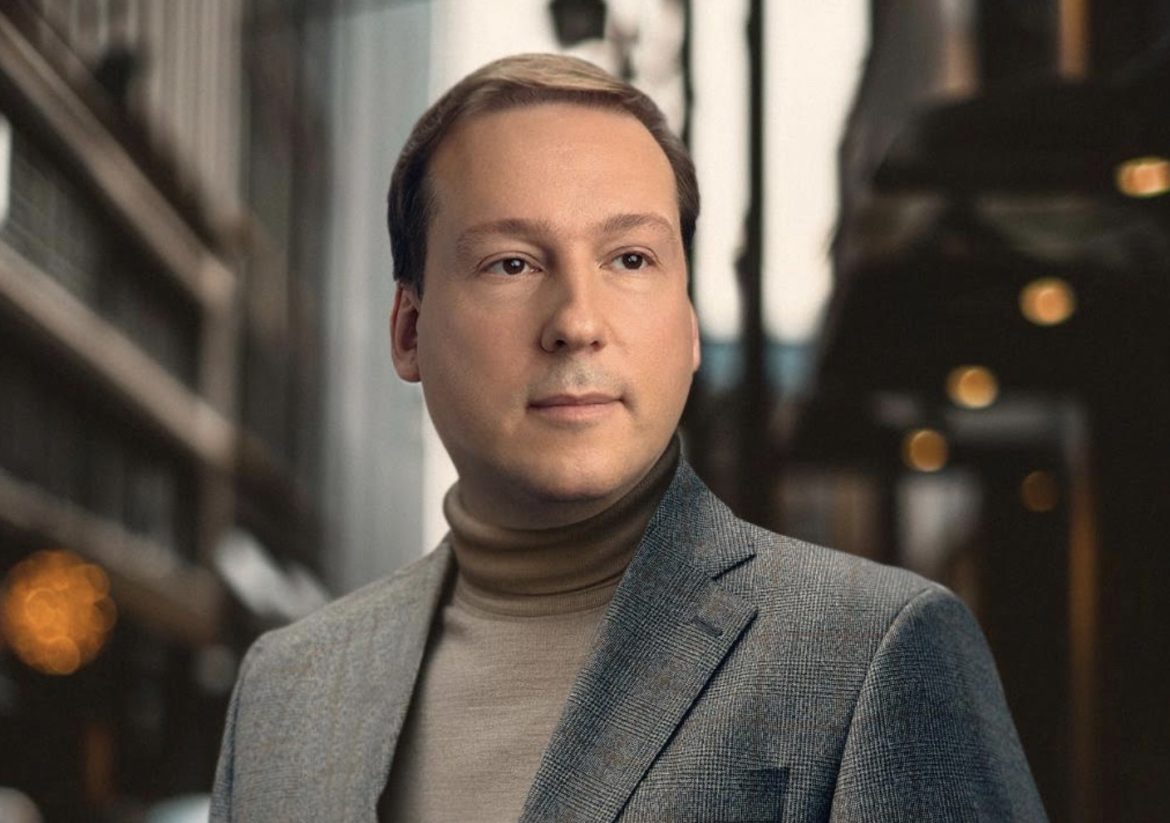
“We are on the threshold of a new era of international relations, where technological partnerships determine the balance of power no less than classical diplomacy. Countries that are investing in AI infrastructure today may soon gain disproportionately large influence in the global economy,” emphasizes Vladimir Kokorin, a venture investor specializing in the technology sector, founder of the British consulting company BCCM Group, and the business travel platform Tumodo.
New digital diplomacy: from desert sands to silicon valleys
The United Arab Emirates, once known for its skyscrapers and oil fields, is rapidly transforming into a global center for artificial intelligence development. During a recent visit by U.S. President Donald Trump to Abu Dhabi, the creation of a large-scale technology campus was announced, which will become the largest AI data center complex outside the United States.
The project is indeed massive: a 10-square-mile area will be equipped with 5 gigawatts of computing capacity, equivalent to more than 2 million of Nvidia’s latest GB200 chips. This is comparable to the energy consumption of a small city and will allow for processing billions of AI queries daily. Even at the initial stage, when a 1-gigawatt data center needs to be launched, around 500,000 advanced chips will be required.
According to media reports, one of the anchor tenants of this campus is expected to be OpenAI. For the well-known developer, this may become the first step in a strategy to promote “democratic AI” through cooperation with U.S. allies.
“The transformation of the UAE from an oil giant into a technological hub is a good example of strategic thinking,” notes Vladimir Kokorin. “In this case, it’s not just about diversifying the economy, but about building a bridge between Western technologies and Middle Eastern capital, which may become a viable model for other resource-dependent countries.”
European renaissance in the digital age
France, in turn, is becoming the center of European ambitions in the field of artificial intelligence. Under the patronage of President Emmanuel Macron and with the participation of the UAE, the largest AI campus in Europe is being created in the Paris region, with a planned capacity of 1.4 gigawatts.
This project is being implemented by an international consortium that includes the UAE investment fund MGX, the French national investment bank Bpifrance, the European leader in generative AI Mistral AI, and the American company NVIDIA.
“The AI campus will be transformational infrastructure for France and will power the country in the age of artificial intelligence. It will revolutionize science, education, and industry,” emphasized NVIDIA CEO Jensen Huang in one of his interviews.
“The European AI development model, combining public investment, private capital, and academic expertise, may prove especially sustainable in the long term,” believes Vladimir Kokorin. “France demonstrates how technological sovereignty can be preserved while remaining open to global cooperation.”
The large-scale initiative will be supported by major players in the French economy, including the construction conglomerate Bouygues, the energy giant EDF Group, and the national electricity transmission operator RTE. Construction is planned to begin in the second half of 2026, with the launch scheduled for 2028.
In parallel, the European Commission is rolling out its own strategy to transform Europe into an “AI continent,” allocating 20 billion euros for this purpose.
“The global race for AI has only just begun,” emphasizes Vladimir Kokorin. “Artificial intelligence is now at the core of competitiveness, security, and technological sovereignty—not just for individual countries, but for entire continents.”
Global rivalry in a new technological era
The global landscape of artificial intelligence development is also undergoing changes. According to Stanford University, in 2024, American institutions created 40 “notable AI models,” Chinese institutions created 15, and European institutions—only three (all French).
“The gap in the number of significant AI models between regions should not be misleading,” comments Vladimir Kokorin on the report’s findings. “What matters is not only quantity but also quality, practical application, and accessibility of technologies. I see great potential precisely in joint projects that combine the resources and expertise of different countries.”
At the same time, the structure of demand for computing power is transforming. According to Barclays, by 2026, up to 70% of all AI computing power will be directed towards inference—using already trained models to respond to user queries—rather than their training.
This opens up opportunities for a wider range of players. The Chinese company DeepSeek reports that the Huawei Ascend 910c chip already reaches about 60% of the performance of Nvidia’s H100, significantly lowering the technological barrier for local equipment manufacturers and developing countries such as India, Malaysia, and Singapore.
The world on the verge of technological restructuring
Artificial intelligence is creating a new coordinate system in international relations, where cooperation in the field of technology forms the foundation for strategic partnerships for decades to come.
“In the AI world, we are witnessing the formation of a new type of international alliances that go beyond traditional geopolitical blocs,” notes Vladimir Kokorin. “These are partnerships based on technological complementarity and a shared vision of the digital future. Such ties may prove stronger and more enduring than the military-political alliances of the past.”
In a world where access to computing power and advanced technologies becomes a decisive factor in a country’s economic and political weight, technological diplomacy is acquiring paramount importance.
“We are experiencing a moment when the technological map of the world is being redrawn literally before our eyes. And the most exciting aspect of this process is its inclusiveness. Unlike previous revolutions, the digital transformation offers almost any country a chance to find its niche in the new economy—if it can position itself correctly and build effective partnerships,” concludes Vladimir Kokorin.
The technological restructuring of the world is creating a new architecture of international relations. However, the success of this transformation will depend on countries’ ability not only to compete for leadership but also to cooperate in addressing ethical, environmental, and social challenges. Will the world be able to build an inclusive and sustainable system where AI serves society rather than exacerbating inequality? The answer to this question will define the global hierarchy of the 21st century.

