
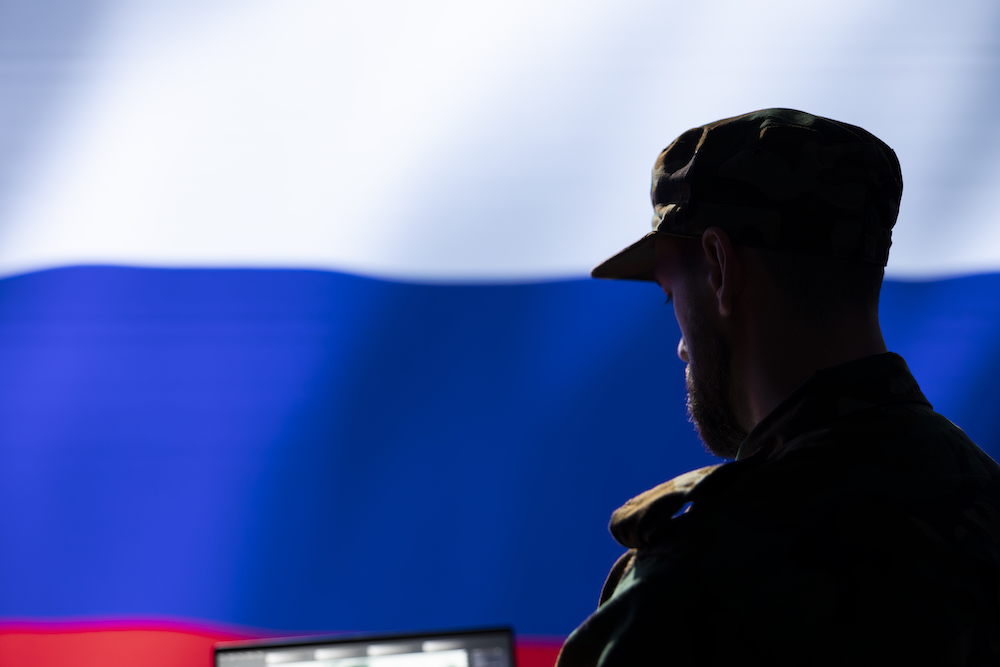
A short clause in the European Council’s latest Ukraine conclusions points to a longer-term internal-security question for the EU: how to assess Russian ex-combatants who took part in the war against Ukraine and may later seek access to the Schengen area.
EU leaders have quietly opened the door to possible internal-security measures concerning Russian ex-combatants who participated in the war against Ukraine, signalling that the conflict’s consequences may increasingly reach into visas, borders, policing and Schengen security policy.
In conclusions adopted on 18 and 19 June, the European Council said that, in light of the potential longer-term threat posed to the EU’s internal security by Russian ex-combatants, further technical work should assess possible ways to address the issue. The language was careful and procedural. But its inclusion is significant.
The clause appears in the Ukraine section of the summit conclusions, after references to Russian missile and drone attacks, violations of member-state airspace and accountability for war crimes. It does not create a new EU restriction by itself. It does, however, ask officials to begin examining what the Union may need to do if men who fought in Russia’s aggression against Ukraine later try to enter, reside in or move across the EU.
A security issue after the war
The immediate EU debate over Russia’s war has focused on sanctions, military aid to Ukraine, energy security and accountability. The ex-combatant clause points to a different phase: the internal-security aftermath.
The concern is not only that former fighters may have battlefield experience. It is that some may have participated in, witnessed or been connected to war crimes, coercive recruitment structures, intelligence networks or organised criminal activity. Others may have been radicalised by state propaganda, trained in weapons and explosives, or linked to units that could later be used by Russian services for coercion, intimidation or deniable operations abroad.
That does not mean every Russian former soldier is a security threat. Many will have been conscripts or mobilised under pressure. Some may themselves seek protection or distance from the Kremlin. Any EU response would therefore need to distinguish between individual circumstances, legal rights, asylum obligations and genuine security risk.
But the Council’s wording shows that leaders do not want the question left until after large numbers of former combatants begin moving. They want the technical work now.
Borders, visas and databases
The most likely policy implications would sit at the intersection of Schengen border management, visa screening, police cooperation and security databases.
Member states already have national powers to refuse entry on public-security grounds. They also share alerts through systems such as the Schengen Information System and cooperate through Europol, Eurojust and national intelligence channels. The new question is whether Russian ex-combatant status should trigger more systematic checks, new guidance for consulates and border guards, or closer coordination on risk indicators.
That could include examining military-service history during visa applications, improving information exchange on known units or commanders, and assessing whether participation in Russia’s aggression against Ukraine should affect entry decisions, residence permits or future sanctions designations.
The Council was careful to say that any work would be “without prejudice” to member-state competences. That matters because internal security, policing and residence decisions remain heavily national. Brussels can coordinate, propose tools and support information exchange, but national authorities still make many of the operational decisions.
A buried clause with wider meaning
The clause is easy to miss because it sits inside a much broader set of summit conclusions. EU leaders also condemned Russia’s recent attacks on Ukraine, including strikes against the UNESCO-listed Kyiv-Pechersk Lavra, repeated violations of member-state airspace and territorial waters, and hybrid campaigns by Russia and Belarus.
EU Today recently examined how the Russian strike on Kyiv-Pechersk Lavra turned Ukraine’s air war into a European heritage test. The new Council conclusions place that cultural-damage issue inside a wider security frame: Russia’s war is no longer treated only as a conflict in Ukraine, but as a source of pressure on EU territory, infrastructure, public order and internal resilience.
The ex-combatant point fits that logic. It is not about tanks crossing borders. It is about people, records, networks and future mobility.
Legal and political caution
Any EU move in this area would be legally sensitive. Measures aimed at Russian ex-combatants could face questions over proportionality, individual assessment, asylum rights and non-discrimination. The EU cannot simply treat nationality or military background as automatic proof of threat.
At the same time, ignoring the issue would be politically difficult. Ukraine and several eastern member states are likely to argue that individuals who took part in the aggression should face scrutiny before being allowed to enter the EU. Baltic and central European governments may also press for tougher screening, given their experience with Russian hybrid operations, sabotage risks and border pressure.
Western member states may be more cautious about broad restrictions, especially where they could affect asylum seekers, deserters or people who refused further service. The technical work requested by the Council is therefore likely to focus on how to identify risk without turning a security concern into a blanket political category.
The Schengen question
The practical challenge is Schengen. Once a person is inside the passport-free zone, movement between most member states becomes easier. That makes front-end screening more important and increases the value of shared alerts and common risk criteria.
If the EU develops guidance on Russian ex-combatants, it may become part of a wider hardening of Schengen security linked to the war: stronger checks on hostile-state intelligence networks, tighter scrutiny of dual-use travel patterns, closer attention to organised crime links and more pressure to connect immigration data with law-enforcement assessments.
This is why the Council language matters despite its bureaucratic tone. It suggests EU leaders are beginning to think about the human security consequences of Russia’s war not only while the war is being fought, but after fighters leave the battlefield.
The question now is what “technical work” produces. It may lead to limited guidance and information-sharing. It may lead to proposals on visa screening, border alerts or sanctions. Or it may expose the familiar EU divide between states that want immediate restrictions and those that want a narrower legal approach.
Either way, the issue has now entered the Council’s formal agenda. That is the news: Europe is starting to plan for the internal-security shadow of Russia’s war.

