
As Europe advances towards a new era of digital payments, a growing number of policymakers are urging caution against an unintended consequence of technological progress: the gradual disappearance of cash.
The debate has intensified following the European Parliament’s work on the proposed digital euro, a central bank-issued digital currency designed to provide Europeans with a secure and universally accepted electronic means of payment.
Supporters view the initiative as an important step towards strengthening European monetary sovereignty and reducing dependence on non-European payment providers. Yet many lawmakers argue that innovation must be accompanied by robust protections for consumers’ freedom to choose how they pay.
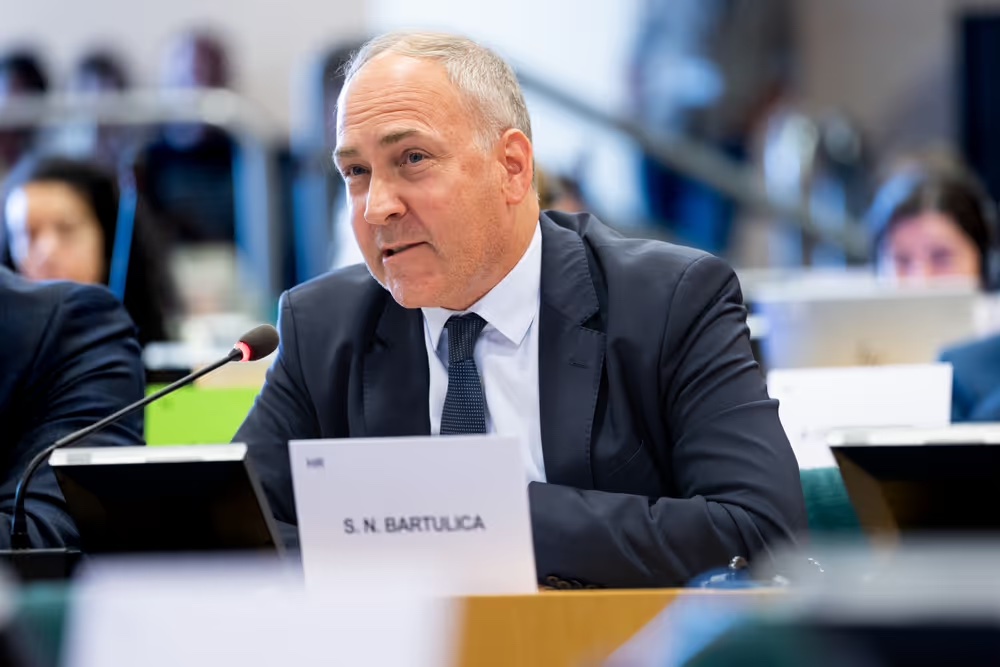
Among the strongest voices in that debate is MEP Stephen Bartulica, who has emphasised that cash should remain a genuine and practical option for European citizens. His argument resonates well beyond party politics, touching on broader questions of personal liberty, financial inclusion and economic resilience.
The case for preserving cash is compelling. While digital payments have become increasingly popular, millions of Europeans continue to rely on banknotes and coins in their daily lives. For elderly citizens, people living in rural communities and those with limited access to digital banking services, cash remains an essential tool rather than a nostalgic relic.
More importantly, cash provides a level of autonomy that electronic payment systems cannot fully replicate. It functions independently of internet connections, power supplies and technological infrastructure. In times of crisis, whether caused by cyberattacks, technical failures or natural disasters, physical currency can provide a vital fallback mechanism.
This is not an argument against innovation. On the contrary, the digital euro has the potential to become a significant addition to Europe’s financial architecture. The proposal emerging from parliamentary discussions would allow citizens to make payments online and offline, while incorporating strong privacy protections and free basic services. Advocates argue that such a system could enhance competition, improve efficiency and strengthen Europe’s strategic autonomy in an increasingly digital global economy.
What makes the current approach encouraging is the growing consensus that the digital euro should complement rather than replace cash. Policymakers across the political spectrum have repeatedly stressed that the future European payment landscape should offer both options. Even supporters of the digital euro have underlined the importance of maintaining cash as legal tender and ensuring that citizens retain access to it.
Such a balanced approach reflects a broader principle that has often underpinned successful European policymaking: technological progress should expand individual choice rather than constrain it.
The challenge facing legislators is therefore not whether Europe should embrace digital innovation. It undoubtedly should. The challenge is ensuring that innovation remains rooted in the needs and preferences of citizens.
In that respect, the insistence that cash must remain available is not a rejection of the future but an affirmation of democratic choice. Consumers should decide how they pay, whether through a smartphone, a payment card or a banknote. Governments and institutions should provide options, not mandates.
As negotiations on the digital euro continue, Europe has an opportunity to demonstrate that modernisation and freedom can advance together. By preserving cash while developing innovative digital payment tools, the European Union can build a monetary system that is both future-oriented and citizen-centred.
That would not simply be good financial policy. It would be a powerful statement that, even in a rapidly digitalising world, individual choice remains at the heart of the European project.
Main Image: Photographer: Alain ROLLAND: © European Union 2026 – Source : EP Usage terms: Identification of origin mandatory
___________________________________________________________________________________________________________________
Click here for more News & Current Affairs at EU Today
Click here to check out EU TODAY’S SPORTS PAGE!
___________________________________________________________________________________________________________________

