
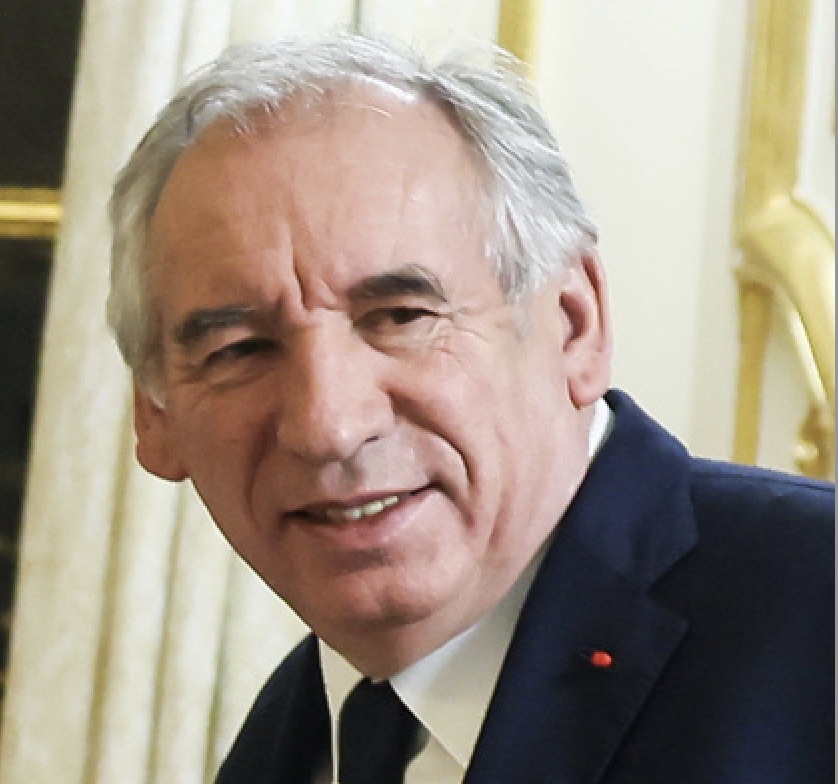
François Bayrou, France’s embattled Prime Minister, is facing an escalating political crisis amid claims he sought to intervene with prosecutors during an investigation into a decades-long child abuse scandal at a Catholic boarding school in his home region.
The accusations, centring on Bayrou’s alleged attempts to shield senior figures at the Notre-Dame de Bétharram school in the Pyrénées-Atlantiques, have ignited a firestorm in Paris and drawn comparisons to some of the gravest institutional cover-ups in French history.
At the heart of the storm is a claim by a retired gendarme who took part in investigations during the 1990s. He alleges that Bayrou, then a rising political star and former Education Minister, personally contacted the chief prosecutor overseeing an inquiry into the school’s former director, accused of sexual assault.
Adding weight to these allegations, Christian Mirande, a retired magistrate who was involved in the case, has testified that Bayrou met with him in the course of the investigation. While Bayrou denies that he exerted any pressure, critics suggest the Prime Minister’s actions represent, at best, a gross lapse of judgement and, at worst, an unlawful attempt to subvert the course of justice.
For Bayrou — a man who built his political reputation on a promise of moral probity and centrist decency — the accusations are devastating. In a febrile political atmosphere already marked by mistrust of elites, they threaten to upend President Emmanuel Macron’s fragile parliamentary majority and have left Bayrou clinging to office.
The scandal erupted earlier this year when a collective of more than 200 former pupils came forward with harrowing accounts of sexual and physical abuse at Notre-Dame de Bétharram, dating from the 1950s through to the early 2000s. The shock was compounded when Bayrou’s own daughter, Hélène Perlant, revealed in a searing memoir Le Silence de Bétharram that she, too, had been assaulted by a priest at the school in 1986.
Her revelation shattered any illusion that Bayrou could distance himself from the affair. It also reignited long-dormant suspicions that local political figures had conspired to suppress earlier investigations to protect the institution’s reputation — and, by extension, their own.
In particular, the suggestion that Bayrou intervened with prosecutors at a critical moment has led opposition figures to accuse him of a cover-up.
“François Bayrou has serious questions to answer,” said Marine Tondelier, leader of the Green party. “Was his priority the wellbeing of children, or was it the protection of an establishment dear to his political network?”
The centre-right Republicans have called for Bayrou to resign immediately, while the far-right National Rally is demanding a formal parliamentary inquiry, with the possibility of criminal proceedings if wrongdoing is proven.
A parliamentary commission has already summoned Bayrou to testify under oath on May 14th, a grilling that could determine not only his political survival but also the stability of the Macron government.
Bayrou has insisted that he never sought to interfere improperly with any judicial process. In a statement issued through his office, he acknowledged meeting judicial figures during his time as Education Minister but described these meetings as “natural and appropriate exchanges” rather than attempts at manipulation.
“Any claim that I tried to obstruct justice is categorically false,” Bayrou said. “I have always placed the protection of children above all other considerations.”
Yet his efforts to stem the tide of outrage have so far proved unsuccessful. Even within his own centrist party, MoDem, private doubts are said to be growing about whether Bayrou can continue to serve as Prime Minister amid such damaging allegations.
Adding to the mounting pressure, victims’ groups argue that the government’s response has been woefully inadequate. While Bayrou pledged in February to support a full investigation and to explore compensation for victims — particularly those whose claims fall outside the statute of limitations — many survivors view his efforts as too little, too late.
“It is difficult to believe in the sincerity of a man who, when he had the opportunity to act, apparently chose to protect the establishment rather than the victims,” said Michel Laborde, a spokesman for the victims’ collective.
Beyond Bayrou himself, the scandal has reignited national debates over the complicity of powerful institutions — both religious and secular — in perpetuating abuse and silencing victims.
The Catholic Church in France has been battered by a series of recent scandals, with a 2021 independent report estimating that more than 330,000 minors had been abused by clergy or Catholic institutions since 1950. The revelations from Bétharram are being seen as yet another grievous wound to an institution already struggling to retain public trust.
Meanwhile, the allegations of political interference risk dealing a further blow to the credibility of French governance, already shaken by repeated scandals and a pervasive sense of democratic malaise.
As Bayrou prepares for what may be the defining testimony of his career, the question hanging over Paris is no longer whether he will survive — but whether the political order he represents can withstand another shattering blow.
It is important to acknowledge that there have been no suggestions whatsoever that Bayrou himself has ever acted incorrectly with any young person – ed.
_______________________________________________________________________________________________________________

Read Also: François Bayrou Faces Political Survival Battle Amid Historic Catholic School Abuse Scandal
François Bayrou, France’s Prime Minister and longtime centrist heavyweight, is battling for his political life this week after a shocking abuse scandal linked to his home region has thrown his government into chaos.
_______________________________________________________________________________________________________________

