
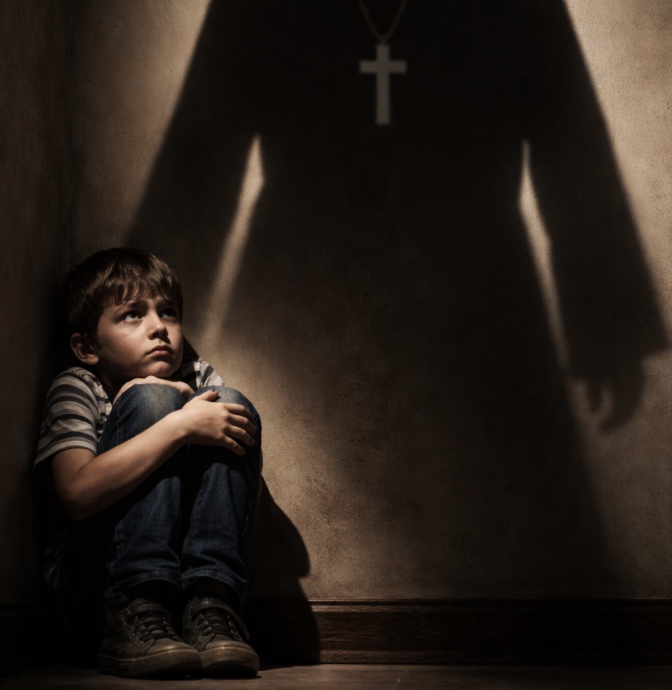
The announcement that Portugal’s Catholic Church will pay €1.6 million to victims of clerical sexual abuse is being presented, predictably, as a gesture of contrition. It is nothing of the sort. It is, instead, a belated, minimalist accounting exercise—one that raises more troubling questions than it answers.
According to a Reuters report, 57 victims will receive compensation, with individual payments ranging from €9,000 to €45,000. That figure, on its own, might sound substantial—until one recalls the scale of the abuse. A Church-commissioned inquiry found that at least 4,815 children and vulnerable adults were abused by clergy in Portugal over the past 70 years.
Set against that grim total, the number of compensated victims is not just small—it is grotesquely inadequate.
The Church points out that only 95 people applied for compensation, with just 67 deemed eligible. But this bureaucratic framing obscures a deeper truth: many survivors of abuse never come forward. Shame, trauma, fear of disbelief, and—in the case of the Catholic Church—a long and well-documented culture of silence have kept victims quiet for decades. This is not speculation; it is the central finding of inquiries across Europe and beyond.
Indeed, the Portuguese case is not an aberration but part of a global pattern. Investigations in countries ranging from Ireland to the United States have repeatedly exposed systemic abuse, compounded by institutional cover-ups. Reports have detailed how abusive priests were quietly reassigned, complaints were buried, and victims were ignored or actively discredited.
That context matters. Because without it, the current compensation scheme risks being mistaken for accountability rather than what it more closely resembles: damage control.
The Church itself admits that financial compensation “does not erase what happened.” This is, of course, true. But the more uncomfortable question is whether the Church has done anything approaching proportional justice. A payout of €1.6 million divided among a handful of victims—out of thousands—is not restitution. It is a symbolic gesture, and a modest one at that.
Worse still is the implicit suggestion that this closes a chapter. It does not. If anything, it underlines how incomplete the reckoning remains. The 2023 inquiry suggested that the thousands of documented cases may represent only “the tip of the iceberg,” a familiar phrase in abuse investigations that should alarm rather than reassure.
And yet, time and again, the institutional response follows a predictable script: acknowledge wrongdoing, apologise, offer limited compensation, and move on.
We have seen this before. In Ireland, decades of abuse in Church-run schools and orphanages were eventually exposed, leading to state inquiries that catalogued widespread cruelty and neglect. In the United States, the Boston scandal—brought to light in 2002—revealed not just individual crimes but systemic concealment, with senior Church officials shielding abusers from scrutiny. France, Germany, Australia: each country has, in its own way, uncovered variations of the same story.
The pattern is depressingly consistent. Abuse occurs over decades. Victims are silenced. Institutions protect themselves. Only when external pressure becomes overwhelming does the truth emerge—piecemeal, reluctant, incomplete.
Portugal now joins that list, albeit belatedly.
What is particularly striking in this case is how recent the revelations are. The independent commission that exposed the scale of abuse was only established in 2021, and its findings were published in 2023. This was not ancient history suddenly rediscovered; it was a long-known reality finally acknowledged.
Even then, the process appears constrained. Victims had to apply within a limited window. Claims were filtered through eligibility criteria. Some were dismissed for failing to meet procedural requirements.
This is not how justice is usually imagined. It resembles, instead, an administrative exercise—one in which the institution accused of wrongdoing retains significant control over the terms of redress.
Defenders of the Church may argue that compensation is only one element of a broader response. They may point to apologies, safeguarding reforms, or new reporting mechanisms. These are not meaningless steps. But they are also, by now, expected. After decades of scandal, the bar for institutional accountability is no longer set by expressions of regret.
It is set by transparency, independence, and proportionality.
On those measures, the Portuguese settlement falls short.
Consider the disparity between harm and response. Thousands of victims, many abused as children, often over prolonged periods. Lives shaped—or derailed—by trauma. And in return: payments that, in many cases, amount to less than the cost of a modest car.
This is not to diminish the value of compensation for individual survivors. For some, any acknowledgment may carry weight. But the broader message matters too. And the message here is troubling: that even after decades of exposure, even after countless inquiries, the institutional instinct remains to limit liability rather than confront it fully.
There is also a moral dimension that cannot be reduced to financial terms. The Catholic Church is not merely another organisation; it claims a moral authority grounded in its teachings. When that authority is undermined—not by isolated wrongdoing but by systemic abuse and concealment—the response must be commensurately serious.
A €1.6 million settlement for a scandal affecting thousands does not meet that standard.
If anything, it reinforces a perception that the Church still struggles to grasp the scale of its own failure—or, more troublingly, that it does grasp it but remains unwilling to act accordingly.
Until that changes, announcements like this will continue to ring hollow.
_______________________________________________________________________________________________________________________
Click here for more News & Current Affairs at EU Today
Click here to check out EU TODAY’S SPORTS PAGE!
_______________________________________________________________________________________________________________________

