
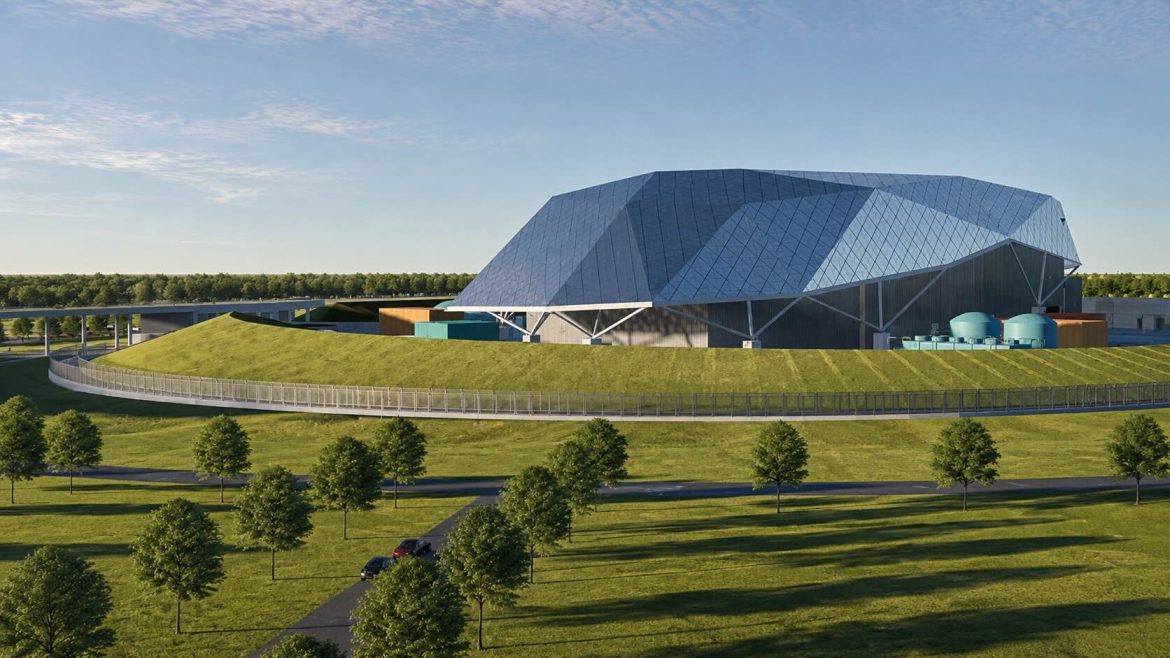
Sweden’s choice of Rolls-Royce SMR over GE Vernova for new reactors at Ringhals gives Europe’s nuclear revival a sharper industrial-policy edge, linking energy security, supply chains and state-backed technology competition.
Sweden’s decision to select Rolls-Royce SMR for a new nuclear power project at Ringhals has turned the country’s nuclear revival into a wider test of Europe’s industrial capacity, energy-security planning and ability to compete with American reactor technology.
The Swedish state-owned utility Vattenfall has chosen the British company to supply three small modular reactors for the project, selecting Rolls-Royce SMR over GE Vernova Hitachi. The planned reactors would be built on Sweden’s west coast, near the existing Ringhals nuclear plant, and are expected to provide about 1.5 gigawatts of capacity.
The decision is significant not only for Sweden’s electricity system, but also for Europe’s attempt to rebuild a nuclear supply chain after years in which new reactor construction remained politically contested, expensive and slow. For Rolls-Royce SMR, the Swedish selection follows previous progress in the United Kingdom and the Czech Republic, strengthening its position as one of the leading European contenders in the emerging small modular reactor market.
According to current project details, the first unit is targeted for operation in the mid-2030s. The project, known as Videberg, would be Sweden’s first new nuclear power development in more than four decades. It is intended to support Sweden’s long-term electricity demand at a time when electrification, industrial decarbonisation and grid stability are moving higher on the political agenda.
The choice also has an industrial-policy dimension. Vattenfall had previously shortlisted two competing options: Rolls-Royce SMR’s larger 470 MW unit and GE Vernova Hitachi’s BWRX-300 reactor. The British design was selected after an evaluation of technology, delivery and project structure. That outcome gives a European supplier a major advantage in a market where American, French, British, Korean and other reactor vendors are seeking early reference projects.
Small modular reactors are being promoted as a way to reduce construction risk through factory-built components, standardised designs and shorter build times. However, the sector remains commercially unproven at scale in Western markets. Cost, licensing, supply-chain readiness and financing remain unresolved issues. Sweden’s decision is therefore not only a procurement choice, but an early test of whether SMRs can move from industrial promise to deployable infrastructure.
For Sweden, the project reflects a broader change in energy policy. The country has previously closed reactors, but its current government has argued that new nuclear capacity is needed to maintain reliable power supplies and support the transition away from fossil fuels. The Ringhals site is strategically important because it already hosts nuclear infrastructure and grid connections, reducing some of the uncertainty associated with new-build projects.
The state will also be central to the financial structure. Swedish authorities have approved support mechanisms for new nuclear power, including loans and price guarantees. Vattenfall’s project company, Videberg Kraft, is expected to require state participation, reflecting the scale and risk of the investment. This means the project will remain politically exposed, especially if future elections alter the balance between pro-nuclear and more cautious parties.
For Britain, the selection is a commercial and diplomatic gain. Rolls-Royce SMR has been promoted as a key part of the UK’s nuclear-industrial strategy, with potential export value if it can secure repeat orders across Europe. A Swedish project would give the company a second major European market beyond the UK and Czech programmes, helping to build supplier confidence and reduce the risk that each project becomes a one-off national experiment.
For the EU and wider European energy debate, the case also raises questions about strategic autonomy. Europe’s electricity demand is expected to increase as transport, heating and industry become more electrified. Wind and solar will remain central to that transition, but governments are increasingly looking again at nuclear power as a source of low-carbon baseload generation. The Swedish decision shows that the contest is not only between energy sources, but also between industrial ecosystems.
The selection of Rolls-Royce SMR does not settle the larger debate over whether small reactors can be delivered more cheaply and reliably than conventional nuclear plants. It does, however, give the technology another political and commercial opening. If the Ringhals project proceeds as planned, Sweden could become an important reference case for European SMR deployment.
Sweden’s decision does not remove the main obstacles facing Europe’s nuclear sector. Licensing, financing, construction capacity and supply-chain delivery remain difficult tests, and none will be settled quickly. But the Ringhals choice gives the debate a more practical form. Nuclear policy is no longer only about whether governments support new reactors; it is increasingly about which technologies can be licensed, funded and built, and which industrial base will supply them.

