
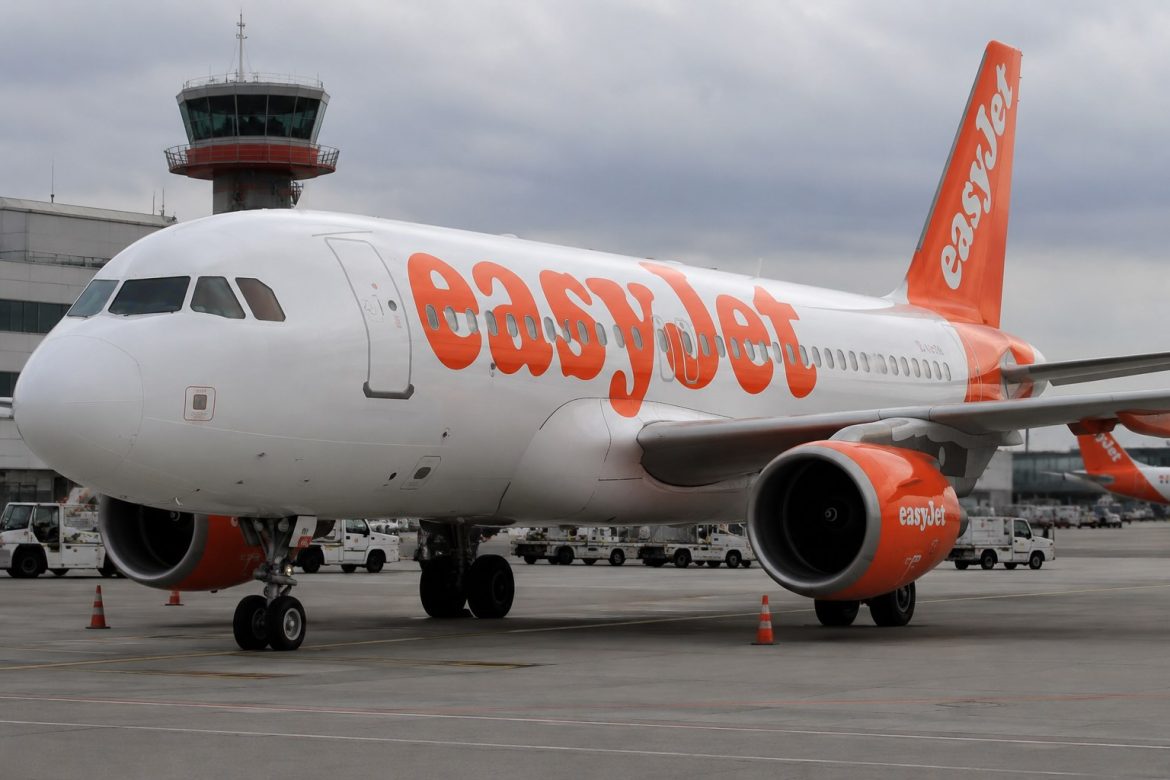
EasyJet has described possible takeover interest from US investment firm Castlelake as “highly opportunistic”, after the airline’s share price came under pressure from higher fuel costs, weaker consumer confidence and renewed instability in the Middle East.
The British low-cost carrier said on Monday that it had not received any formal approach or proposal from Castlelake, but would consider any offer if one were made. According to Reuters, EasyJet’s shares rose by around 10 per cent after Castlelake confirmed it was in the early stages of considering a possible bid.
The timing is central to the airline’s response. EasyJet argued that recent pressure on its valuation had been driven partly by the Iran war, which has affected customer confidence, fuel prices and summer booking expectations. In that context, the company presented Castlelake’s interest not as a neutral market development, but as a move made while the airline’s share price was depressed.
Castlelake, a US-based investment firm with aviation-sector experience, has disclosed a 2.14 per cent stake in EasyJet. That places it among the airline’s larger shareholders, though not in a controlling position. Under UK takeover rules, Castlelake has until 26 June to make a firm offer or state that it does not intend to bid.
The possible approach comes at a sensitive moment for European aviation. Airlines have recovered unevenly from the pandemic, with low-cost carriers benefiting from strong leisure demand but still facing volatile fuel prices, aircraft delivery delays, labour costs and geopolitical disruption. The latest escalation in the Middle East has added another pressure point by feeding uncertainty in energy markets and consumer travel behaviour.
The wider market context is relevant. Reuters reported that European shares slipped on Monday as renewed Middle East tensions clouded hopes of de-escalation. Airlines are particularly exposed to such shocks because jet fuel is one of their largest operating costs and because discretionary travel can weaken quickly when households become more cautious.
EasyJet’s position is also complicated by regulation. A full takeover by a US investor would face significant ownership and control questions. European aviation rules require EU-licensed airlines to be majority-owned and effectively controlled by EU nationals. EasyJet has a post-Brexit corporate structure designed to preserve its ability to operate inside the European market, including EasyJet Europe, based in Austria.
That makes any potential bid more complex than a conventional corporate acquisition. Even if Castlelake were to table an offer acceptable to shareholders, a buyer would have to satisfy aviation regulators that EasyJet’s operating rights inside the EU would not be put at risk. Similar questions would arise in relation to UK regulatory requirements and the airline’s broader route network.
The issue therefore goes beyond EasyJet’s share price. It highlights how European airlines can become targets when their valuations fall, while their legal structures remain tightly linked to sovereignty, market access and traffic rights. Aviation is a commercial sector, but it is also governed by national and regional rules that limit who may own and control carriers operating within specific markets.
The Guardian reported that Castlelake’s possible offer would value EasyJet at about £3 billion, with the US firm stating that any offer would have to be made at a minimum price of 403p per share. EasyJet’s shares rose sharply after the disclosure, though the company’s board sought to emphasise that no talks had taken place.
EasyJet has been the subject of takeover speculation before. Its network, slots and brand make it one of Europe’s best-known low-cost carriers, while its package-holiday business has become an important part of its post-pandemic recovery strategy. The airline has also been working to improve winter profitability, when European leisure demand is traditionally weaker.
At the same time, EasyJet remains exposed to external shocks. The company has had to manage aircraft supply constraints, cost inflation and uncertainty over household spending. The Iran war has now added a further layer of risk through fuel prices and booking sentiment. That combination creates the conditions in which a long-term investor may see value, while the company itself argues that the market price does not reflect its underlying prospects.
For Brussels and national regulators, the case will be worth watching even if no firm bid emerges. It raises the recurring question of how Europe should treat foreign interest in companies that are commercially private but strategically relevant to connectivity, competition and market access.
A bid for EasyJet would not be assessed in the same way as a defence or energy acquisition. However, aviation has direct public-policy relevance. Airlines connect labour markets, tourism economies, regional airports and business travel. They are also central to competition in Europe’s internal market, particularly where low-cost carriers have placed pressure on legacy airlines.
For investors, the immediate question is whether Castlelake moves beyond preliminary interest. For policymakers, the broader issue is whether Europe’s aviation market is entering a period in which weakened valuations, geopolitical instability and foreign capital combine to reshape ownership in one of the continent’s most visible sectors.
EasyJet has told shareholders to take no action. That may prove to be the end of the matter. But the episode has already shown how quickly pressure can build on a European airline when geopolitical risk, fuel costs and market weakness converge.

