
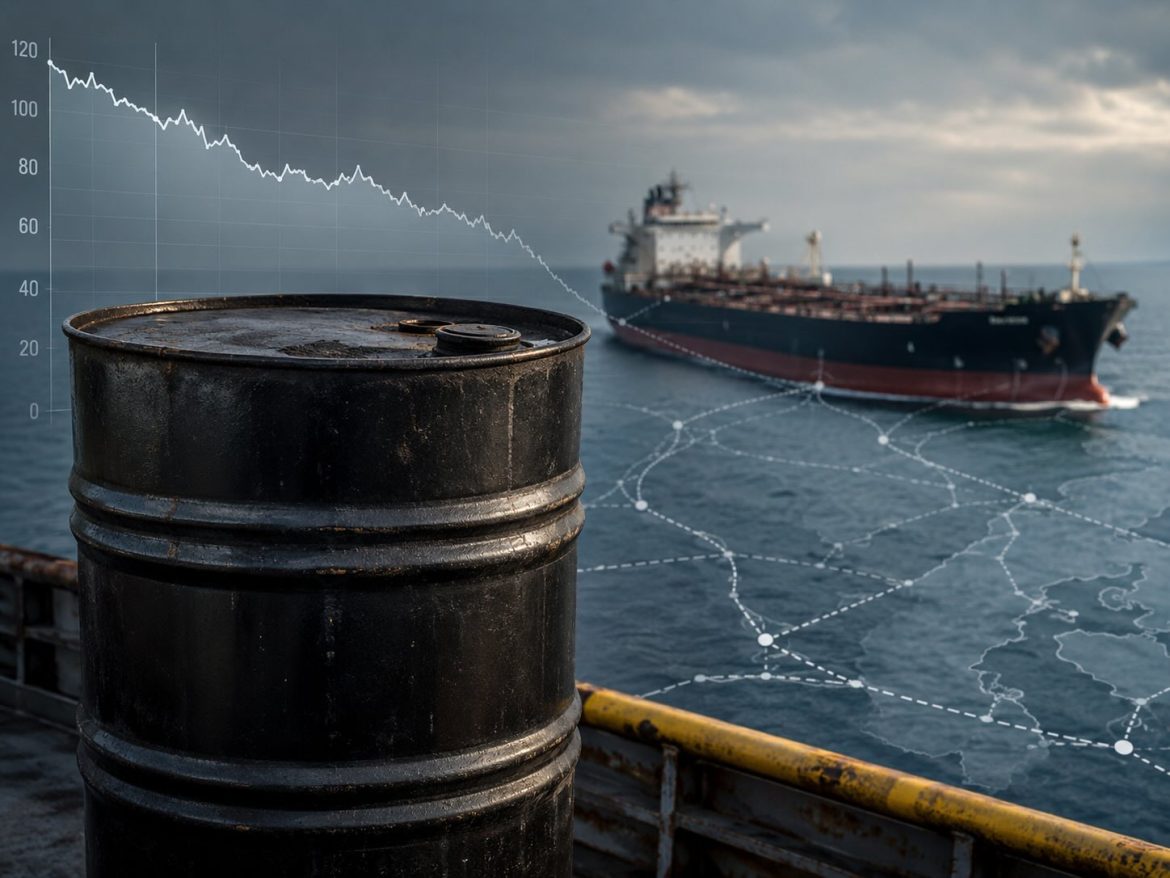
The European Union is considering whether to keep the price cap on Russian crude oil unchanged as part of its forthcoming 21st sanctions package, in an effort to prevent Moscow from benefiting from higher global energy prices.
The European Commission is examining a proposal to maintain the cap at $44.10 per barrel during the next review in July. The issue has become more urgent after the closure of the Strait of Hormuz contributed to a sharp rise in oil prices, raising concern in Brussels that Russia could receive additional export revenue despite existing sanctions.
The current cap was set under a dynamic mechanism introduced by the EU to keep pressure on Russian oil earnings. In January, the European Commission announced that the ceiling would fall to $44.10 per barrel, effective from 1 February. The mechanism was designed to adjust the cap in line with market conditions, keeping it below the average price of Russian crude over a reference period.
That formula is now under scrutiny. A rise in the benchmark price could push the next cap significantly higher, weakening the intended effect of the sanctions regime. Reuters reported that the Commission may propose keeping the current ceiling in place rather than allowing an automatic increase. It also noted that a permanent ceiling of $60 per barrel could be considered for future reviews.
The oil price cap is one of the EU’s main tools for limiting Russia’s energy revenue while avoiding a complete disruption of crude supplies to international markets. It restricts access to Western shipping, insurance and related maritime services for Russian oil sold above the agreed level. Non-EU buyers may continue purchasing Russian crude, but only within the limits of the cap if they rely on such services.
The 21st sanctions package is expected to form part of a wider attempt to tighten enforcement and close remaining gaps in the restrictions imposed since Russia’s full-scale invasion of Ukraine. EU foreign policy chief Kaja Kallas has said that the next package will target Russia’s military-industrial complex, while member states may also propose further measures against the so-called shadow fleet. Her comments were made after a Foreign Affairs Council meeting and published by the European External Action Service.
The shadow fleet has become a particular focus of EU and G7 enforcement efforts. It refers to vessels used to move Russian oil outside normal regulatory and insurance structures, often through opaque ownership, frequent flag changes and ship-to-ship transfers. The fleet has allowed Moscow to continue exporting large volumes of crude despite sanctions.
Risk in European Waters: The Shadow Fleet, Sanctions Evasion and Safety Gaps
In April, the Council of the EU adopted the 20th sanctions package, which included measures against energy revenues, military-industrial suppliers, trade circumvention and financial services. The European Commission said that package added 46 vessels to the EU’s shadow-fleet listings, bringing the total to 632 vessels subject to port access restrictions and bans on receiving services.
Recent events have underlined the maritime dimension of the sanctions campaign. France intercepted the Russia-linked tanker Tagor in the Atlantic on 1 June. The vessel was suspected of belonging to Russia’s shadow fleet. French President Emmanuel Macron said the operation formed part of efforts to enforce sanctions against ships used to sustain Russian oil exports.
The debate over the oil price cap is therefore not only a technical question of market adjustment. It is also a test of whether the EU can adapt its sanctions regime to changing geopolitical conditions. If the cap rises sharply because of external energy-market disruption, Russia could obtain additional revenue without any change in EU policy. If the cap is frozen or otherwise limited, Brussels would preserve the pressure mechanism but may need to manage differing positions among member states and international partners.
Any new sanctions package will require unanimity among EU member states. Energy-related measures have often required difficult negotiations, particularly where shipping, insurance, maritime services or oil-market stability are involved. The Commission’s current approach appears to be aimed at maintaining pressure on Russia while avoiding a wider supply shock.
The July review gives the issue a clear deadline. Unless the EU modifies or suspends the automatic mechanism, the cap could rise in line with higher market prices. For that reason, the price cap is likely to become one of the central points in negotiations over the 21st sanctions package.
The broader direction of EU policy remains consistent: reduce Russia’s ability to finance its war against Ukraine, increase pressure on military-industrial supply chains, and make circumvention through shadow-fleet networks more difficult. The immediate question is whether member states can agree quickly enough on a revised approach to the oil cap before the next scheduled adjustment.

