
The European Commission has approved new French and Irish State aid schemes to help farmers, fishing operators and aquaculture businesses absorb higher fuel costs linked to the Middle East crisis, showing how geopolitical instability is moving into EU subsidy policy.
The larger measure is a €212 million French scheme for agricultural and aquaculture companies affected by the rise in non-road diesel prices. A separate €15 million Irish scheme will support fishing and aquaculture businesses facing additional fuel costs.
The approvals are not routine agricultural support measures. They were cleared under the EU’s Middle East Crisis Temporary State Aid Framework, a special regime designed to allow limited, targeted assistance to sectors directly affected by the economic consequences of the conflict. The use of that framework shows that the crisis is no longer only a matter of diplomacy, shipping risk or energy markets. It is now affecting the operating costs of European primary producers.
In France, the scheme is intended to cover part of the increase in non-road diesel fuel, known as gazole non routier, used by agricultural and aquaculture companies. The Commission said the price of this fuel rose by 74 per cent between February and May 2026, creating an average additional cost of €0.41 compared with the 2025 average. Companies will be able to receive €0.15 per litre for fuel bought between 1 May and 31 August 2026, with the scheme running until 31 December.
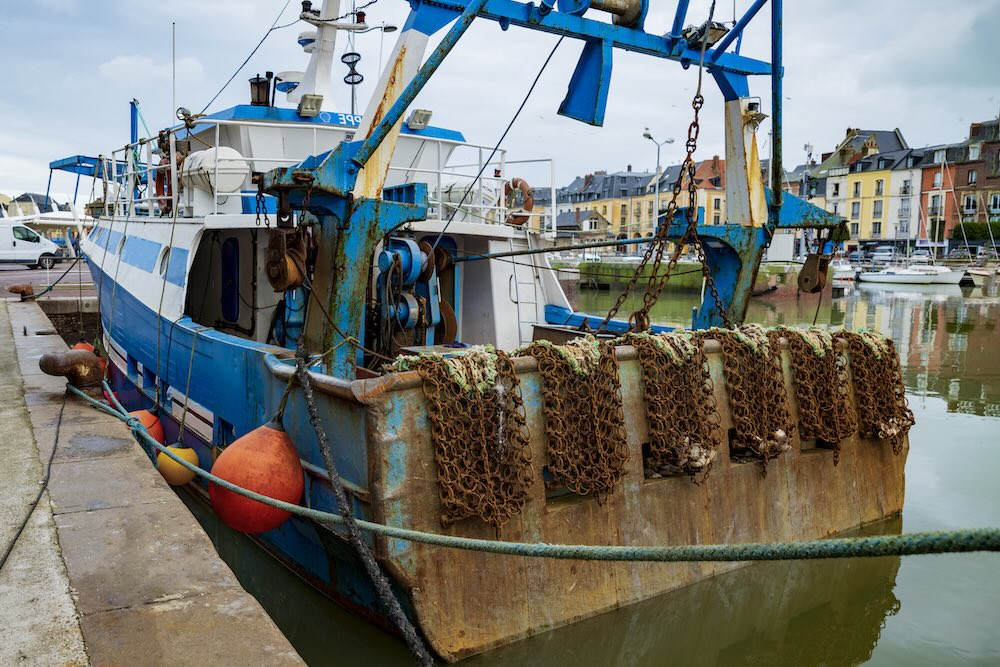
The Irish measure is smaller but follows the same logic. It will provide direct grants to fishing and aquaculture operators to cover additional fuel costs incurred over a five-month period from March to July 2026. Vessel owners will receive support either as a lump sum for smaller boats or through fuel-cost compensation subject to a per-litre cap.
The significance lies in the transmission of the shock. A conflict outside Europe is raising fuel costs for European producers, which then creates pressure on national governments to intervene, which in turn requires clearance from Brussels under State aid rules. What begins as an external security crisis becomes a domestic budget and competition-policy issue.
This is not the first time the EU has relaxed State aid discipline in response to a crisis. The Covid-19 pandemic and Russia’s full-scale invasion of Ukraine both led to temporary frameworks allowing governments to support companies facing exceptional disruption. The Middle East framework follows that pattern, but it also raises familiar questions about how often temporary State aid instruments become necessary as geopolitical shocks multiply.
For France and Ireland, the immediate issue is sectoral survival and price stability. Agriculture, fisheries and aquaculture are fuel-intensive sectors with limited ability to absorb sudden cost increases. When fuel prices rise quickly, margins can be squeezed before producers have time to adjust prices, contracts or production schedules. Smaller operators are particularly exposed.
The political sensitivity is also clear. Farmers and fishers have already been central to protests and policy disputes across the EU, including over environmental rules, costs, imports and competition from non-EU producers. Fuel-price pressure adds another grievance in sectors where governments are already cautious about provoking further unrest.
For Brussels, the challenge is to permit emergency support without weakening the single market. State aid rules are designed to prevent wealthier member states from giving their companies an unfair advantage. Crisis frameworks allow flexibility, but only if the aid is limited, proportionate and linked to a clearly defined shock. The Commission said both schemes met those conditions and would not affect trading conditions in a way contrary to the common interest.
There is also an energy-policy contradiction. The EU wants to reduce dependence on fossil fuels, but the immediate State aid response is designed to offset the cost of diesel. The Commission has sought to square this by presenting the support as temporary and targeted. Yet the approvals show that many parts of Europe’s food and maritime economy remain dependent on conventional fuel and vulnerable to external price shocks.
That dependence has wider implications for inflation. Higher fuel costs do not remain confined to farms and fishing vessels. They can feed into food prices, transport costs and regional economic pressure. The Commission’s spring economic analysis had already warned that the Middle East crisis was affecting energy assumptions, with potential spillovers into inflation and consumer spending.
The State aid decisions also show the uneven impact of external crises across the EU. Countries with large agricultural, fishing or aquaculture sectors may face more immediate pressure to support producers. Others may experience the same shock through consumer prices, industrial costs or transport. This creates a policy problem for Brussels: the crisis is shared, but the fiscal response remains national.
The French and Irish measures are therefore small in comparison with the wider EU economy, but they point to a larger trend. Europe is being forced to manage the domestic consequences of external security shocks through subsidy policy, energy policy and competition law at the same time.
The approvals will not solve the underlying problem of fuel exposure. They are designed to cushion specific sectors for a limited period. But they show how quickly geopolitical risk can become a line item in national budgets and an issue for EU competition authorities.
For the Commission, the decision is a balancing act. It must allow governments to protect exposed producers without turning crisis response into permanent subsidy competition. For farmers, fishers and aquaculture businesses, the question is more immediate: whether temporary support will be enough if fuel prices remain elevated beyond the summer.

