
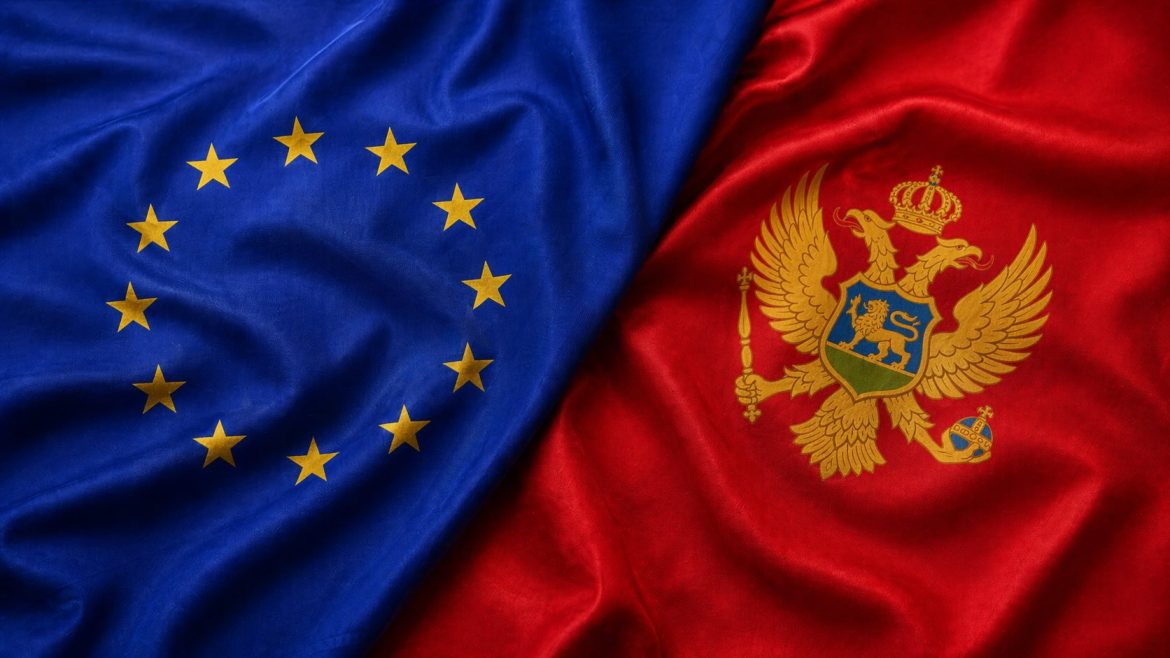
Montenegro has moved into a new stage of its EU bid after the bloc agreed to begin work on its accession treaty, signalling renewed momentum in enlargement policy after more than a decade without a new member.
The European Union has taken what may prove to be its most concrete enlargement step in more than a decade, with member states agreeing to begin work on Montenegro’s accession treaty. The move marks the first time since Croatia’s entry into the bloc in 2013 that the EU has formally started preparing the legal text for the admission of a new member state.
European Commissioner for Enlargement Marta Kos welcomed the decision, describing it as a significant moment both for Montenegro and for the wider enlargement agenda. In a public message, she congratulated Prime Minister Milojko Spajić and said Montenegro’s future inside the European Union was now taking more tangible shape. She presented the creation of a working structure to draft the accession treaty as recognition of Podgorica’s progress and as a signal that reform efforts should continue.
The decision follows the approval by EU ambassadors of an ad hoc working party tasked with drafting the accession treaty with Montenegro. Council documentation published this month showed that the establishment and mandate of such a body had been under discussion within the EU institutions, indicating that the political decision had been prepared in advance and was part of a broader attempt to inject momentum into enlargement policy.
Although the start of treaty drafting does not in itself guarantee swift entry, it is an important procedural milestone. An accession treaty is the final legal instrument that sets out the terms under which a candidate country joins the Union. Its preparation suggests that Brussels now sees Montenegro not merely as a long-term aspirant, but as a candidate whose membership has entered a more practical phase. EU officials view the step as a sign that enlargement, long delayed by internal disagreements and reform concerns, is once again moving into operational territory.
EU–Montenegro accession talks: five chapters provisionally closed
Montenegro has for some time been regarded, alongside Albania, as one of the most advanced candidates in the current enlargement round. Of the countries seeking EU membership in the Western Balkans, Montenegro is widely seen in Brussels as the frontrunner. According to the Council of the EU, the latest accession conference with Montenegro on 17 March 2026 provisionally closed another negotiating chapter, bringing the country further forward in a process that has already stretched over more than a decade.
There has, however, been some confusion in public reporting over the exact structure of Montenegro’s negotiations. Recent reporting indicates that Montenegro has provisionally closed 14 negotiating chapters out of 33, rather than “35 clusters”. The substance remains the same: the country has made more measurable progress than any other candidate currently in negotiations, even if considerable work remains in areas such as rule of law, governance and alignment with EU standards.
For Brussels, the move is also political. Enlargement had for years appeared to be trapped between rhetorical support and institutional hesitation. The return of geopolitical competition, Russia’s war against Ukraine, and renewed concern over stability in the Western Balkans have altered that calculation. In a speech earlier this year, European Council President António Costa said 2026 could see Montenegro complete its accession negotiations and expressed the hope that drafting of the treaty would begin during the current Council Presidency. That expectation has now begun to materialise.
Montenegro itself has set 2028 as its target date for EU membership. Kos has indicated that accession by then is possible, though much will depend on the pace and credibility of reforms, as well as on the political will of existing member states. The treaty-drafting phase does not remove the need for unanimity at crucial stages, nor does it settle questions over implementation capacity, institutional preparedness, or the EU’s own ability to absorb new members.
Still, the symbolism is difficult to ignore. Since Croatia became the EU’s newest member in July 2013, enlargement has remained one of the Union’s stated priorities but has produced no new accessions. The decision to begin work on Montenegro’s treaty is therefore more than a technical step. It is a signal that, after years of drift, the enlargement process may again be entering a stage where membership is treated as a concrete legal and political project rather than a distant promise.

