
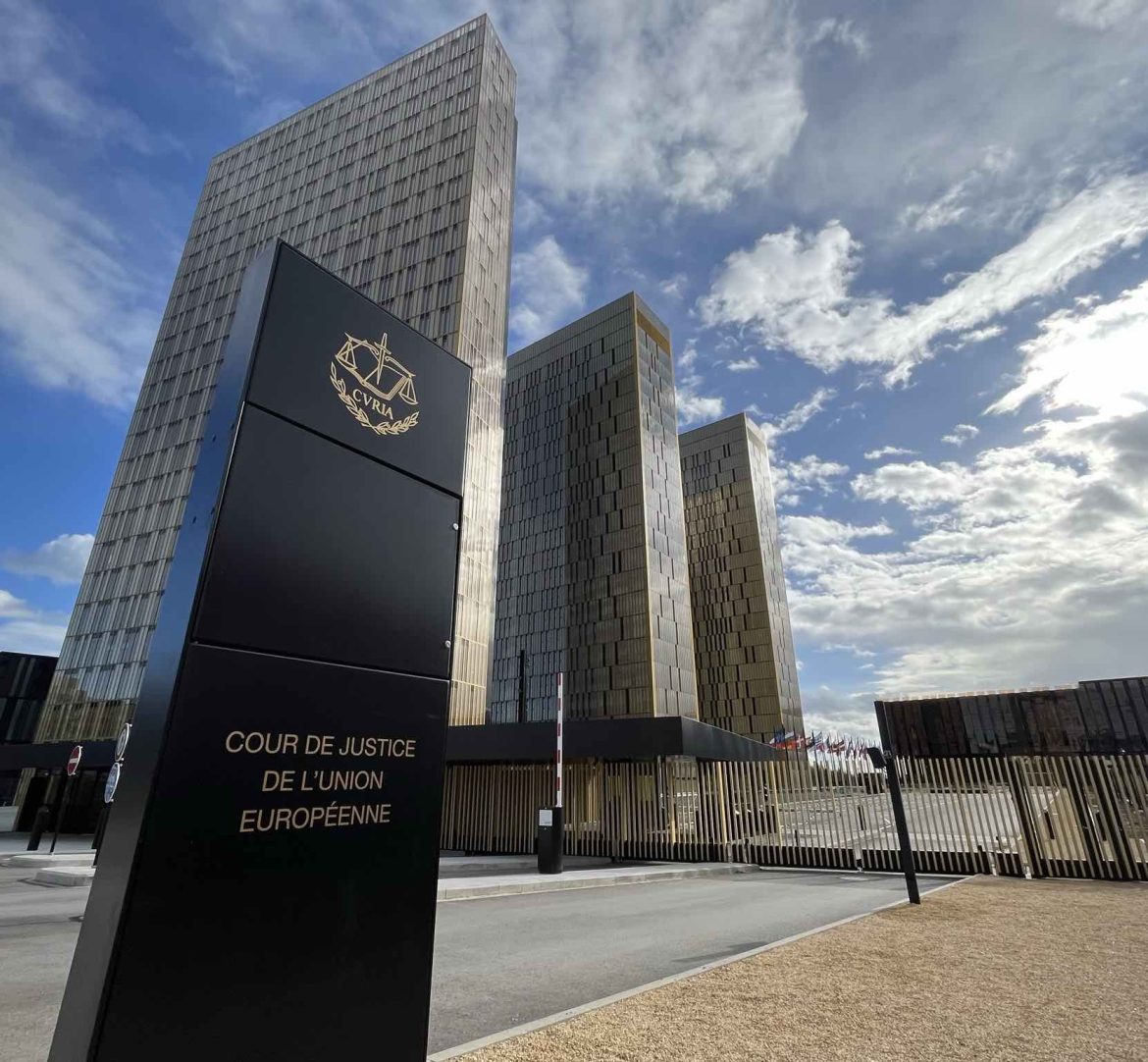
The European Union likes to present itself as a defender of the rule of law, insisting that its institutions are governed by legal principles rather than political power. However, in the field of sanctions litigation, that promise is increasingly coming under strain, writes lawyer Valérie Hanoun of the Paris Bar in Le Journal du Dimanche.
Hanoun makes clear she is not against sanctions themselves. The EU is right, she writes, to target those genuinely backing Russia’s war in Ukraine, and she regards sanctions as an effective tool. Her concern is with how the courts review them — and her argument is blunt: under the current system, a sanctioned person can win in court repeatedly and stay sanctioned throughout.
A paradox built on delays
Much of the problem comes down to timing. Cases before the General Court of the EU usually take 18 to 24 months, while sanctions are reviewed and renewed every six months. By the time a judge annuls a measure, the contested act has often already expired and been replaced by a new text resting on slightly reworded reasoning that produces the same effects.
Because each new sanctions act counts, formally, as a separate legal measure, the Council of the EU can effectively move the legal target before the court ever delivers a remedy. The judge examines yesterday’s sanctions while today’s keep applying.
Hanoun cites the case of Dmitry Pumpyansky, former co-owner of the Russian group TMK, who stepped down and sold his holdings in March 2022. In June 2024 the General Court annulled sanctions imposed on him between September 2022 and September 2023, but his re-listing in March 2024 fell outside that case, so he stayed sanctioned on broadly similar grounds despite the win. In September 2025 the court annulled the measures again, finding the Council had not shown he could still count as an influential businessman operating in Russia. Each time an act expired, the Council adopted another. His wife, Galina Pumpyanskaya, went through the same thing.
For Hanoun, this drains Article 47 of the Charter of Fundamental Rights of meaning. The article guarantees an effective remedy, not just a favourable ruling on a measure that has already lapsed.
“A ritual rather than genuine review”
There is a second problem. Winning in court does not automatically remove someone from the sanctions list. Delisting stays at the discretion of the Council — the same body that imposed the measures and defended them. And rather than rethinking whether a listing belongs at all, Hanoun argues, the Council can simply fix the specific weaknesses a court flagged and reproduce much the same decision in a fresh act.
It is not a one-off. Maya Tokareva, daughter of the head of the Russian company Transneft, won three separate cases and remained sanctioned. Nikita Mazepin, son of the former majority shareholder of Uralchem, needed several favourable rulings before he was finally taken off the list. Past a certain point, Hanoun warns, judicial review starts to look like a ritual rather than a real check.
She levels similar criticism at the Court of Justice of the EU (CJEU), the appeals court, where she says scrutiny seems to ease in the most politically sensitive files. The Court leans on the principle of sanctions’ “effectiveness” without testing whether the measures actually pressure Russia, and has pulled back from the tougher proportionality and evidence review it set out in its earlier Kadi II ruling.
CJEU has also backed a broad reading of the listing criteria: it can be enough that someone works in a sector generating revenue for Russia, with no direct link to the authorities required. The “influential businessman” test can only be challenged by showing it “manifestly inappropriate,” a high bar.
The danger, she argues, is that an individual measure turns into a kind of liability based on belonging to an economic category rather than on proven conduct, which feeds worries about a politicisation of judicial review. Some commentators, she notes, have gone as far as calling the court a “rubber stamp.”
Procedural fixes
The remedies Hanoun proposes are procedural: fast-track sanctions challenges so rulings come within the six-month renewal cycle; require the Council to quickly review later acts based on the same grounds once a listing is annulled; and gather evidence before sanctions are adopted, not after litigation starts.
Europe’s authority, she concludes, rests not only on economic weight or diplomatic influence but on the belief that its institutions are bound by law — a belief that weakens when sanctions stay in place no matter who wins. Late justice is a problem and denied justice a danger, she writes, but justice that changes nothing may be worse, leaving Brussels to ask whether justice is being done or just staged.
___________________________________________________________________________________________________________________
Click here for more News & Current Affairs at EU Today
Click here to check out EU TODAY’S SPORTS PAGE!
___________________________________________________________________________________________________________________

