
When Prime Minister Keir Starmer declared this week that Elon Musk should stop interfering in British politics, one could almost hear a collective sigh from millions of voters across the country.
Not because they necessarily agree with everything Musk says. They don’t. Nor because Britain’s political future should be dictated by an American billionaire posting on social media. It shouldn’t.
No, the reaction stems from something far more basic. A growing number of Britons are wondering why a prime minister whose own government appears to be lurching from crisis to crisis believes the greatest threat to the nation is a man sitting thousands of miles away behind a keyboard.
Starmer’s latest intervention came after Musk commented on the highly controversial Henry Nowak case, which has sparked widespread public outrage and uncomfortable questions about policing, race and political bias in modern Britain. The prime minister accused Musk of attempting to “whip up division” and called on him to stop interfering in UK politics.
Yet perhaps the more pertinent question is this: who has done more damage to public confidence in British institutions over the past two years — Elon Musk or Keir Starmer?
For many voters, the answer is becoming increasingly obvious.
Starmer entered Downing Street promising competence, stability and seriousness after years of Conservative turmoil. Britain, we were told, would be governed by adults once again. The drama would end. The grown-ups would take charge.
Instead, what followed has been a period marked by economic stagnation, mounting political discontent and increasingly visible fractures within Labour’s own ranks. Recent reports of leadership speculation and calls for Starmer’s resignation would have been almost unthinkable only a year ago. Today they barely raise eyebrows.
Indeed, it is becoming harder to identify a major policy area where this government has genuinely exceeded expectations.
Growth remains anaemic. Public services continue to struggle. Illegal migration remains a source of public frustration. Tax burdens remain historically high. Businesses complain of uncertainty while ordinary households continue to feel squeezed.
The promise of renewal has gradually given way to managerial drift.
That is why comparisons with the final years of the Conservative government increasingly miss the point. The more relevant historical parallel may be the dying years of John Major’s premiership.
Major was not a bad man. Nor is Starmer. But both appeared to suffer from the same debilitating political condition: an inability to inspire confidence, define a clear national mission or maintain authority over events.
By the mid-1990s, Major looked like a prime minister reacting to developments rather than shaping them. Increasingly, Starmer appears trapped in the same position.
The difference is that Major inherited a deeply divided government after more than a decade in office. Starmer cannot make that excuse. His administration is still relatively young.
Perhaps that explains why so many voters now view statements such as his criticism of Musk with a degree of irritation.
The public’s concern is not Elon Musk.
The public’s concern is Britain.
They are worried about the economy. They are worried about housing. They are worried about crime. They are worried about immigration. They are worried about whether their children will enjoy the same opportunities previous generations took for granted.
Against that backdrop, hearing the prime minister lecture a foreign businessman about interfering in politics feels strangely disconnected from reality.
Musk undoubtedly enjoys provoking controversy. He has involved himself in political debates across Europe and North America. He often expresses strong opinions on matters about which he has little direct responsibility. That is fair criticism.
But the beauty of a democratic society is that people are free to agree with him, disagree with him or ignore him entirely.
What voters cannot ignore is the performance of the government itself.
That is where Starmer’s real challenge lies.
A confident and successful prime minister would scarcely notice Musk’s comments. He would dismiss them and continue governing. A prime minister delivering visible improvements in living standards, public services and national confidence would not need to spend political capital fighting social media battles.
Yet here we are.
The irony is difficult to miss. Starmer complains about interference while many of his own critics increasingly feel that his government interferes too much in areas where ordinary citizens simply want common sense, accountability and practical solutions.
Politics is ultimately a results business.
People can forgive mistakes. They can forgive broken promises. They can even forgive periods of economic hardship if they believe a government has a coherent plan.
What they struggle to forgive is a growing sense of drift.
That is why Keir Starmer’s remarks about Musk may ultimately backfire. Rather than focusing attention on an outspoken billionaire, they have reminded many voters of a far more uncomfortable question.
If Elon Musk should stop interfering in British politics, then will Keir Starmer start succeeding at it?
An increasing number of Britons probably know the answer to that question.
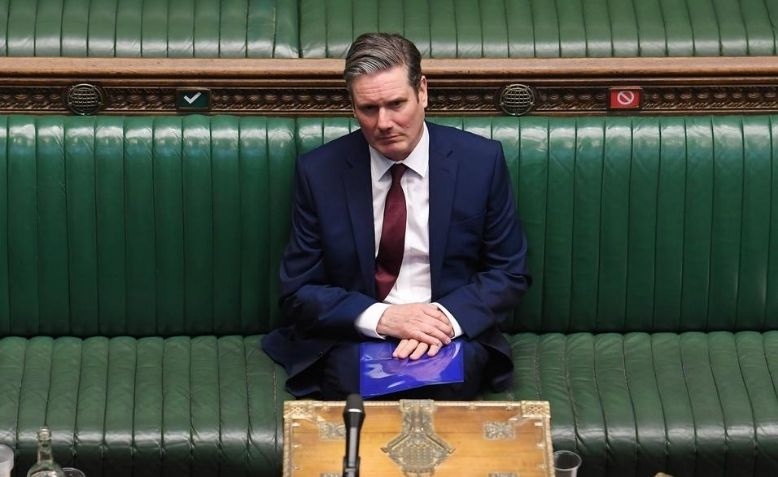
Main Image: Keir Starmer in the House of Commons chamber Photo: Flickr – Uk Parliament / Jessica Taylor / cropped from original / licensed under CC 2.0,
Click here for more News & Current Affairs at EU Today
Click here to check out EU TODAY’S SPORTS PAGE!
___________________________________________________________________________________________________________________

