
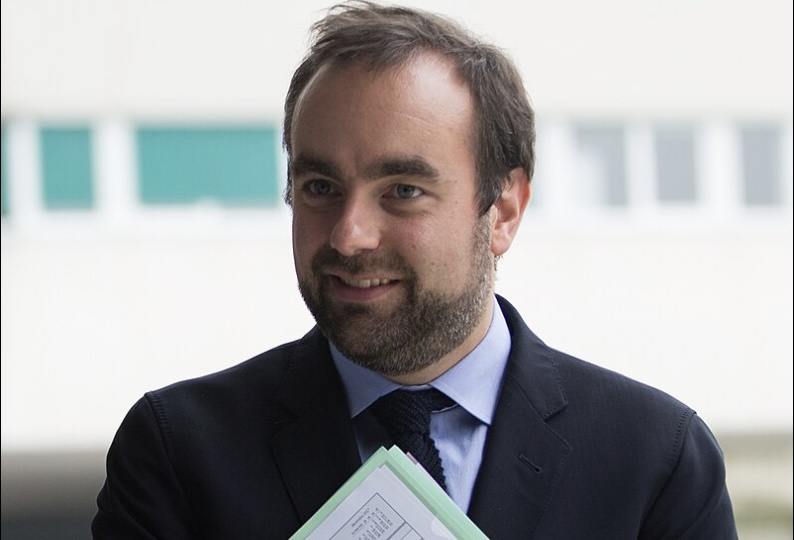
President Emmanuel Macron has appointed Defence Minister Sébastien Lecornu as prime minister, following the resignation of François Bayrou after his government lost a parliamentary vote of confidence on Tuesday, 9 September 2025.
The Élysée said Lecornu has been tasked first with consulting parliamentary groups to secure agreement on the state budget and other decisions due in the coming months, before presenting the composition of his government.
Bayrou tendered his resignation earlier on Tuesday after the National Assembly declined to grant his government confidence, triggering the latest change at Matignon in a period of heightened political fragmentation.
The Élysée’s statement sets out an unusual sequencing for the change of government. Rather than naming a full cabinet immediately, Macron has instructed Lecornu to open cross-party talks aimed at reaching the compromises required to pass the national budget. Only once those discussions conclude will the new prime minister submit a list of ministers to the president. A handover at Matignon is scheduled for Wednesday at midday.
Lecornu, 39, moves to Matignon after serving as minister of the armed forces since 2022. During his tenure he oversaw France’s most recent multi-year defence build-up and was a consistent advocate of closer European security coordination, including support arrangements for Ukraine. Before joining Macron’s centrist camp in 2017, he began his career on the right and later played a key role in the president’s 2022 re-election effort.
The appointment makes Lecornu Macron’s fifth prime minister in less than two years, underscoring the difficulties of steering legislation through a fragmented National Assembly. The government will continue to lack an outright majority, making the forthcoming budget round a critical early test of Lecornu’s ability to assemble ad-hoc coalitions and secure durable agreements with opposition parties.
According to the presidency, consultations will involve all forces represented in parliament, with a particular focus on the timetable for adopting the state budget. The instruction reflects the constraints of minority government and the immediate fiscal calendar: without a budget vote, the executive would be forced to rely on stop-gap measures and emergency procedures that risk further political strain. By prioritising cross-party talks before naming a cabinet, the Élysée appears intent on identifying workable policy ground and minimising early defeats on key texts.
Lecornu’s move from defence to the premiership continues Macron’s recent pattern of appointing close allies to Matignon while seeking external support bill-by-bill. The incoming prime minister inherits a crowded agenda beyond the budget, including industrial policy, energy pricing, and internal security, all of which have been complicated by a volatile parliamentary arithmetic since the last legislative elections. His immediate challenge will be procedural as much as political: structuring negotiations with party leaders to obtain reliable majorities on the finance bill and associated measures.
Bayrou’s departure ends a short tenure defined by fiscal consolidation plans that failed to command sufficient support in the Assembly. The no-confidence outcome reflects both ideological splits and tactical positioning among opposition parties, which have used confidence votes to exert leverage over the government’s programme. With Lecornu in place, attention now turns to whether centrist, conservative, and parts of the left can be brought into limited agreements on budgetary headings, or whether the executive will again have to resort to constitutional tools that bypass standard votes—measures that, while legal, tend to carry political costs.
A formal transfer of responsibilities is expected at Matignon at 12:00 on Wednesday, after which Lecornu is due to begin his consultations. The Élysée has not announced a timeline for unveiling the cabinet list. For now, the presidency’s emphasis is on securing the numerical and political basis for a budget vote, with the government’s composition to follow once those discussions have progressed.

