
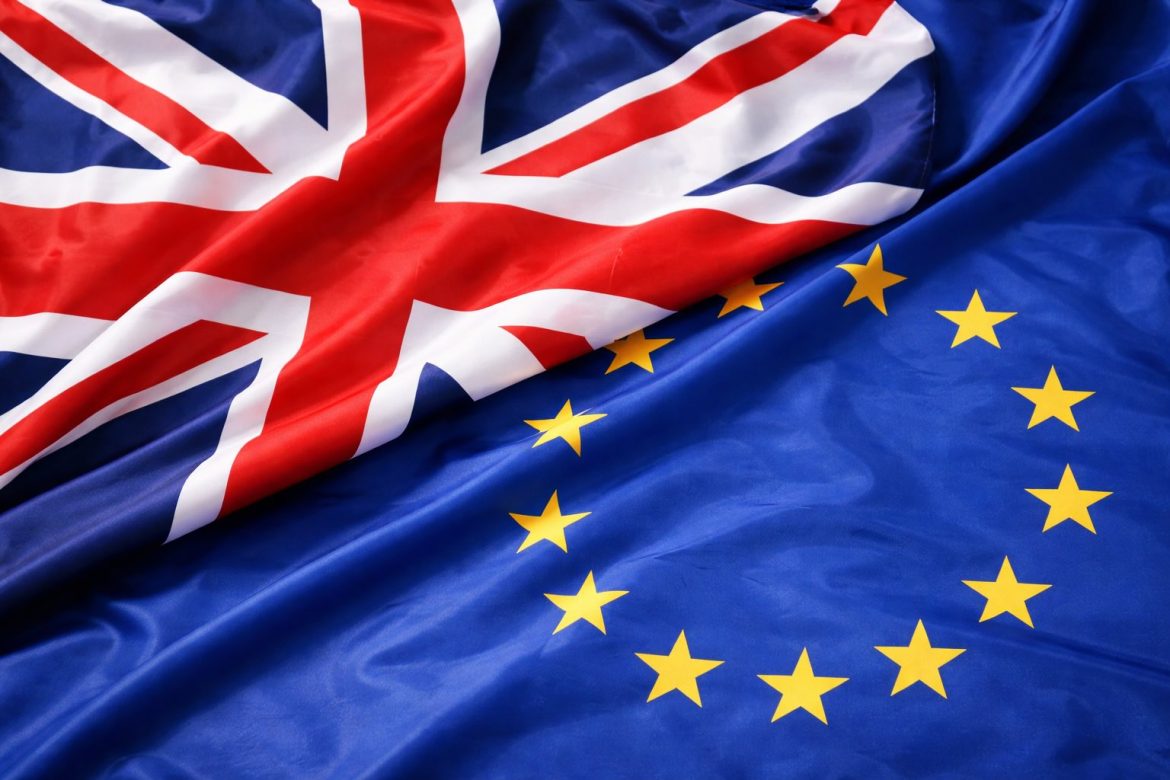
The European Union is reassessing whether to hold its planned summit with Britain on 22 July after Prime Minister Keir Starmer announced that he would resign, creating a fresh obstacle for London’s attempt to rebuild relations with Brussels.
The meeting had been intended as the next stage of the UK-EU “reset”, following months of negotiations on closer co-operation in trade, security, energy and mobility. Its timing had already been politically sensitive. The summit was announced only days ago, with the British government presenting it as evidence that post-Brexit relations were moving into a more structured phase.
That timetable is now uncertain. The European Commission has said Brussels and London are looking again at the opportunity of holding the summit as planned. The issue is not procedural alone. A summit designed to finalise or advance agreements depends on political authority in London. A departing prime minister can prepare a handover, but he cannot easily offer long-term certainty to EU counterparts.
The original 22 July date mattered because both sides had been working towards possible agreements on areas where practical co-operation is easier than a full reopening of the Brexit settlement. These include veterinary and agri-food checks, electricity trading and youth mobility. UK ministers had suggested that a triple EU reset deal could be reached by the summit, although several files remained politically difficult.
For Brussels, the resignation creates a familiar problem in dealing with Britain: continuity. Since the 2016 referendum, UK-EU relations have repeatedly been shaped by leadership changes in London, domestic party pressure and arguments over how far any government can move towards the EU without reopening Brexit divisions at home. The reset was intended to show that practical co-operation could now proceed without that instability dominating every negotiation.
Starmer had made improved relations with the EU one of the clearest foreign policy differences between his government and previous Conservative administrations. He rejected rejoining the single market or customs union, but sought closer sectoral agreements where they could reduce friction for business, improve security co-operation or ease movement for certain groups. That approach was designed to be politically limited but economically useful.
The July summit was therefore not expected to transform UK-EU relations. Its importance lay in whether it could produce a set of tangible agreements that would show the reset had moved beyond symbolism. For British exporters, farmers, energy companies, universities and financial services firms, even narrow deals can have practical value if they reduce costs or create more predictable rules.
Business pressure has been particularly visible in the financial sector. British finance groups have called for closer ties with Europe before the summit, arguing that closer regulatory and market access arrangements could benefit both sides. The City of London remains Europe’s largest financial centre, but Brexit has weakened some of its formal links with the EU market.
The wider political context is less favourable. Starmer’s departure follows mounting pressure inside Labour and a wider sense that the government had failed to convert its large 2024 majority into durable political control. His resignation has prompted questions about whether a successor would maintain the same EU policy, modify it or delay negotiations while consolidating authority at home.
Andy Burnham, who is widely seen as a leading contender to succeed Starmer, has previously taken a pragmatic position on Europe, but any new prime minister would face immediate political constraints. A deeper reset with Brussels could provoke criticism from opposition parties and parts of the press, while a pause would disappoint businesses and EU officials who had invested time in the July process.
Brussels has little incentive to conclude agreements with a British administration in transition if the next prime minister may want to reopen parts of the package. EU negotiators also know that summit diplomacy has political value only when both sides can implement what they announce. A delayed summit would therefore be less a diplomatic snub than a calculation about whether the UK government can still speak with sufficient authority.
There are also practical implications for security and Ukraine policy. The UK and EU have moved closer on defence co-operation since Russia’s full-scale invasion of Ukraine, and the July summit was expected to include strategic issues as well as trade and mobility. With Washington pressing European allies to carry more responsibility, closer UK-EU security co-operation has become more than a post-Brexit repair exercise.
The risk for London is that uncertainty turns the reset into another missed opportunity. The UK has spent years seeking looser relations with the EU while still needing access, co-ordination and influence in areas where geography and economics have not changed. The EU, for its part, has little reason to rush into concessions while Britain’s leadership is unresolved.
The summit may still go ahead. Officials on both sides could decide that cancelling or delaying it would send the wrong signal and that limited agreements remain possible. But even if the date is preserved, Starmer’s resignation has changed the political meaning of the meeting. It would no longer be the summit of a prime minister seeking to demonstrate momentum. It would become a holding exercise before another British government defines its own approach.
The immediate question is therefore not whether the UK and EU still want a better relationship. Both sides have reasons to continue. The question is whether Britain can provide the political continuity needed to turn that intention into agreements. The reset was designed to move beyond the instability of the Brexit years. Starmer’s departure shows that Westminster politics can still interrupt that process.

