
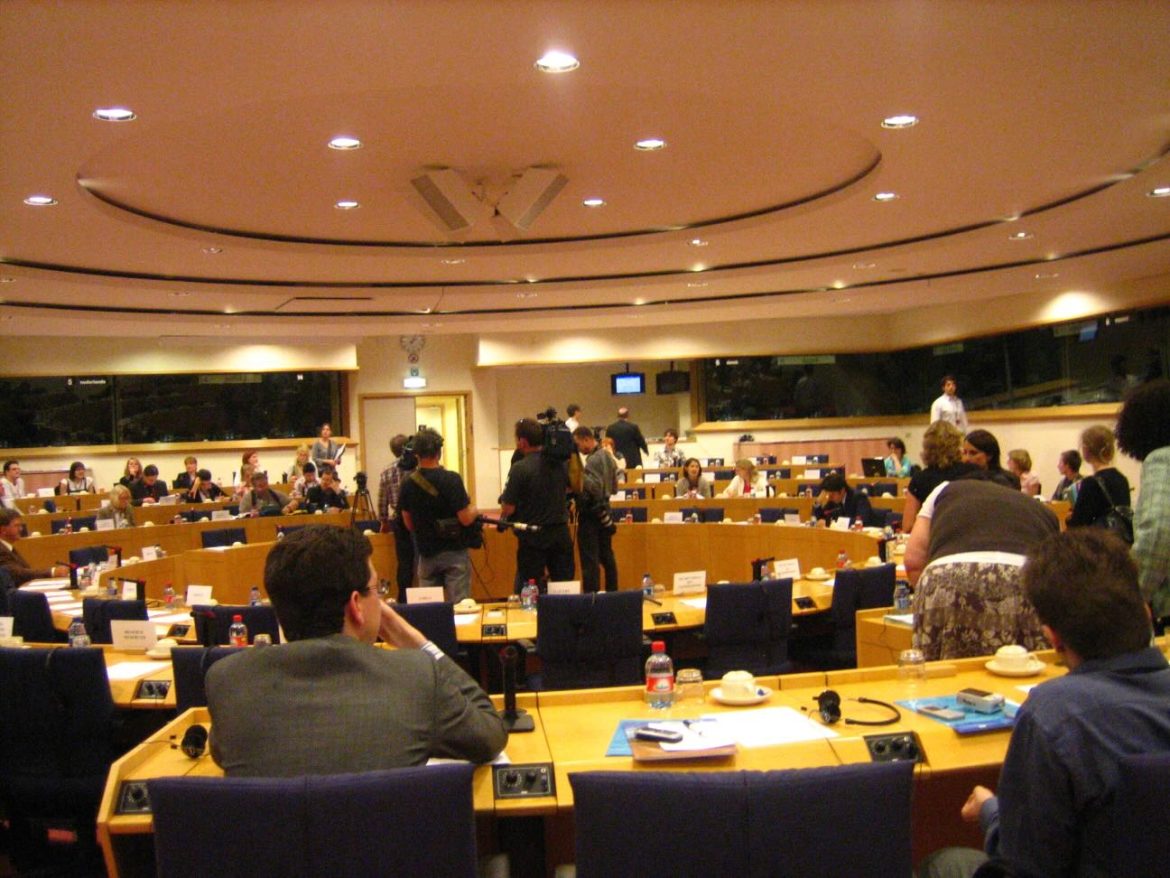
The European Parliament’s environment committee has opened a week of scrutiny covering climate funding, energy infrastructure, industrial decarbonisation, taxonomy rules and the next EU budget framework.
The European Parliament’s Committee on the Environment, Climate and Food Safety has opened a new round of Brussels policy scrutiny focused on how the EU intends to finance climate, energy and industrial priorities in the next budget cycle.
The committee’s latest agenda highlights published on Monday, 4 May, set out a series of meetings and exchanges taking place on 4 and 5 May. The programme covers several files linked to the EU’s 2028–2034 budget architecture, including the European Competitiveness Fund, the Connecting Europe Facility, the future cohesion framework, energy infrastructure rules and the proposed Temporary Decarbonisation Fund.
The immediate significance is procedural, but the policy implications are wider. The committee is examining how the EU intends to connect competitiveness, climate policy and infrastructure spending in the next multiannual financial framework. These are not isolated technical files. They will shape the funding instruments available for industrial transition, clean technology, energy grids, regional development and environmental safeguards after 2027.
One of the central items is the draft opinion on the European Competitiveness Fund, which committee members are due to vote on. The proposal, presented by the Commission in July 2025, would bring together 14 existing EU funding instruments under one investment framework. The structure is organised around four policy windows: clean transition, health and bioeconomy, digital leadership, and security and resilience.
For Parliament, the question is how such consolidation affects policy control, budget transparency and environmental conditions. A single investment framework may make funding easier to present politically, but it also raises practical questions about prioritisation. Members will need to assess whether climate-related objectives remain clearly identifiable inside a broader competitiveness instrument, and whether future spending can be tracked against the EU’s existing climate and environmental commitments.
The committee is also due to vote on its opinion concerning the Connecting Europe Facility for the 2028–2034 period. The facility remains central to EU infrastructure planning, including transport, energy and digital connectivity. Its next version will be part of the proposed budget heading that covers competitiveness, prosperity and security-related investment.
Energy infrastructure is another major element of the committee’s agenda. Members will consider a draft opinion on the proposed revision of the Trans-European Networks for Energy regulation. The Commission proposal, adopted in December 2025 as part of the European Grids Package, is intended to streamline administrative procedures, including permitting, and strengthen the development, resilience and interoperability of EU energy infrastructure.
The political issue is whether faster permitting can be combined with credible environmental scrutiny. Grid expansion, storage, hydrogen infrastructure, charging networks and renewable-energy connections all require accelerated deployment if the EU is to meet its energy and climate objectives. At the same time, Parliament’s environment committee is likely to scrutinise whether simplification measures weaken public oversight or environmental assessment.
Committee members are also scheduled to consider draft reports on the Carbon Border Adjustment Mechanism and the proposed Temporary Decarbonisation Fund. The CBAM proposal seeks to extend the mechanism’s scope to downstream products and strengthen anti-circumvention measures. The decarbonisation fund is intended to support sectors exposed to carbon costs within the broader climate-policy framework.
The link between these files is industrial policy. EU climate legislation increasingly depends on whether European industries can absorb carbon costs while investing in lower-emission production. The committee’s work on CBAM and decarbonisation funding will therefore feed into a larger debate on competitiveness, trade exposure and the cost of transition.
The agenda also includes a joint ENVI–ECON exchange with the Commission on implementation of the EU Taxonomy Regulation. The discussion will cover sector-specific technical screening criteria and two draft delegated acts. The taxonomy remains a central tool for defining which economic activities may be treated as environmentally sustainable for investment purposes.
In a separate exchange, members will meet Executive Vice-President Stéphane Séjourné, responsible for prosperity and industrial strategy. That discussion is expected to cover ongoing and upcoming legislative proposals, including the Industrial Accelerator Act and the Circular Economy Act.
Taken together, the committee’s work points to a broader shift in EU policymaking. Climate policy is no longer being handled only through emissions targets and environmental legislation. It is increasingly embedded in budget design, industrial strategy, infrastructure rules, trade instruments and financial classification systems.
For Brussels, the immediate issue is how Parliament positions itself before negotiations over the next financial framework intensify. For industry, regions and investors, the outcome will help determine where EU money is directed, what conditions attach to it, and how the balance is struck between competitiveness, decarbonisation and regulatory simplification.

