
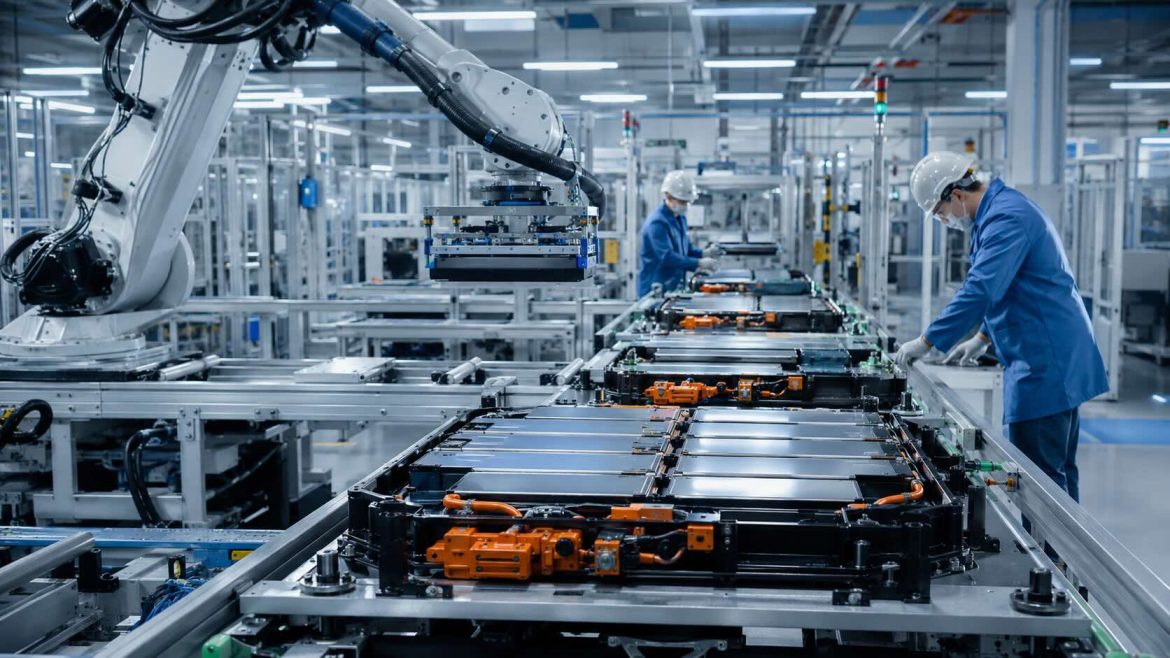
Hungary’s new government is promising tougher oversight of electric-vehicle battery factories, testing whether Europe can expand strategic manufacturing without weakening environmental enforcement.
Hungary will create a new national authority to monitor and sanction polluting industries, with electric-vehicle battery manufacturers at the centre of a regulatory change driven by years of local complaints.
The planned watchdog follows the rapid expansion of battery production under former prime minister Viktor Orbán, whose government attracted major Chinese and South Korean investment with subsidies and an industry-friendly approach.
The new administration says plants that fail environmental rules could face stronger sanctions, including closure. The credibility of that promise will depend on the authority’s independence, inspection powers and willingness to act against large employers.
Hungary’s battery bet
Hungary positioned itself as a bridge between German carmakers and Asian battery producers. Samsung SDI, CATL and other investors developed or planned large facilities, making the country a significant node in Europe’s electric-vehicle supply chain.
The strategy promised jobs, exports and a place in the automotive transition. It also concentrated water use, chemical handling, waste and industrial risk near local communities.
Residents around the Samsung plant in Göd and other sites have raised concerns about noise, hazardous substances and weak enforcement. Investigations and local testimony made the sector a national political issue.
Police have opened several procedures involving Samsung since 2023, including inquiries related to environmental damage, workplace danger and waste management. The company is entitled to respond to those allegations, and criminal investigations do not establish guilt.
Industrial policy cannot replace regulation
Europe wants domestic battery capacity to reduce dependence on imports and support car manufacturing. That strategic objective can create pressure on authorities to tolerate non-compliance for fear of losing investment.
Such tolerance is ultimately self-defeating. Local opposition becomes stronger when residents believe permits and court decisions are ignored. A factory built without social trust can face delays, litigation and political reversal.
A credible watchdog should publish inspection results, harmonise sanctions and prevent plants from continuing indefinitely after serious breaches. It also needs technical expertise in solvents, heavy metals, water contamination and occupational exposure.
The China dimension
Chinese investment is central to Hungary’s battery sector, but environmental rules should apply equally regardless of ownership. Framing enforcement as anti-Chinese would obscure failures by domestic regulators and other foreign companies.
The more relevant question is whether competition for investment weakened standards. Governments across Europe offer subsidies and faster permits to strategic manufacturers. Without strong oversight, that race can shift environmental costs onto communities.
Hungary’s policy change may also affect EU industrial planning. If stricter enforcement raises costs or delays production, carmakers will need alternative suppliers. If it produces cleaner and more predictable operations, it could strengthen the sector’s legitimacy.
A watchdog must demonstrate independence
Creating an authority is easier than changing enforcement culture. Its budget, appointment process, access to facilities and power to suspend operations will determine whether it can challenge politically connected projects.
The agency should also allow local communities to submit evidence and obtain data. Pollution monitoring controlled only by companies or ministries will not rebuild trust.
Hungary’s battery boom exposed the weakness of treating green industry as environmentally beneficial by definition. Batteries support lower-emission transport, but their production involves real chemical, energy and water risks.
The new watchdog is an opportunity to align industrial strategy with public protection. Its first difficult case will reveal whether the change is structural or merely political repair after the backlash.

