
A planned luxury resort in Albania linked to Jared Kushner’s Affinity Partners has become a test case for the country’s handling of foreign investment, environmental protection and public trust as it seeks closer integration with the European Union.
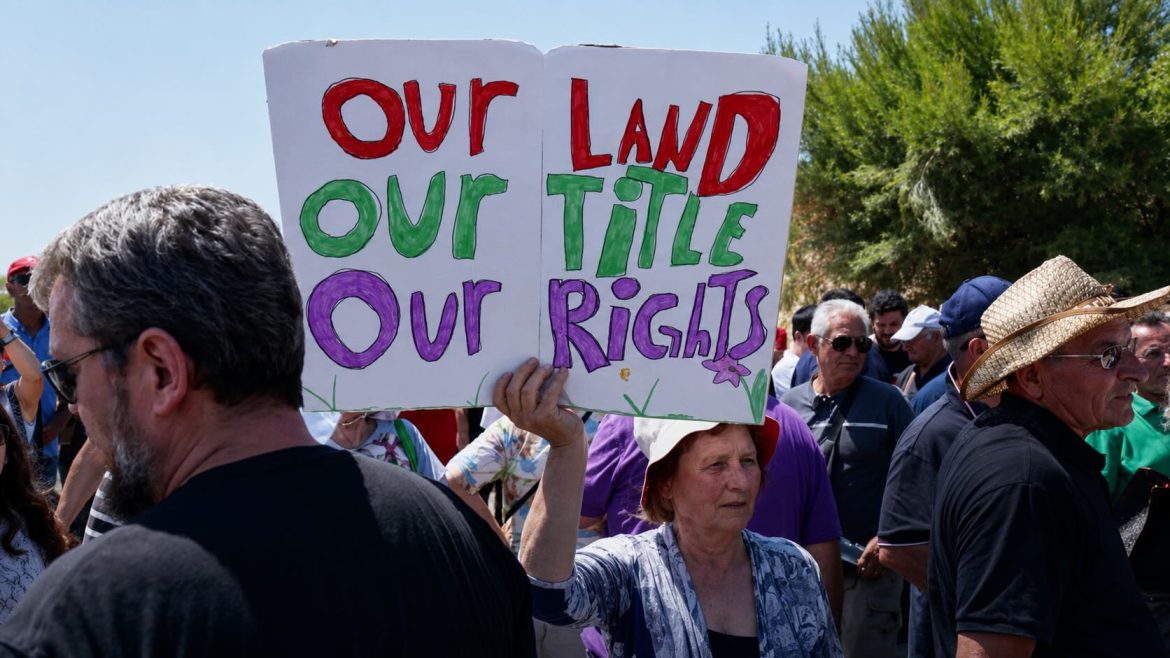
Thousands of people demonstrated in Tirana this week against the proposed development on Albania’s Adriatic coast, after protests intensified over plans affecting the Vjosa-Narta protected landscape near Zvërnec and the nearby island of Sazan. The project has been presented by its backers as a major tourism investment, but environmental groups and local protesters say it risks damaging one of the country’s most sensitive coastal areas.
The development has been reported as a project worth about €1.4 billion, involving Kushner’s investment firm Affinity Partners and plans for an undeveloped stretch of coastline near protected wetlands. The area is known for bird habitats, wetlands and nesting sites for marine species. The dispute has attracted wider attention because Kushner is the son-in-law of US President Donald Trump and previously served as a senior adviser in the White House.
The protests gathered pace after fencing was erected at the proposed site in Zvërnec, near Vlora. Several hundred people gathered there over the weekend, while clashes with private guards left some people injured, according to reporting from the site. Protesters later assembled outside the office of Prime Minister Edi Rama in Tirana, carrying placards and inflatable flamingos, a reference to the area’s birdlife.
Environmental campaigners argue that the scale of the project could permanently alter the coastline. One ecologist cited in local and international coverage said the development would create “a new city” with around 10,000 rooms and called for construction activity to be halted. The developers have said they intend to proceed responsibly and have emphasised environmental stewardship, job creation and benefits for local communities.
Rama has defended the project, arguing that Albania should remain open to investors. He has said the country should not acquire a reputation as a place where investors are met with hostility, and that there was “absolutely no chance” the investment would be stopped while he remained in office. His position places the government in direct conflict with protesters who argue that protected land and public trust should not be subordinated to large-scale coastal development.
The case is sensitive for Albania because it sits at the intersection of several policy priorities: tourism growth, protection of natural assets, foreign capital, land ownership and the credibility of public institutions. Albania has promoted tourism as a key source of economic growth, and its Adriatic and Ionian coastline has attracted rising interest from international investors. At the same time, rapid coastal development has repeatedly raised questions over planning rules, protected-area status and the role of political influence in major real estate decisions.
The dispute has also taken on a legal and governance dimension. Albania’s anti-corruption authorities have reportedly opened an investigation amid questions over land ownership and protected-area changes. That does not prove wrongdoing, but it places the development within a wider debate over how major projects are approved, how land rights are handled, and whether environmental protections are applied consistently.
That question is likely to be watched beyond Albania. The country is an EU candidate state, and accession talks require progress not only on formal legislation but also on rule of law, public administration, environmental standards and effective enforcement. A dispute of this kind therefore has implications beyond one tourism development. It touches the practical credibility of institutions in a country seeking to align with EU norms.
The controversy also follows a separate Kushner-linked project in Serbia, where plans for redevelopment involving the former army headquarters in Belgrade were withdrawn after public opposition and legal concerns. The comparison is not exact, but it points to a broader Balkan pattern in which large prestige developments by foreign investors can become politically charged when they involve public land, protected areas or contested historical sites.
For Albania, the immediate question is whether the authorities can show that the project has been assessed through transparent procedures and enforceable environmental safeguards. For investors, the dispute raises questions over reputational risk in high-profile developments. For local communities and environmental groups, it has become a case about whether protected landscapes can be altered for tourism-led growth.
The dispute is unlikely to be resolved only through street protest or government assurances. Its significance lies in whether Albania’s institutions can demonstrate that major investment decisions are subject to credible scrutiny, clear land rules and environmental standards that are not weakened by the status of the investor.
For the EU, the issue is not whether Albania should attract foreign investment. It is whether large-scale development in a candidate country is being handled in a way consistent with the governance and environmental obligations that EU membership requires. The resort may therefore become more than a coastal planning dispute: it is a test of how Albania balances growth, political authority, public accountability and its European trajectory.

