
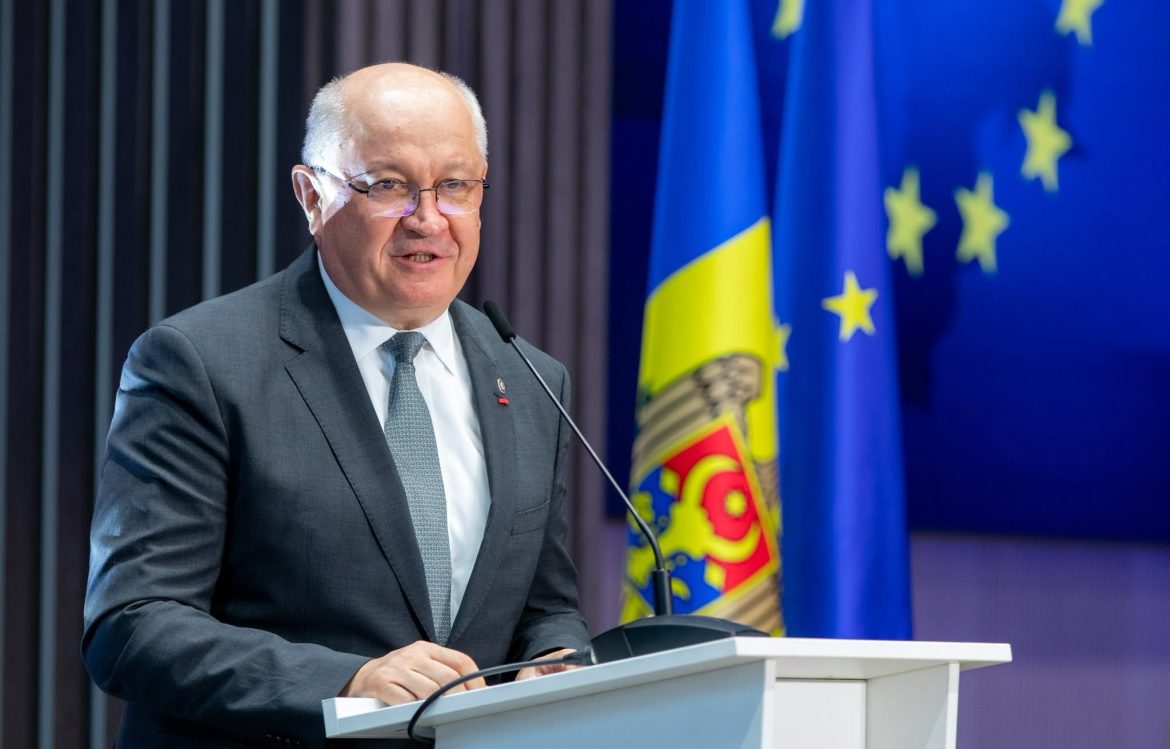
Prime Minister Alexandru Munteanu’s surprise resignation dissolves Moldova’s government at a sensitive point for accession reforms, energy resilience and resistance to Russian pressure.
Moldovan Prime Minister Alexandru Munteanu has announced his resignation, automatically triggering the departure of the government and opening a new period of political uncertainty in an EU candidate state bordering Ukraine.
Munteanu said on Friday that he was stepping down less than a year after taking office. Moldova’s president and parliament must now manage the constitutional process of forming a replacement administration.
The change is not merely a domestic personnel matter. Moldova’s government is responsible for a demanding programme of judicial, administrative and economic reforms tied to EU accession, while also managing energy vulnerability, Russian interference and the unresolved Transdniestria conflict.
Accession depends on administrative continuity
EU enlargement is negotiated through institutions, chapters and measurable reforms. Political support from Brussels matters, but candidate governments must adopt laws, strengthen regulators and demonstrate implementation.
A prolonged government transition can slow that process. Ministries may delay decisions, senior officials may wait for new leadership and coalition negotiations can consume the attention needed for technical reform.
Moldova’s pro-European direction has received strong backing from President Maia Sandu and the governing Party of Action and Solidarity. The party’s parliamentary position may allow an orderly replacement, but the reason for Munteanu’s resignation and the choice of successor will shape confidence in the government’s stability.
EU Today recently examined how an EU-Moldova summit placed security and hybrid threats at the centre of enlargement. The resignation tests whether that agenda can continue through a leadership change.
Russia will exploit uncertainty
Moldovan authorities have repeatedly accused Russia and aligned actors of interference, disinformation, illicit political finance and pressure through energy supplies. Moscow denies interference and maintains influence through media, economic ties and the separatist region of Transdniestria.
A government reset creates an opportunity for hostile narratives. Pro-Russian groups can present the resignation as evidence that the European course is failing, regardless of its actual cause.
The answer is not to suppress political disagreement. It is to conduct the succession transparently and keep reform decisions anchored in law rather than personality.
Energy remains a particular vulnerability. Moldova has worked to reduce dependence on Russian gas and connect more closely to European markets. Those changes require investment, pricing decisions and public support, all of which can become politically contentious during a transition.
Brussels has a stake in the outcome
For the EU, Moldova is a test of enlargement as a security policy. The country is small, exposed and under sustained pressure, yet it has pursued closer integration despite the risks.
Brussels should avoid treating one resignation as a strategic reversal. It should also insist that funding and accession progress remain tied to institutions, anti-corruption safeguards and implementation.
If the transition is quick and constitutional, it may demonstrate resilience. If it becomes a prolonged contest over appointments or policy direction, accession momentum could suffer.
The most important signals will be the identity of the next prime minister, the continuity of the negotiating team and whether parliament maintains the reform timetable.
Moldova’s European course has never depended on calm conditions. Munteanu’s resignation adds another test: whether the state can change governments without losing strategic direction.

