
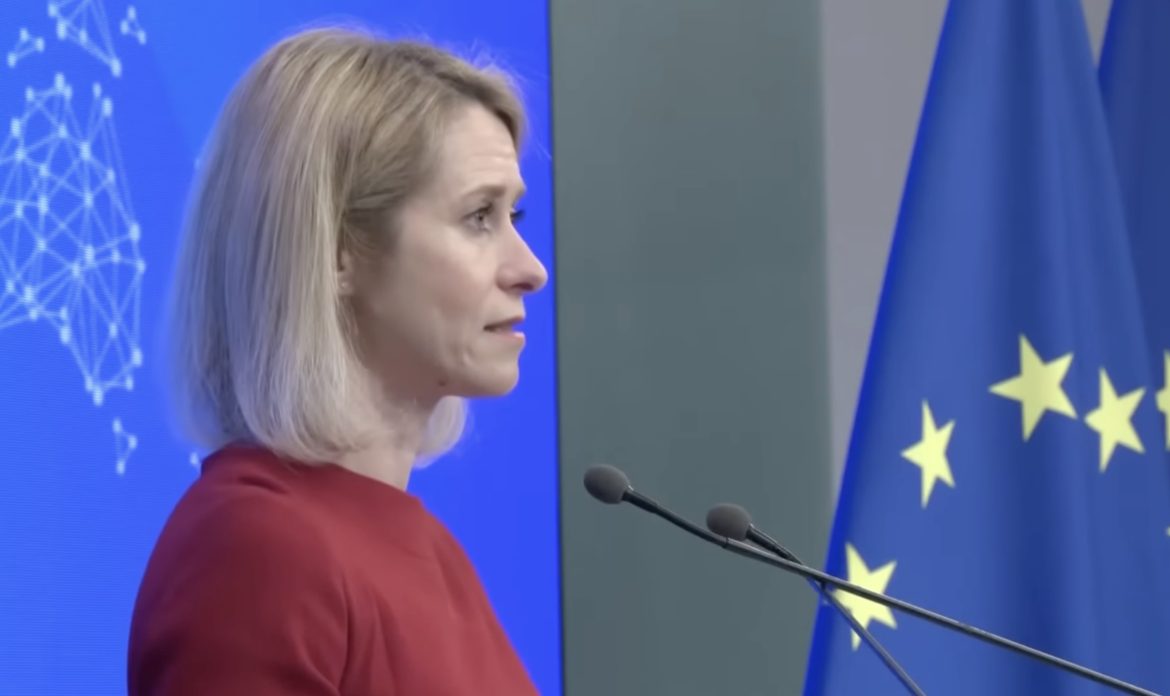
The European Union is preparing to sign new defence partnerships with Australia, Iceland and Ghana, in a move that underlines Brussels’ effort to broaden its security relationships beyond the European continent. Kaja Kallas said the agreements would be signed in the coming days.
The announcement was made by the EU’s High Representative for Foreign Affairs and Security Policy, Kaja Kallas, during the 2026 EU Ambassadors’ Conference in Brussels on 9 March 2026. In her keynote speech from that event she said Australia would become the EU’s tenth Security and Defence Partnership, with Iceland and Ghana to follow shortly afterwards.
The move reflects a broader shift in EU external policy. In her speech, Kallas said the Union already has nine such partnerships with countries in Europe, Asia and North America, and added that other states are also seeking similar arrangements. Her remarks framed the initiative as part of a wider pattern in which governments are looking to diversify strategic ties in response to heightened risk.
Although the EU is not a military alliance, it has in recent years expanded the use of structured defence partnerships as a way to strengthen cooperation on security issues without creating mutual defence obligations. Reuters’ account of Kallas’s remarks and the EEAS text both indicate that Brussels sees these partnerships as part of a larger effort to widen cooperation with external partners in an increasingly unstable geopolitical climate.
Australia is the clearest strategic fit among the three countries mentioned. As an Indo-Pacific power and a close Western security partner, it aligns with the EU’s growing focus on the Indo-Pacific as an area of geopolitical and economic importance. Kallas said Australia would become the tenth such partner, indicating that Brussels sees Canberra as part of a longer-term security architecture extending beyond Europe itself.
Iceland’s significance is different but still substantial. It is not a member of the European Union, but it is closely connected to the bloc and occupies a strategically important position in the North Atlantic. Kallas’s inclusion of Iceland alongside Australia and Ghana suggests the EU is building a geographically diverse network of defence relationships, linking its security interests to several regions at once.
The proposed partnership with Ghana broadens the picture further. Ghana is one of West Africa’s more stable democratic states, and its inclusion points to an EU interest in deepening security ties in regions affected by instability, maritime insecurity and broader strategic competition. Kallas’s statement that more countries are “knocking at our door” reinforces the impression that Brussels is seeking flexible regional partnerships rather than a narrowly European framework.
No detailed text of the three agreements has yet been published, so the precise scope of cooperation remains unclear. However, the EU’s own description of these arrangements as Security and Defence Partnerships indicates that they are intended as structured frameworks for dialogue and cooperation, rather than treaty-based defence guarantees. That distinction is important in understanding how Brussels is trying to extend its strategic reach.
The political message is that the EU wants to play a broader role in international security, even if its instruments remain primarily diplomatic and cooperative rather than military. By moving to formalise partnerships with Australia, Iceland and Ghana, Brussels is signalling that its security outlook is increasingly global in scope, shaped by developments in the Indo-Pacific, the North Atlantic and Africa as much as by events on the European mainland.

