
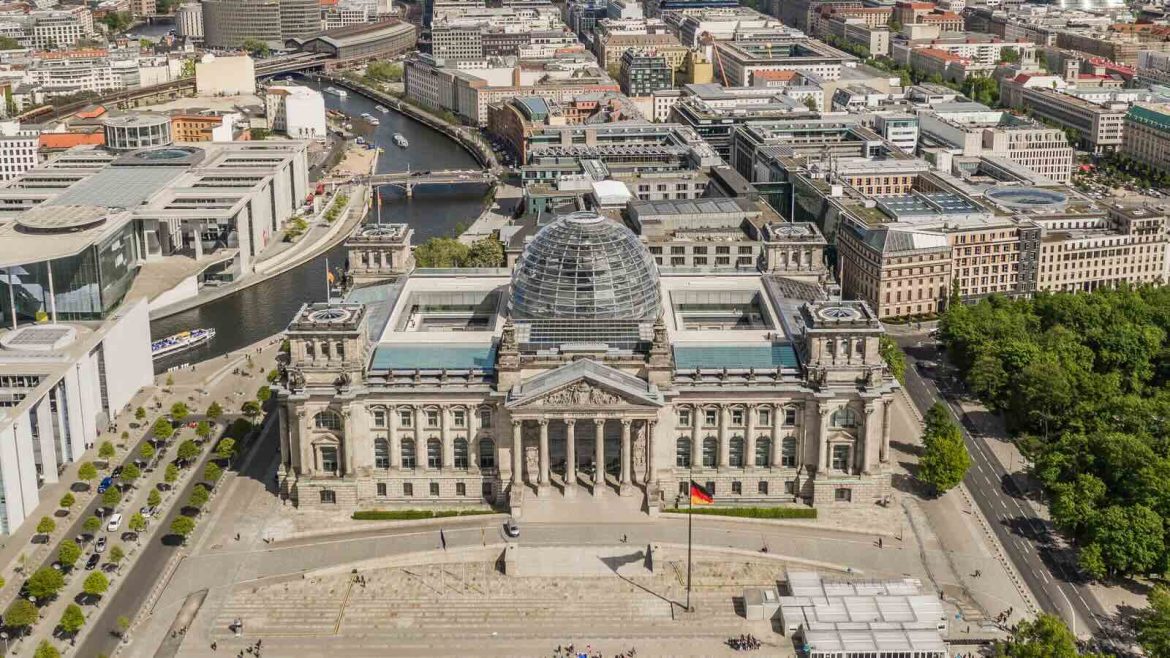
Berlin has approved a 2027 budget built around record investment and a rapid increase in defence spending, moving Germany’s fiscal turn from a leaked plan to a parliamentary and European test.
Germany’s cabinet has approved a draft 2027 federal budget that commits Europe’s largest economy to an exceptional expansion of borrowing, investment and security expenditure. The decision turns what was previously a provisional financing plan into government policy and sets up a difficult parliamentary argument over how Germany pays for rearmament without neglecting infrastructure, welfare and economic growth.
The Finance Ministry’s approved draft sets total federal spending at €555.4 billion. It provides €109.7 billion for the Defence Ministry and €11.6 billion for continued support to Ukraine, while Germany’s wider NATO-accounted security expenditure is expected to reach €130.1 billion.
The borrowing headline requires care. Total planned borrowing across the core budget and special funds is €203.6 billion. Within that amount, core-budget net borrowing is €118.7 billion, with another €54.9 billion allocated through the infrastructure and climate-neutrality fund and €30 billion through the Bundeswehr special fund.
From draft figures to a government choice
EU Today reported on 5 July that Germany’s borrowing plan was placing defence inside Europe’s wider budget fight. Cabinet approval is a material new step: ministers have now accepted the numbers collectively, and the government must defend them before both houses of parliament.
The revised plan is substantially larger than the parameters approved in April. Total expenditure has increased from €543.3 billion, while investment is now projected at €117.5 billion. The government says this is necessary to reverse years of underinvestment, strengthen resilience and put a weak economy back on a growth path.
Finance Minister Lars Klingbeil has also framed the budget as a security necessity. Germany aims to reach NATO’s core-defence benchmark of 3.5 per cent of GDP by 2029. That timetable is unusually fast for a country that spent years struggling to meet the Alliance’s former 2 per cent benchmark.
The debt brake has changed, not disappeared
Germany can finance this increase because constitutional changes exempt qualifying defence expenditure above 1 per cent of GDP from the federal debt brake and because parliament created a €500 billion infrastructure fund. These instruments provide fiscal space, but they do not remove political trade-offs.
The core budget still contains consolidation measures designed to close a previously identified €34 billion gap. Ministries face pressure to make savings, while higher debt will add to future interest costs. The dispute will therefore concern not only the size of borrowing, but which expenditure is treated as exceptional and which public services must absorb restraint.
That distinction matters across the EU. Germany has often pressed highly indebted member states to respect common fiscal rules. Berlin can argue that security threats and neglected infrastructure justify exceptional treatment, but other capitals will ask why similar strategic investment should be judged differently elsewhere.
The EU has already activated additional flexibility for defence expenditure under its reformed economic-governance framework. Germany’s programme will test whether that flexibility can coexist with credible medium-term debt control, particularly if slower growth reduces expected tax revenue.
Defence money must become capacity
The budget’s political defence will ultimately depend on delivery. Germany does not merely need larger appropriations; it needs ammunition, air defence, deployable formations, secure communications, logistics and industrial capacity. Procurement delays or cost overruns would weaken the argument that exceptional borrowing is producing exceptional security value.
The same test applies to the €11.6 billion reserved for Ukraine. Stable multi-year financing can help Kyiv and defence manufacturers plan production, but only if appropriations become contracts and deliveries rather than accounting totals.
The cabinet’s formal decision now moves into the legislative process. Parliament can amend the spending mix, and the Bundesrat will have a role before final approval expected later this year.
Germany has therefore crossed an important line. The debate is no longer whether Berlin is prepared to relax its old fiscal orthodoxy. It is whether the new borrowing model can simultaneously improve defence readiness, modernise the economy and preserve public confidence in budget discipline. The 2027 budget makes all three promises. The coming parliamentary confrontation will test whether they can be reconciled.

