
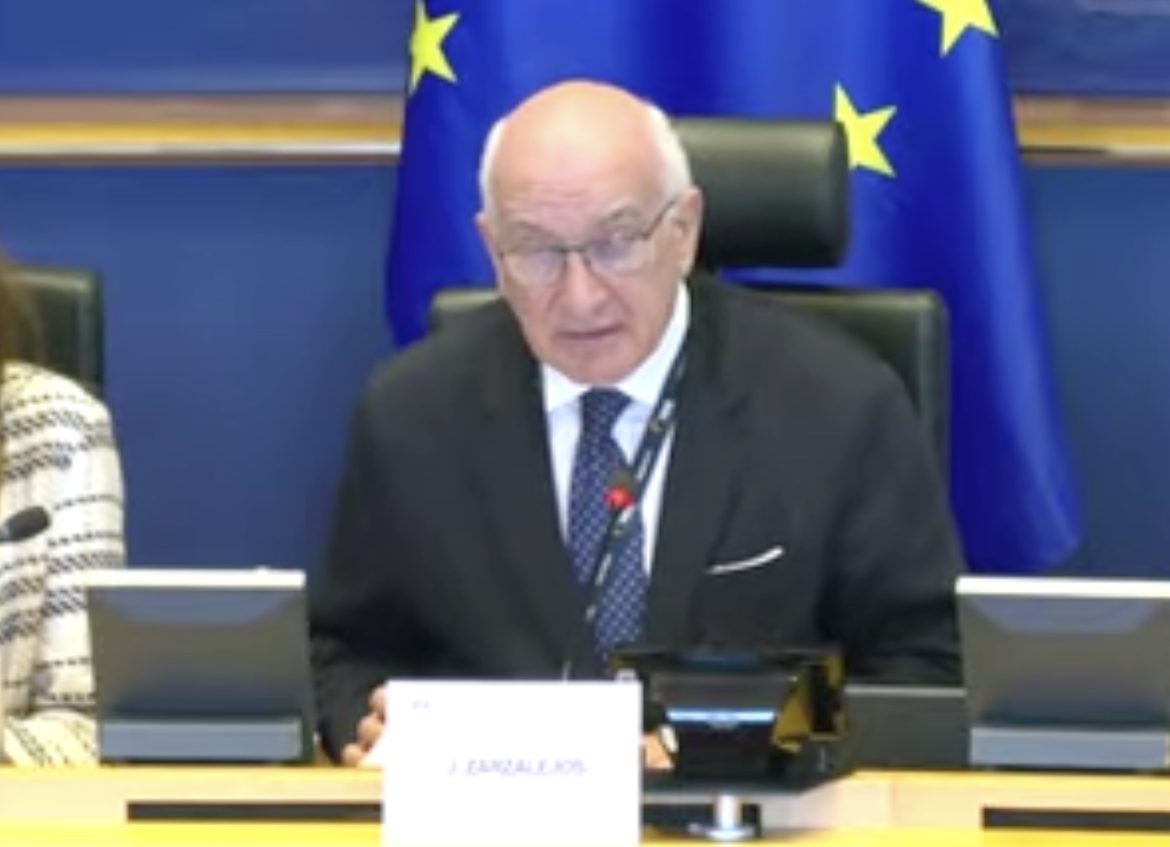
In a committee room in the European Parliament on March 2nd, the language was unusually stark as MEPs and campaigners confronted the contentious issue of so-called conversion practices.
There was little of the technocratic fog that so often settles over Brussels hearings; instead, speakers addressed head-on the claim that attempts to change or suppress a person’s sexual orientation or gender identity amount, as the United Nations has put it, to “a form of torture”.
Instead, MEPs, campaigners and legal scholars spoke in terms more often heard in criminal courts or war crimes tribunals than in policy workshops.
At issue were so-called “conversion practices” – attempts to change, suppress or repress a person’s sexual orientation, gender identity or gender expression. The United Nations has described such practices as “a form of torture”, a characterisation that hung heavily over proceedings and lent the debate a moral clarity that few could ignore.
The hearing was convened in response to a European Citizens’ Initiative (ECI) calling for EU-wide legislation to ban these practices outright. The organisers, representing a coalition of LGBTQ+ advocacy groups from across the bloc, describe conversion practices as discriminatory, degrading, harmful and fraudulent. They argue that patchwork national bans are insufficient, leaving vulnerable people exposed in countries where legislation remains absent or weakly enforced.
The European Citizens’ Initiative mechanism itself is one of the more ambitious experiments in participatory democracy undertaken by the European Union. Introduced under the Lisbon Treaty, it allows citizens – if they gather at least one million signatures from a minimum number of member states – to compel the European Commission to consider legislative proposals. While it does not guarantee new law, it forces the EU’s executive to respond formally and publicly.
In this instance, campaigners have successfully propelled the issue to the heart of the European legislative agenda. The hearing was jointly hosted by Parliament’s committee on civil liberties, justice and home affairs, its committee on petitions, and the committee on women’s rights and gender equality – a sign of the breadth of concern.
Speakers returned repeatedly to the United Nations’ framing of conversion practices as torture. That language is not chosen lightly. Under international law, torture denotes the intentional infliction of severe pain or suffering, whether physical or mental, for purposes that can include coercion or discrimination. By invoking it, the UN has elevated the debate beyond questions of professional misconduct or misguided therapy. It has placed conversion practices in the same moral category as some of the gravest human rights abuses.
For supporters of a ban, that designation changes everything. If something is a “form of torture”, then it cannot be tolerated as a matter of cultural variation or religious freedom. It becomes an affront to fundamental rights, demanding unequivocal prohibition.
Several EU member states – including Germany, France and Spain – have already enacted laws restricting or banning conversion practices, particularly when directed at minors. Others have introduced partial measures, or rely on existing criminal or medical regulations. But significant gaps remain. In some countries, there is no specific legislation at all. In others, bans apply only to licensed medical professionals, leaving unregulated actors operating in legal grey zones.
Campaigners argue that this inconsistency undermines the EU’s professed commitment to equality and non-discrimination. A young person in one member state may be legally protected from coercive “therapy”, while their counterpart across a border may not. In a union founded on the free movement of people, such disparities are increasingly hard to defend.
Opponents of sweeping EU intervention, though quieter at this hearing, have previously raised concerns about subsidiarity – the principle that decisions should be taken as closely as possible to citizens. Matters of health, education and family law are traditionally the preserve of national governments. There are also those who warn that poorly drafted legislation could infringe upon religious counselling or parental rights.
Yet the moral force of the UN’s torture designation has narrowed the room for equivocation. It is one thing to argue for national discretion over regulatory detail; it is quite another to defend a practice framed in the language of abuse and coercion.
The European Parliament has, for years, adopted resolutions condemning discrimination against LGBTQ+ people. It has criticised the pathologisation of trans and intersex individuals and called on member states to ensure equal treatment under the law. Conversion practices have featured repeatedly in those texts. But resolutions, however emphatic, are not binding. The question now is whether the European Commission will translate parliamentary sentiment into concrete legislative proposals.
Under the ECI procedure, the Commission must examine the initiative and set out its legal and political conclusions. It may choose to propose legislation, pursue non-legislative measures, or decline to act – though it must justify its decision. In politically sensitive areas touching on fundamental rights, the Commission is often cautious. But it is also mindful of the EU’s growing self-image as a “union of values”.
That self-image has been tested in recent years by disputes over the rule of law in Hungary and Poland, and by debates over asylum policy and border control. A bloc that seeks to present itself globally as a champion of human rights cannot easily ignore a call to outlaw practices labelled by the UN as torture.
For those who testified in Brussels, the debate was not abstract. Survivors of conversion practices have described psychological trauma, depression, anxiety and lasting damage to family relationships. Some spoke of being told that their identity was disordered or sinful; others recounted coercive environments in which vulnerability was exploited under the guise of care.
The organisers of the initiative insist that a binding EU ban would send a powerful signal: that sexual orientation and gender identity are not pathologies to be cured but aspects of human dignity to be respected. They argue that without harmonised standards, the single market risks becoming a patchwork of protection and peril.
Whether the Commission will embrace so far-reaching a step remains to be seen. But the tenor of the March 2nd hearing suggested that the centre of gravity in Brussels has shifted. Once discussed in cautious euphemisms, conversion practices are now being described in the bluntest of terms.
When the United Nations calls something “a form of torture”, it strips away the comfort of ambiguity. The European Union must now decide whether it is prepared to legislate accordingly.
Click here for more News & Current Affairs at EU Today
Click here to check out EU TODAY’S SPORTS PAGE!
_____________________________________________________________________________________________________________________

