
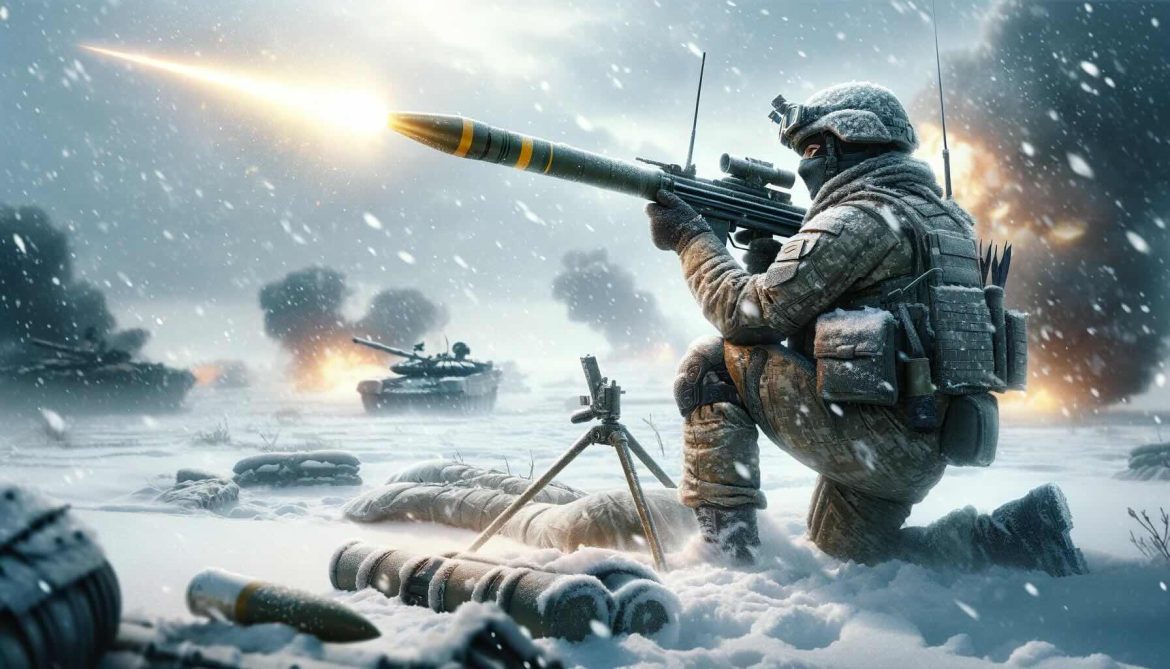
Recent reports indicate that Ukrainian armed forces continue to make strategic advances in the Kursk region, further intensifying pressure on Russian defensive positions.
According to Ukrainian military sources, the latest operations south of Sudzha have led to significant disruptions in Russian supply lines, prompting a notable reaction from Russian propagandists and military officials.
Military Developments and Strategic Gains
Over the past six months, Ukrainian forces have conducted operations in the Kursk region, an area of historical significance. The General Staff of Ukraine has reported substantial losses for Russian forces in terms of manpower and equipment. Although the exact numbers remain classified, independent assessments suggest heavy attrition on the Russian side.
Recent intelligence indicates that Ukrainian troops have successfully maneuvered beyond the settlement of Cherkasskaya Konopelka, aiming to threaten Russian logistical hubs. The response from Russian officials has been one of concern, with some acknowledging that Ukrainian forces are exploiting weaknesses in their defensive formations.
Russian Reaction and Propaganda Response
The Russian state media and affiliated propagandists have reacted with notable alarm. High-profile figures linked to the Russian military have been attempting to downplay the significance of Ukrainian advances, citing isolated Ukrainian losses as evidence of their defensive effectiveness. However, the broader reaction suggests that Moscow is struggling to contain the offensive.
One notable response came from Ramzan Kadyrov’s faction, which claimed that Ukrainian troops were only advancing because Chechen units were not deployed in the region. Meanwhile, Russian propagandists have shifted their rhetoric, expressing concerns over renewed Ukrainian offensive operations.
Challenges and Countermeasures
Despite Ukrainian advances, the Kursk front remains heavily fortified by Russian forces, with over 60,000 troops stationed in the region, supported by mechanised units, airborne troops, and naval infantry. Reports indicate that Russian artillery and aviation continue to strike Ukrainian positions, with collateral damage inflicted on civilian areas within their own controlled territory.
A significant challenge for Ukraine is the numerical disadvantage. Ukrainian units in the region reportedly operate with a force size three times smaller than their Russian counterparts. However, military analysts attribute their success to superior training, motivation, and tactical adaptability.
Furthermore, reports suggest that North Korean troops could be deployed to reinforce Russian positions. Intelligence sources indicate that a contingent from Pyongyang may arrive in March to provide additional manpower, following an earlier phase of combat assessment by North Korean personnel.
Air Support and Western Assistance
On the airpower front, Ukraine has received the first batch of Mirage 2000 fighter jets from France. While the exact number remains undisclosed, estimates suggest that between four and ten aircraft have been delivered. This marks a significant enhancement to Ukraine’s air capabilities, particularly in precision strikes using French-provided SCALP missiles.
Additionally, Ukraine has received further F-16 fighter jets from the Netherlands, with some reports suggesting that as many as 20 of these aircraft are now operational. The exact deployment locations remain undisclosed due to security concerns. However, military experts suggest that these aircraft will primarily be used for air defence and ground support operations.
Ukrainian officials continue to advocate for increased military assistance, particularly in advanced air capabilities. While European allies such as France and the Netherlands have expedited deliveries, concerns remain over the delayed supply of US-provided F-16s. The Biden administration has been criticised for bureaucratic delays, which have hindered Ukraine’s ability to establish aerial superiority.
NATO Dynamics and Strategic Shifts
One of the most significant geopolitical shifts in recent weeks is the change in leadership within the Ramstein format, the coalition supporting Ukraine’s military efforts. For the first time, the United States will not lead the next meeting, with the UK assuming the chair. This move reflects growing European efforts to reduce dependency on Washington’s policy shifts, particularly in light of uncertainties surrounding US foreign policy under the new Trump administration.
British and French military leadership has taken a more proactive stance in supporting Ukraine, advocating for a more independent European security structure. This shift aligns with longstanding French policy to establish greater European autonomy in defence matters, reducing reliance on transatlantic coordination.
Implications for the War
The developments in Kursk represent a broader trend in Ukraine’s evolving military strategy. By sustaining pressure on Russian border regions, Ukrainian forces aim to disrupt supply chains and stretch Russian defensive lines. The use of mobile warfare tactics, combined with strategic air support, has proven effective in counteracting Russia’s numerical advantage.
However, challenges remain. Russia continues to mobilise reinforcements and leverage its artillery and airpower superiority. Additionally, uncertainty over Western aid—particularly from the United States—complicates long-term strategic planning for Kyiv.
Nevertheless, the latest Ukrainian advances underscore the resilience and tactical ingenuity of its armed forces. As the war continues, the battle in the Kursk region will be closely watched for indications of Ukraine’s broader operational objectives and Russia’s ability to maintain its defensive positions in the face of sustained pressure.

