
Donald Trump claimed early on Saturday that Venezuelan President Nicolás Maduro and his wife had been “captured and flown out of the country” following what he described as a US special operation, as reports emerged of explosions and air activity over Caracas.
In a post on his Truth Social platform, the US President said the United States had carried out “a large scale strike against Venezuela” and that Maduro and his wife had been seized and removed from Venezuela. Trump said the operation was conducted “in conjunction with U.S. law enforcement” and promised further details. He also announced a news conference at 11am local time at his Mar-a-Lago resort in Florida.
There was no immediate independent confirmation of the claim that Maduro had been detained or taken out of Venezuela. At the same time, Venezuelan authorities issued statements describing attacks inside the country and said Maduro had declared a national emergency, language that suggested he remained engaged with state structures.
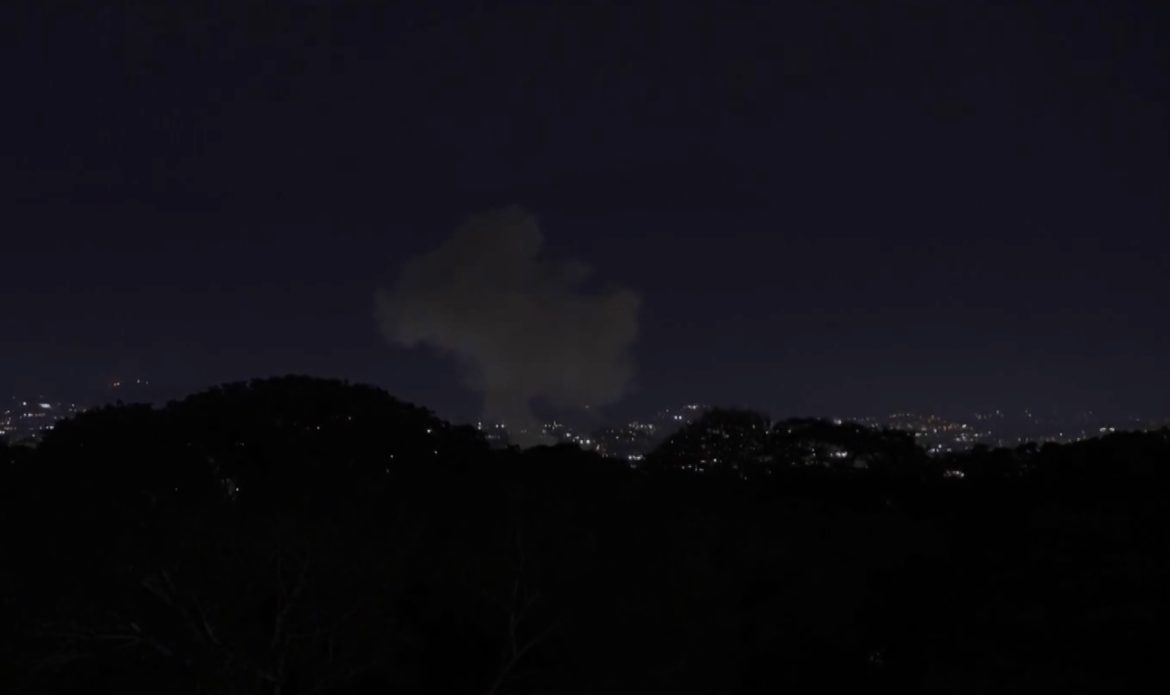
A US official told Reuters that the United States was carrying out strikes inside Venezuela after explosions were reported in Caracas in the early hours of Saturday. Reuters witnesses described blasts, aircraft overhead and smoke in parts of the capital. The official did not provide details of targets or the scope of the operation.
Venezuela’s government said the country had come under “military aggression” and that attacks took place in Caracas and in the states of Miranda, Aragua and La Guaira. The statement said Maduro had declared a national emergency and ordered defence plans to be implemented. It also accused Washington of seeking control over Venezuela’s oil and mineral resources.
The White House and the Pentagon did not immediately provide an official public account of events. Reuters reported that the Pentagon referred questions to the White House, which declined to comment on the strikes. A separate Reuters report cited a CBS journalist saying administration officials were aware of reports of explosions and aircraft over Caracas.
The reports of strikes followed weeks of escalating rhetoric and military signalling between Washington and Caracas. Reuters has previously reported that Trump had pressed Maduro to leave office, and Trump has publicly linked his pressure campaign to narcotics trafficking and regional security. In late December, Trump said the US had “hit” an area where he said boats were loaded with drugs, while declining to specify which arm of the US government carried out the action.
On Saturday, aviation authorities also moved to restrict air traffic. The Federal Aviation Administration issued an alert prohibiting US civil aircraft from flying over Venezuela, citing safety risks associated with “ongoing military activity”.
Regional leaders signalled concern as information remained incomplete. Colombian President Gustavo Petro posted on social media that Caracas was being bombed and called for a meeting of the United Nations, without providing supporting detail.
In Washington, questions about legal authority and congressional oversight are likely to intensify if the strikes expand or continue. In early December, lawmakers had warned they would seek a war powers vote to block US forces from hostilities “against or within Venezuela” without explicit congressional authorisation. A Congressional Research Service briefing published last month set out the competing claims and oversight debates already under way over US actions connected to Venezuela, including the scope of reported strikes and the Administration’s stated objectives.
For now, the central assertion in Trump’s post — that Maduro and his wife have been captured and removed from Venezuela — remains unverified by independent sources, and sits alongside Venezuelan government messaging that presents Maduro as directing a national emergency response.
Trump’s scheduled Mar-a-Lago news conference is expected to clarify whether the White House is prepared to provide operational details, the legal basis for US action, and the status of the Venezuelan leader.

