
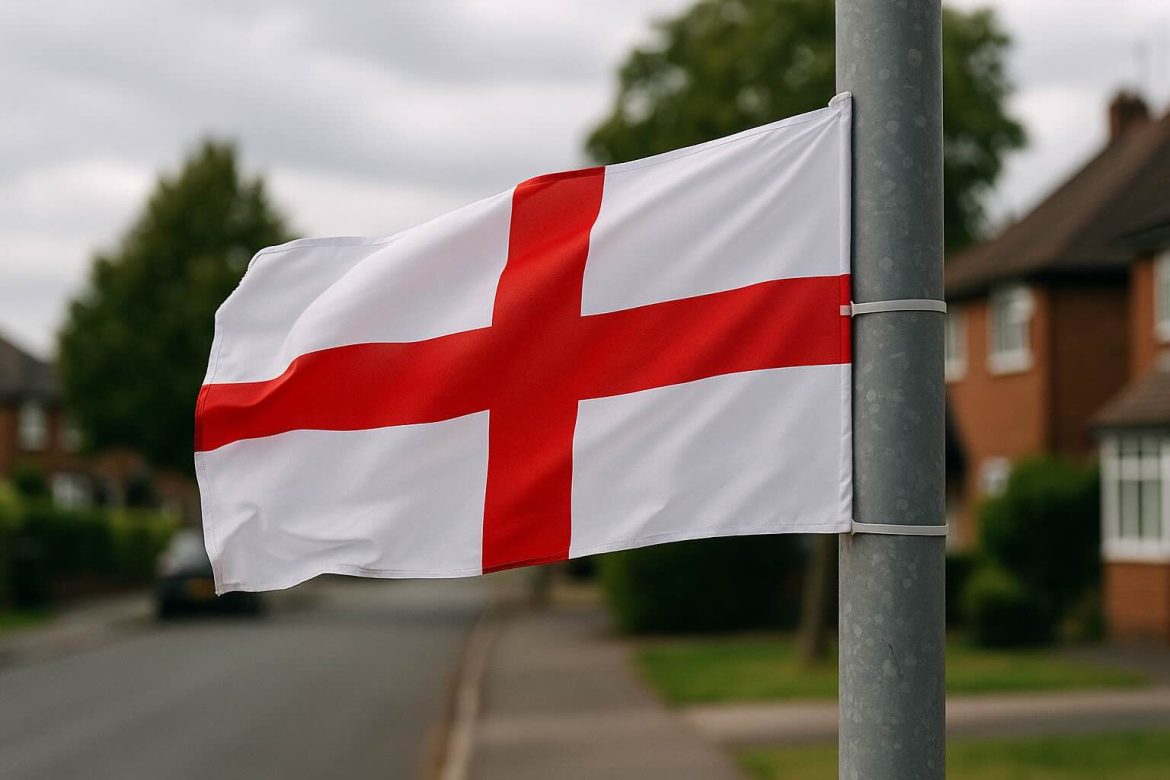
Hundreds of St George’s and Union flags installed on lamp posts and buildings across south-west Birmingham have sparked a sharp dispute over safety, politics and community cohesion, after the Labour-run city council announced plans to remove unauthorised attachments from street furniture.
The displays first appeared in Weoley Castle and quickly spread to Northfield, Bartley Green, Selly Oak and Frankley Great Park. Supporters describe the initiative as a patriotic outpouring that has lifted spirits, prompted neighbours to request installations on their streets and led to online fundraising. A group styling itself the Weoley Warriors says it has collected roughly £2,500 to buy flags and fittings and has pledged to replace any that are taken down.
Birmingham City Council said it would remove items fixed to lamp columns as part of a programme to upgrade street lighting to energy-efficient LEDs, adding that attaching materials to tall structures can endanger those installing them and road users below.
“People who attach unauthorised items to lamp posts could be putting their lives and those of motorists and pedestrians at risk,” a spokesman said.
The authority stressed that its policy applies to any flags, posters or signs on publicly owned lamp posts or traffic signals, and that it does not object to national flags flown from council housing or private property with the owner’s permission.
Organisers and many residents dispute the council’s stance. One organiser, speaking anonymously, said the flags were a response to “frustration at being pushed into a corner and silenced”, insisting the displays were not racist. Hayley Owens, 40, a former West Midlands Police officer, said the flags had had “a positive impact” and warned there would be “a real battle” if removals went ahead. Another supporter, Jeremy Duthie, called the displays “a breath of fresh air”.
Other residents voiced unease about the scale and timing. Nazia, a local resident, said she respected those who felt pride in the flag but found it increasingly difficult, as a minority, to separate patriotism from an “undertone of nationalism”. Alex Clarke, a radiographer, said mass displays outside a specific event risked “marking out territory” and could be linked in perception to anti-migrant sentiment. “If they were up for a celebratory reason or a specific event that is great,” he said, “but it feels different.”
The political response has been immediate. Lee Anderson, Reform UK MP, called the council’s position “a disgrace”, arguing that Britons should be able to fly national flags with pride. Cllr Robert Alden, leader of the Conservative opposition on the council, said “our national flags are nothing to be ashamed of”, accusing the administration of moving quickly to remove Union and St George’s flags while other fly-posting often remained in place. Cllr Simon Morrall, Conservative, Frankley Great Park, described the initiative as a “clearly peaceful movement” and has urged an amnesty on removals until the end of the month, arguing that resources should be prioritised for potholes, fly-tipping and youth services.
Some residents highlighted that Palestinian flags have been visible in parts of east Birmingham since the Gaza conflict escalated in 2023, calling for consistent enforcement. Others countered that the current effort is a community-led expression of pride welcomed by shopkeepers and residents “of all backgrounds and religions”.
The Government’s published guidance says it wants to see more national flags flown, particularly the Union Flag, where done with the permission of the site owner and in line with safety and planning rules. A spokesman for the Ministry of Housing, Communities and Local Government said councils should make “sensible decisions” that take account of public safety.
The episode unfolds against a challenging backdrop for the authority, which has faced industrial action in waste services this year and declared itself effectively bankrupt in 2023. While the council has stopped short of coordinating a mass removal, officials say the lighting upgrade cannot proceed with flags attached to columns and that routine removal work will continue.
Organisers of the campaign say they will reinstall any flags that are taken down and have urged supporters to avoid confrontation. “This is about peace and pride,” a spokesman said, while acknowledging that tensions could rise if residents feel “singled out”.
With local elections next year and Reform UK and independent candidates expected to target the area, the streetscape has become a proxy for a wider argument about identity and public space.

