
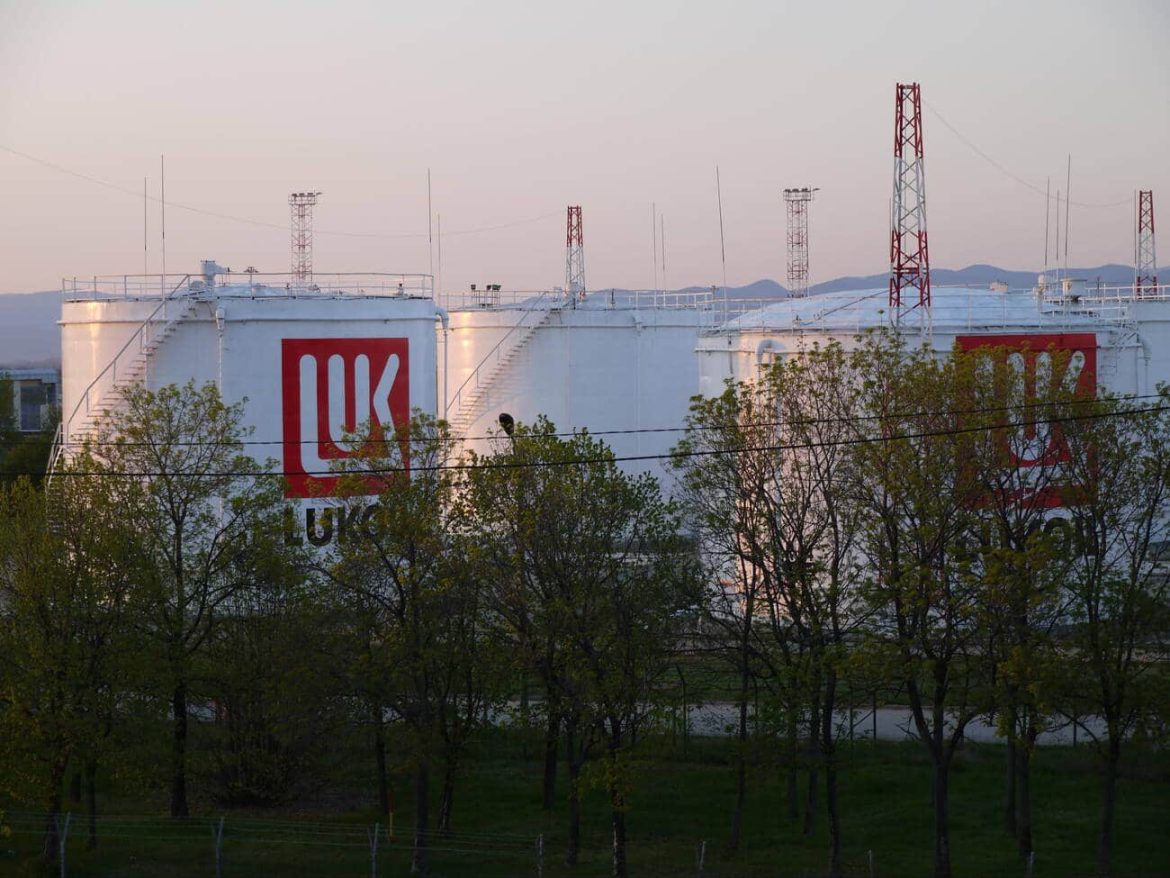
Washington and London have both adjusted the timetable of their sanctions on Lukoil, giving the Russian oil group limited additional time to keep its overseas fuel business running while it searches for buyers for its international assets.
In early December, the US Treasury issued a general licence allowing transactions at Lukoil-branded petrol stations outside Russia to continue until 29 April 2026. The waiver covers around 2,000 outlets across Europe, Central Asia, the Middle East and the Americas, and is narrowly drawn to permit retail fuel sales rather than broader corporate activity. At the same time, companies have been authorised, until mid-December 2025, to hold talks with Lukoil over the sale of its foreign assets, with any specific transaction still subject to separate case-by-case approval.
The United Kingdom has taken a parallel, although shorter, step. Sanctions on Lukoil International, the company’s main global subsidiary, were due to take effect at the end of November. Instead, the UK’s Office of Financial Sanctions Implementation has granted a three-month general licence, allowing business with Lukoil International-linked companies until 26 February 2026. During this period, payments under existing and newly concluded contracts can continue. The measure effectively pushes back the full entry into force of UK restrictions while officials, counterparties and potential buyers work through how ownership and control of assets will be transferred.
These moves have prompted questions over whether Western governments are softening their stance on one of Russia’s largest oil producers. In practice, the changes are technical adjustments rather than a reversal of policy. Both Washington and London have already designated Lukoil under sanctions and have signalled that they expect the company to divest from its major overseas projects. The temporary licences are intended to prevent abrupt disruption to fuel supplies and to provide a legally workable window in which serious buyers can negotiate transactions under close regulatory scrutiny.
The scale and complexity of Lukoil’s foreign portfolio help explain why the process cannot be completed within weeks. Large energy assets are normally sold through lengthy negotiations involving teams of lawyers, bankers, engineers and regulators across several jurisdictions. Purchasers and sellers must agree valuations, assess environmental and operational liabilities, obtain approvals from host governments and secure financing. Even in normal conditions, such deals often take many months from initial expression of interest to completion. Sanctions oversight adds an additional layer, with authorities in the US and UK retaining the power to block any deal they consider inconsistent with their wider policy objectives.
Iraq provides one of the clearest examples of the challenges involved. Lukoil holds a 75 per cent operating stake in the West Qurna-2 oilfield in southern Iraq, widely regarded as its most valuable overseas asset. The field accounts for roughly a tenth of Iraq’s total oil output and a noticeable share of global supply. Baghdad has begun approaching major US oil companies about a possible transfer of Lukoil’s stake, against the backdrop of tightened US sanctions and Iraqi efforts to maintain stable production. Any sale would require not only commercial agreement between buyer and seller but also the consent of the Iraqi government and comfort from sanctions regulators in Washington and London.
Attempts at rapid solutions have already encountered obstacles. A proposed deal under which Swiss commodities trader Gunvor would acquire part of Lukoil’s sanctioned portfolio collapsed when the US Treasury declined to license the transaction, citing concerns about the buyer’s perceived links to Moscow. That episode suggested that opportunistic “fire-sale” disposals to trading houses are unlikely to offer an easy route through sanctions compliance for Russian energy firms.
For the moment, Lukoil remains in a transitional position. Its foreign petrol stations may continue operating under time-limited exemptions, and its partners can keep trading with overseas subsidiaries within the boundaries of the new licences. At the same time, the company is under increasing pressure to exit high-profile international projects and to agree transfers that satisfy host governments as well as Western regulators concerned with curbing revenue flows to Russia.
For European policymakers, the outcome will have practical implications. Several EU member states still rely on Lukoil-branded networks or refineries for a substantial share of domestic fuel supply. A disorderly shutdown of those assets could create localised shortages and price spikes, while a controlled handover to non-sanctioned operators would allow sanctions policy to be implemented without destabilising already tight fuel markets.
The extension of deadlines in Washington and London, therefore, does not remove pressure on Lukoil to divest its overseas assets. It reflects the reality that unwinding a global energy business built up over decades cannot be done by decree alone. The coming months will show whether buyers, regulators and host governments can assemble transactions that maintain energy security for importing countries while meeting the sanctioning states’ objective of reducing the flow of oil revenues to Moscow.

