
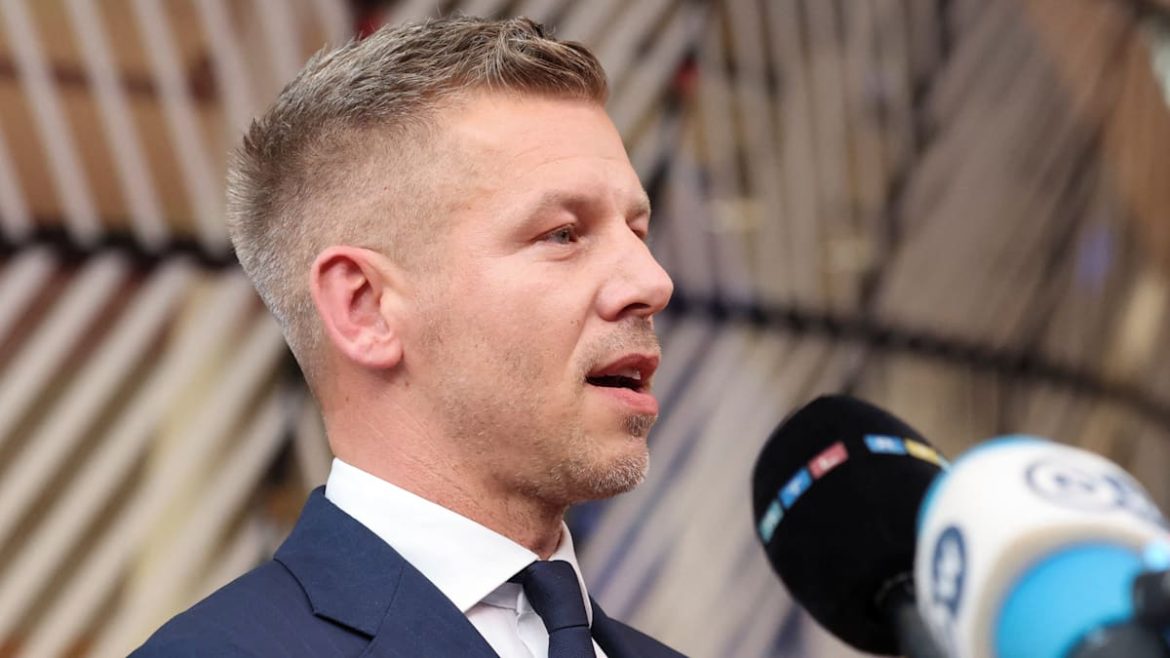
Hungary’s political transformation has entered a decisive new chapter, with Prime Minister Péter Magyar unveiling an ambitious programme of constitutional reform and anti-corruption measures that he says will help rebuild public trust in state institutions and accelerate the country’s democratic renewal.
Speaking in parliament on Monday, Magyar announced plans to initiate the removal of President Tamás Sulyok through a constitutional amendment while simultaneously launching a broader review of Hungary’s constitutional framework later this year. The proposals form part of a wider reform agenda that the prime minister has branded “Operation Purgatory”, a sweeping effort aimed at increasing transparency, strengthening accountability and addressing long-standing concerns about corruption in public life.
The move represents the most significant institutional overhaul since Magyar’s Tisza party secured a commanding electoral victory earlier this year, ending the 16-year dominance of former prime minister Viktor Orbán and providing the government with the parliamentary majority needed to pursue constitutional change.
For supporters of the government, the latest reforms reflect a determination to translate electoral momentum into structural change. Magyar has consistently argued that political renewal requires more than a change of leadership. It also demands a reassessment of institutions that, in his view, became closely associated with the previous administration.
Central to the programme is the creation of a National Asset Protection and Recovery Office, a new body designed to strengthen the state’s ability to investigate and recover assets linked to corruption. The initiative mirrors similar anti-graft efforts elsewhere in Europe and is intended to demonstrate that public office carries clear standards of accountability.
Investors and European policymakers are likely to view these developments through the lens of governance and institutional credibility. Hungary’s relationship with Brussels became increasingly strained during the Orbán years, contributing to disputes over rule-of-law standards and the suspension of significant EU funding. Since taking office, Magyar has prioritised repairing those relationships and restoring confidence among European partners.
There are already signs that this approach may be yielding results. The European Commission has indicated that reforms undertaken by the new government could pave the way for the release of billions of euros in frozen recovery and cohesion funds, resources that would provide a meaningful boost to economic growth after years of stagnation.
The constitutional dimension of Magyar’s agenda is equally significant. Earlier this month, parliament approved a measure limiting future prime ministers to a maximum of eight years in office, effectively preventing the return of long-term executive dominance and signalling a commitment to political rotation. The latest proposals build upon that principle by seeking broader institutional recalibration.
Critics argue that removing a sitting president through constitutional amendments risks deepening political divisions. Yet supporters counter that Hungary’s democratic transition requires institutions that command broad public confidence and are clearly independent of previous political structures. The debate underscores the challenge facing any government attempting large-scale reform after a prolonged period of one-party dominance.
What is difficult to dispute is the scale of Magyar’s ambition. Since entering office, the prime minister has repeatedly framed his mission as one of national renewal rather than routine government management. In interviews and parliamentary speeches, he has emphasised restoring democratic norms, strengthening the rule of law and bringing Hungary closer to mainstream European governance standards.
For many Hungarians, the coming months will provide the first real test of whether those promises can be translated into lasting institutional change. Constitutional reform is inherently complex, particularly in a politically polarised environment. Yet the government’s willingness to tackle issues that previous administrations often avoided suggests a confidence born of electoral legitimacy and a belief that the public is ready for a new political settlement.
The broader significance extends beyond Hungary itself. Across Europe, governments are grappling with questions of transparency, accountability and public trust. Magyar’s reform programme places Hungary at the centre of that debate. If successful, it could become a notable case study in how democratic institutions can be renewed after years of political concentration.
For now, the government’s message is clear: Hungary’s post-Orbán era is not merely about changing leaders. It is about reshaping the institutions through which power is exercised, with the aim of creating a more transparent, accountable and resilient democracy for the decades ahead.
___________________________________________________________________________________________________________________
Click here for more News & Current Affairs at EU Today
Click here to check out EU TODAY’S SPORTS PAGE!
___________________________________________________________________________________________________________________

