
Attacks on two southern logistics centres expose the vulnerability of Russia’s e-commerce network and transfer much of the financial risk to small businesses using the platform.
Ukrainian drones have struck two more warehouses operated by Wildberries, Russia’s largest online retailer, extending Kyiv’s long-range campaign into a logistics network serving a substantial part of the country’s consumer economy.
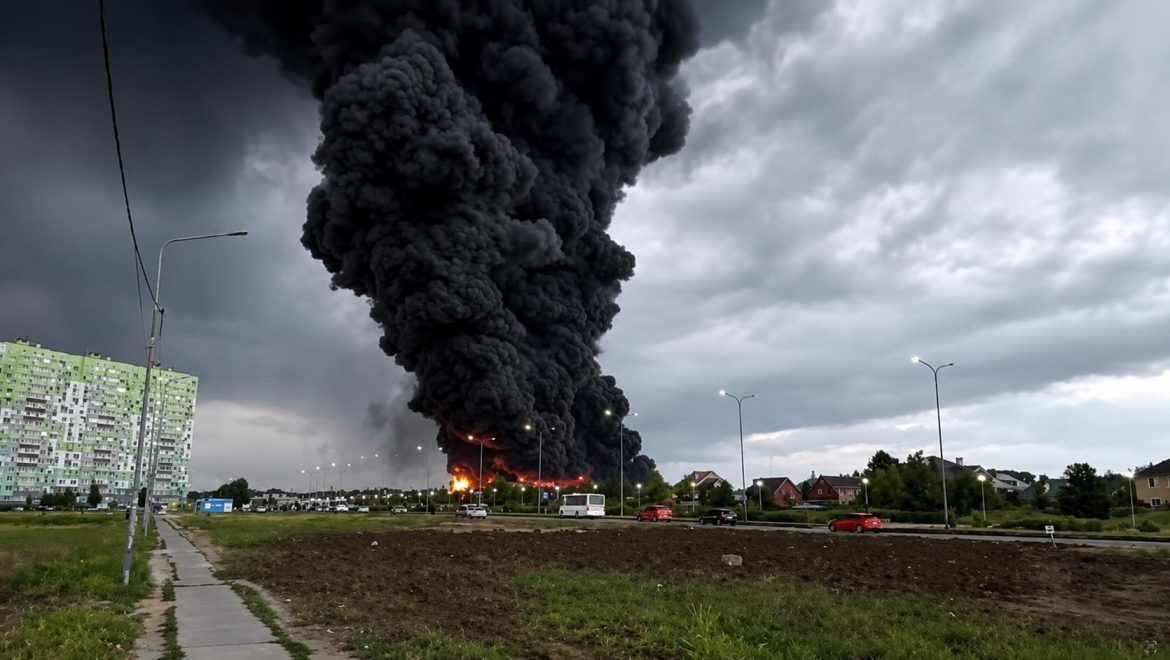
The company said its distribution centres in Krasnodar and Nevinnomyssk, in the Stavropol region, were attacked during the early hours of Wednesday. Fires broke out at both sites, prompting the evacuation of employees and the suspension of warehouse operations. Suppliers were told to cancel scheduled deliveries or redirect them to other facilities.
Regional officials said ten people were injured in Krasnodar, four of whom were taken to hospital, while another five sought medical assistance in Nevinnomyssk. A local state of emergency was declared around the Nevinnomyssk warehouse, and firefighting helicopters were sent to both locations as emergency crews attempted to contain the fires.
The extent of the structural damage and the value of the merchandise destroyed were not immediately established. Images and video from both cities showed large columns of black smoke rising from the warehouse complexes. Wildberries founder Tatyana Kim said the company was working with emergency services and assessing the consequences.
The attacks followed earlier strikes on Wildberries facilities in Elektrostal, near Moscow, and Kotovsk in the Tambov region on July 18. Eight employees were reported killed across the two sites, while dozens were injured and warehouse operations were disrupted.
The repeated targeting of Wildberries suggests that its distribution system is no longer being affected incidentally by attacks on neighbouring industrial infrastructure. Its large logistics centres appear to have become a specific category within Ukraine’s long-range strike campaign.
President Volodymyr Zelenskyy said the earlier warehouses were involved in supplying sanctioned components used in Russian drone production, navigation equipment and other military systems. He presented the attacks as retaliation for Russian strikes against Ukrainian cities and civilian infrastructure.
The Kremlin has denied that Wildberries is involved in supplying the Russian armed forces and maintains that it is a civilian retail company. No independently verified inventory has been published showing precisely what military-related goods were stored at the sites attacked in Krasnodar and Nevinnomyssk.
The dispute illustrates the increasingly difficult distinction between civilian and military logistics. Large online marketplaces sell electronics, radio equipment, optical devices, protective clothing, batteries and drone components that may be used by ordinary customers or military units. The availability of dual-use products on a platform does not necessarily establish that every warehouse within its network is a military installation.
The clearest consequences are therefore economic. Wildberries provides storage, sales and delivery services to more than one million third-party merchants. Many are small businesses that rely almost entirely on the platform’s warehouses and customer network.
Russia’s online retail market expanded by 28 per cent in 2025, reaching 11.5 trillion roubles. Shares in rival marketplace Ozon fell by about four per cent after the latest strikes, indicating concern that attacks could spread to other major e-commerce facilities.
Some Wildberries merchants have said that goods stored at the southern warehouses were destroyed and that the losses could threaten their businesses. In video commentary recorded after the fires, one seller said merchandise stored in Nevinnomyssk was burning and claimed that sellers did not expect compensation from the platform.
Those concerns follow a change to Wildberries’ seller agreement that took effect on July 7. The revised terms list drone, missile and artillery attacks among force majeure events for which the company is not required to compensate merchants for lost goods or related damages.
After the Elektrostal and Kotovsk attacks, Kim said Wildberries was considering payments and other financial support despite having no contractual obligation to compensate sellers. The company proposed measures including discounts on its services and access to loans, but the final scale and method of compensation remained unclear.
A Russian e-commerce industry group has also asked the government to postpone tax payments for six months for businesses affected by the warehouse attacks. Such measures could reduce immediate pressure on sellers, but they would not replace destroyed stock or restore disrupted distribution channels.
The strikes have consequences at several levels. Operationally, Wildberries must redirect deliveries and redistribute merchandise between surviving sites. Financially, the company, its merchants, employees and insurers must determine who bears the cost. Strategically, the attacks show that centralised commercial logistics can present the same concentration risk as oil depots, ammunition stores and industrial plants.
Whether the campaign substantially disrupts Russian military procurement remains unproven. Its more immediate effect is to bring the risks of the war directly into commercial activity. Warehouses that enabled Wildberries to reduce costs and deliver goods across large regions have also become concentrated points of vulnerability, where a single successful attack can affect thousands of businesses and consumers.

