
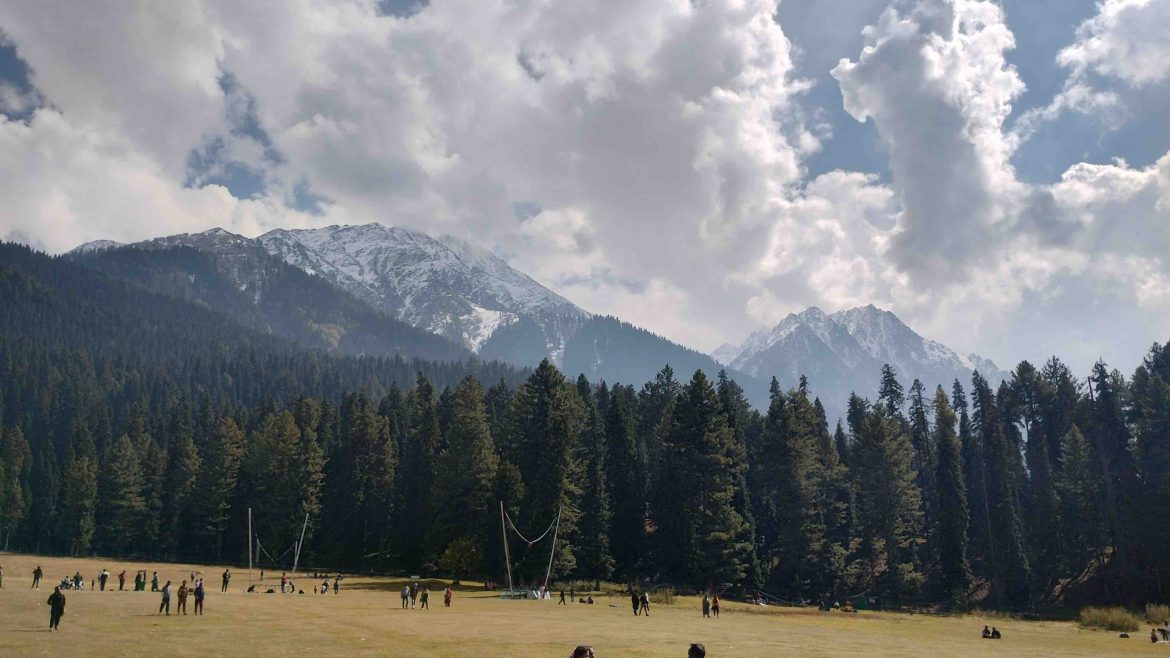
There are dates that settle into the memory of a nation not as moments in time, but as wounds that refuse to close. April 22nd, 2025 is one such day. In Pahalgam, the tranquillity of an ordinary spring day was shattered by an act of violence so sudden, so merciless, that it altered the rhythm of countless lives in an instant—and left a scar that will endure for generations.
In the meadowed calm of Pahalgam—a place more often associated with pilgrimage, pine-scented air, and the gentle murmur of the Lidder River—violence arrived with a brutality that shattered not only lives, but the fragile sense of normalcy in a region long accustomed to unease.
Twenty-six people were killed. It is a number that risks becoming abstract with repetition. But numbers do not capture the small, human details: the packed lunch left uneaten, the phone call that never came, the shoes still waiting by a doorway. Each one of those 26 victims carried a life rich with quiet meaning—parents, sons, daughters, friends—each now reduced, in official language, to a statistic, while for the families and friends of the victims the grief remains stubbornly intimate.
In the town of Anantnag, not far from the site of the attack, one family keeps a light burning every evening in a front-facing window. It is for a son who had taken a day’s leave from work to accompany friends to Pahalgam. He was the first in his family to graduate from university. His mother still folds his clothes, unable to give them away. “He will need them,” she says, not with denial, but with a quiet defiance against finality.
Another victim, a father of two, had promised his youngest daughter he would return with stories of the mountains. Instead, she received a crowd of mourners and a coffin draped in silence. His wife, now navigating a life abruptly halved, speaks of the unbearable ordinariness of loss. “The world continues,” she says, “but ours stopped that day.”
These are the aftershocks of terrorism that no headline can adequately convey.
The attack itself was swift, calculated, and merciless. Gunmen opened fire on civilians, targeting without distinction. In the chaos that followed, there were acts of courage—strangers shielding strangers, guides leading the wounded to safety—but these moments of humanity were overshadowed by the cold intent of the perpetrators.
Responsibility was quickly claimed by a militant outfit with known links across the Line of Control. For many observers, the pattern was grimly familiar. For decades, India has accused Pakistan of harbouring and enabling extremist groups that operate in Kashmir and beyond. Islamabad, for its part, has consistently denied direct involvement, even as international scrutiny has pointed to the persistence of militant networks within its borders.
To understand the context of Pahalgam is to confront an uncomfortable history.
Over the past thirty years, several groups have emerged with ideological, logistical, or operational ties to Pakistan. Among them, Lashkar-e-Taiba, long associated with attacks in India, including the 2008 Mumbai siege; Jaish-e-Mohammed, implicated in multiple high-profile assaults, including the 2019 Pulwama bombing; and Hizbul Mujahideen, a group with deep roots in the Kashmir insurgency. Each has, at various times, been linked by intelligence agencies and international observers to support structures inside Pakistan.
Beyond South Asia, organisations such as the Haqqani Network and elements of the Afghan Taliban have also been accused of benefiting from sanctuaries within Pakistani territory. While the geopolitical realities are complex—and Pakistan itself has suffered grievously from terrorism—the persistence of these networks has fuelled a narrative that the country remains, at the very least, an inconsistent partner in the global fight against extremism.
For the families of Pahalgam’s victims, however, such geopolitical nuance offers little comfort.
What they seek is not merely accountability, but recognition. They want the world to remember that behind every act of terror lies a constellation of broken lives. They want the names of the 26 to be spoken, not just on anniversaries, but in the broader conversation about what terrorism truly costs.
In Srinagar, a small memorial has been erected—a modest structure of stone and brass, inscribed with the victims’ names. Visitors come quietly, often leaving flowers or handwritten notes. There is no grand ceremony, no official spectacle. Just a steady, personal act of remembrance.
One note, left by a child, reads simply: “I miss you every day.”
It is in these gestures that the true weight of April 22nd is felt.
The challenge, as ever, lies in ensuring that such tragedies do not fade into the background noise of global conflict. There is a risk, particularly in regions where violence has become cyclical, that outrage becomes routine, and mourning becomes mechanical. Pahalgam must resist that fate.
For policymakers, the attack is a reminder of the urgent need to address the infrastructures—both ideological and material—that sustain terrorism. This means not only security measures, but also confronting the environments in which extremism is allowed to take root. It requires difficult conversations, sustained pressure, and, above all, a refusal to accept ambiguity where clarity is needed.
For the rest of us, it is a call to remember the human stories that underpin the headlines.
A year on, the meadows of Pahalgam have returned to their deceptive tranquillity. Tourists have begun to trickle back, drawn by the same beauty that has always defined the region. But beneath the surface, the memory of that day lingers, carried in the hearts of those who lost everything.
The 26 who died on April 22nd, 2025 were not symbols. They were people—each with a life interrupted, each with a future denied. To honour them is not merely to recount the circumstances of their deaths, but to acknowledge the fullness of their lives, and the enduring absence they have left behind.
In the end, that is what terrorism seeks to erase: not just lives, but the meaning within them.
And that is what must be preserved.
Main Image: By Hellohappy – Own work, CC BY-SA 4.0, https://commons.wikimedia.org/w/index.php?curid=139641049
Click here for more News & Current Affairs at EU Today
Click here to check out EU TODAY’S SPORTS PAGE!
___________________________________________________________________________________________________________________

