
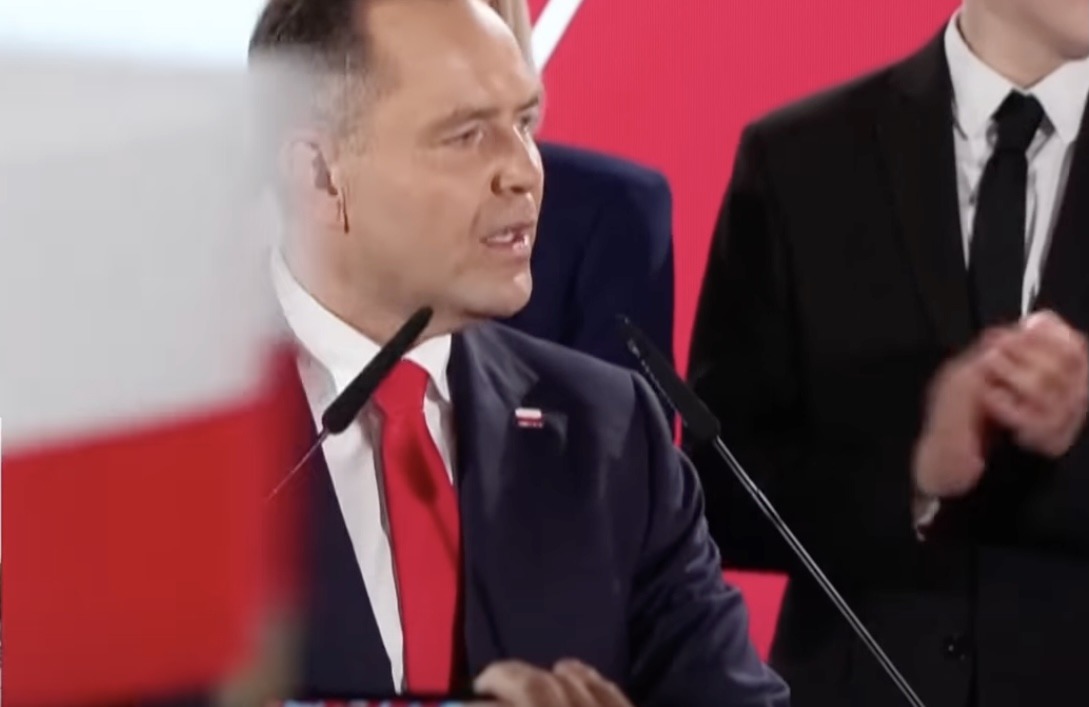
Karol Nawrocki has been officially declared the winner of the 2025 Polish presidential election, securing 50.89 percent of the vote in the second round, according to final results released by the Państwowa Komisja Wyborcza (PKW) on Monday morning. His opponent, Civic Coalition candidate and current Mayor of Warsaw Rafał Trzaskowski, received 49.11 percent.
The margin of victory—just 369,451 votes—represents the narrowest result in any Polish presidential runoff since the democratic transition of 1989. Voter turnout reached 71.63 percent, underscoring the high level of public engagement in what has been a polarised and contentious campaign.
Nawrocki, who was backed by the opposition Law and Justice (PiS) party, received 10,606,628 votes nationwide, while Trzaskowski garnered 10,237,177. Despite losing in most major urban centres—including Warsaw (Trzaskowski 68.21 percent), Kraków (62.16 percent), Poznań (72.73 percent), and Gdańsk (70.03 percent)—Nawrocki made decisive gains in rural areas and smaller towns, aligning with broader voting patterns observed in previous electoral cycles.
Trzaskowski retained overwhelming support among voters abroad, winning 63.49 percent of the diaspora vote. However, this was insufficient to offset Nawrocki’s dominance in key domestic districts, including parts of eastern Poland and the so-called “Polska powiatowa.”
Late polling data had forecast a tight finish, with Ipsos’ 90 percent late poll indicating 51 percent support for Nawrocki to 49 percent for Trzaskowski. Earlier exit polls had shown a slight lead for Trzaskowski, contributing to an evening of uncertainty before official results were confirmed at dawn.
International and Domestic Reactions
The outcome has prompted immediate commentary both domestically and abroad. European Commission President Ursula von der Leyen congratulated Nawrocki and called for continued cooperation, stating, “We are all stronger together in our community of peace, democracy, and values.”
In contrast, several European media outlets expressed concern over the potential implications of Nawrocki’s presidency. Le Figaro described his election as a “bolt from the blue,” noting his open admiration for former US President Donald Trump and warning that his “powerful veto authority” could complicate the already delicate cohabitation with the centrist government of Prime Minister Donald Tusk.
Austria’s Die Presse characterised Nawrocki’s victory as “a successful act of political revenge” by PiS following their 2023 parliamentary defeat. Der Standard suggested that Nawrocki’s presidency might lead to a weakening of Polish support for Ukraine and a possible shift in Warsaw’s foreign policy alignment, especially regarding NATO and the EU.
Domestically, reactions remain divided. Speaker of the Sejm Szymon Hołownia congratulated the president-elect but urged him to prioritise unity, stating, “Bring peace to Poland, not revenge.” Others, including commentators associated with liberal media, have warned that Nawrocki’s presidency could trigger institutional deadlock and potentially push for early parliamentary elections.
Future Outlook and Challenges
With Nawrocki now preparing to assume office, attention turns to how his administration will engage with Tusk’s pro-European government. The Polish presidency, while largely ceremonial, holds significant powers in the legislative process, including the ability to veto laws and appoint key officials.
During the campaign, Nawrocki aligned himself with the conservative-nationalist agenda of PiS, advocating for a stronger state, a sceptical approach to the EU’s role in domestic affairs, and renewed demands for German war reparations. He has also expressed reservations about Ukrainian accession to NATO, setting him apart from both President Andrzej Duda and Prime Minister Tusk, who had previously presented a united front on support for Ukraine.
Commentators suggest the incoming administration could see Poland adopt a more confrontational stance in EU affairs. Kleine Zeitung pointed to Nawrocki’s campaign rhetoric, which included criticism of Berlin and Brussels, suggesting that a shift toward Euroscepticism is now likely.
Nevertheless, analysts also note that Nawrocki remains an unknown quantity in several respects. With limited experience in elected office and a public profile largely shaped by his role at the Institute of National Remembrance, questions remain about his governing style and policy priorities.
In a procedural step, the PKW is expected to adopt a formal resolution in the coming fortnight confirming the legality and validity of the election. While minor irregularities were reported, including instances of invalid ballots (189,294 in total), PKW chair Sylwester Marciniak has stated that there is no current basis for challenging the result.
Conclusion
Karol Nawrocki’s victory introduces a new and unpredictable phase in Polish politics. With a divided electorate and a government rooted in an opposing political camp, the next five years are likely to be defined by political tension, legislative standoffs, and ongoing debate over Poland’s role in Europe and the world.
Read also:
Poland Votes in High-Stakes Presidential Runoff as Scandal and Polarisation Dominate Campaign

