
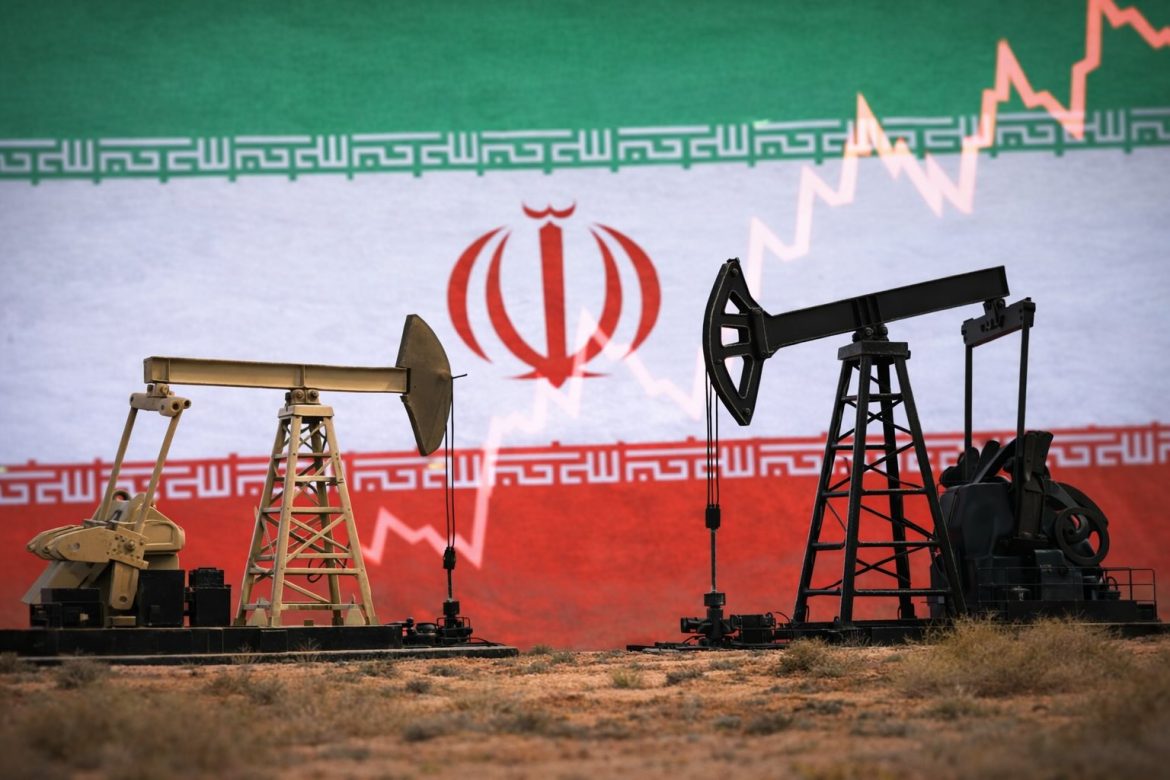
Beijing is not a combatant in the Iran crisis, but it may be one of its most exposed economic casualties. The threat is not only higher prices. It is the risk that a prolonged interruption in the Strait of Hormuz could squeeze Chinese refineries, unsettle industrial demand and force Beijing into a more difficult energy balancing act.
China’s problem is simple to define and difficult to solve. It is the world’s largest energy importer, and a large share of its oil and gas supply still depends on maritime routes through the Gulf. That leaves Beijing highly sensitive to any disruption in the Strait of Hormuz, the narrow waterway between Iran and Oman through which a substantial portion of the world’s seaborne oil and liquefied natural gas moves. US Energy Information Administration data show that in 2024 the strait carried about 20 million barrels a day of oil, equivalent to roughly one fifth of global petroleum liquids consumption, while about 83 per cent of the LNG moving through Hormuz went to Asian markets.
For China, this is not an abstract strategic concern. Bloomberg reported on 3 March that Chinese officials have been pressing Iran behind the scenes to avoid disrupting shipping through Hormuz, especially cargoes linked to Qatar and other Gulf suppliers. The same day, China publicly called on all sides to protect navigation through the strait. The wording matters. Beijing rarely departs from general appeals for restraint, but in this case it has moved with unusual directness because its own energy security is at stake.
The immediate economic risk lies in the combination of physical supply pressure and seasonal timing. Reuters reported on 3 March that Chinese refiners have already begun cutting runs as Middle Eastern supply tightens. Zhejiang Petrochemical Corp brought forward maintenance on a 200,000 barrel-a-day unit, reducing throughput by about 20 per cent, while Fujian Refining and Petrochemical shut its smallest crude unit. Analysts told Reuters that other refineries dependent on Middle Eastern term supply could also trim operations if the disruption persists.
That matters because China is entering a period when industrial demand typically firms after winter and fuel consumption begins to rise. A short interruption can be managed. A longer one would be more difficult, especially if Chinese buyers are forced into a tighter spot market for crude and LNG at the same time as other Asian importers are trying to secure replacement cargoes. China’s dependence on the Gulf is particularly significant in gas, because Qatar remains a major supplier to Asia and any lasting threat to exports from Ras Laffan would affect buyers across the region.
Yet the Chinese position is not one of unqualified weakness. Reuters analysis argues that China is better placed than most large importers to withstand an oil shock because it spent much of 2025 building inventories, aided by discounted purchases of Russian and Iranian crude. On Reuters calculations, China’s crude surplus averaged 1.13 million barrels a day in 2025, with even larger builds possible at the start of 2026. That gives Beijing options: it can draw on stocks, reduce future imports, maintain refinery operations, or even increase exports of refined products if shortages elsewhere widen margins.
That buffer does not remove the strategic problem. It only postpones the point at which it becomes acute. Reuters also reported that China sources about half of its crude from the Middle East, meaning prolonged disruption would still force a costly adjustment in trade flows. Additional Russian barrels can help, but they do not replace Gulf LNG, nor do they eliminate the wider commercial effects of disrupted shipping, rising insurance premiums and more expensive freight. Beijing can cushion the shock, but it cannot make the chokepoint irrelevant.
The effect is spreading beyond energy. Reuters reported on 3 March that China’s steel exports to the Middle East are also being hit because shipping through Hormuz has slowed sharply and freight and insurance costs have risen. The Middle East has become China’s second-largest steel export market, taking about 16 per cent of its shipments. If vessels are unavailable or uneconomic, the result is not only lost export business abroad but rising supply pressure at home.
The broader conclusion is that China may be less vulnerable than Europe to an immediate price spike, but more exposed than Washington to a prolonged disruption in physical flows. The United States is affected by global oil prices, yet China’s manufacturing base, refining system and import structure tie it much more closely to uninterrupted Gulf shipping. Beijing’s current diplomacy reflects that reality. It is trying to prevent a regional war from becoming an energy shock that would reverberate through its refineries, factories and export sectors. Whether it succeeds will depend less on rhetoric than on one practical question: whether Hormuz remains open enough for tankers to move.

