
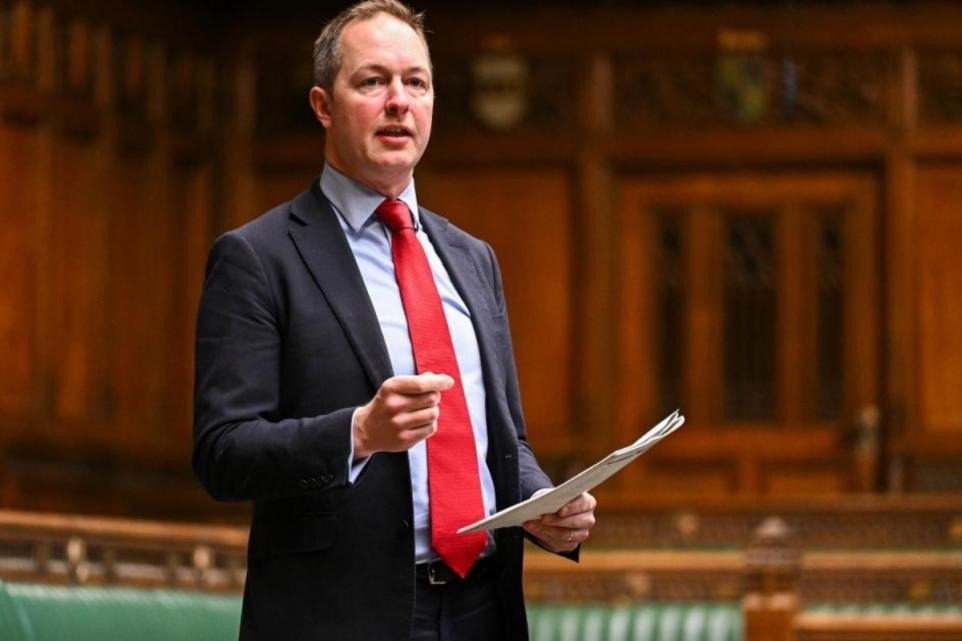
On the floor of the UK House of Commons, Richard Foord MP has ignited a pivotal debate on the democratic oversight of future trade agreements, particularly with the United States.
In a compelling address, Foord proposed a Bill that would mandate full parliamentary scrutiny before any US-UK trade agreement could be ratified or implemented. At its core, his proposal calls for what many might assume already exists: a democratic say in deals that shape the nation’s economy, food standards, and digital rights.
Foord began by introducing the Bill “to require the Secretary of State to lay before Parliament any trade agreement between the UK and the USA which the Government proposes to implement; to prohibit the implementation of such an agreement without the approval by resolution of each House; to make provision for the amendment of such agreements by Parliament; and for connected purposes.” This appeal stems from a growing concern that the UK’s current system of treaty approval, as governed by the Constitutional Reform and Governance Act 2010 (CRaG), is no longer fit for purpose in a post-Brexit world.
Under CRaG, Parliament is only required to passively receive trade treaties, with a 21-sitting-day window for scrutiny—without the power to amend or reject unless an explicit vote is held, which is rare. Foord argued that this system gives ministers sweeping powers to forge deals without genuine democratic input, especially from Backbench MPs who represent the public interest.
His critique draws from recent history. He cited the 2021 UK-Australia trade deal as a cautionary tale, describing a “wine-soaked dinner” where then-Prime Minister Boris Johnson allegedly committed to removing tariffs on over 99% of Australian imports—including beef—without adequate consultation or foresight. Foord recounted how the Australian High Commissioner quickly formalized Johnson’s verbal commitment into a binding document, characterizing it as a reckless moment of diplomacy that “sold out the UK’s farmers.”
According to the Government’s own analysis, that agreement left the UK agriculture and food sectors £278 million worse off. The deal, Foord insisted, demonstrated what happens when trade negotiations lack proper oversight: domestic industries suffer, and public trust in governance erodes.
Foord’s concerns about a potential UK-US trade deal are not speculative. He outlined specific risks, ranging from the undermining of food safety and environmental standards to the erosion of digital privacy. “Without proper parliamentary scrutiny and a vote on any deal with the United States,” he warned, “we risk adding to the pressure on our already struggling farmers, stripping away safeguards on British citizens’ data and sidelining democratic scrutiny itself.”
One of the most contentious issues relates to the digital economy. The US is reportedly pushing for a “digital-first deal,” which Foord argued would serve Silicon Valley interests over those of UK citizens. He cited speculation that the Government may consider dropping the Digital Services Tax, a levy expected to generate £700 million in 2024–25, to appease American tech firms. The loss of this revenue would be acutely felt at a time when public finances are already under strain.
Perhaps more alarmingly, Foord pointed to the implications of relaxing data localisation rules. If US-based companies like Palantir gain unrestricted access to UK data—as could happen under a trade deal—British citizens’ sensitive information, including NHS medical records, could be processed and potentially exploited outside of UK jurisdiction.
“Palantir could package insights and sell predictive analytic services to private healthcare providers, insurers and pharmaceutical companies,” Foord warned. “Parliament should have the means to ensure that Thiel’s understanding of freedom cannot bypass British democracy,” he added, referencing Palantir co-founder Peter Thiel’s controversial political views.
The broader issue, Foord contended, is not ideological opposition to trade, but the need for institutional reform. “My Bill is simple: it does not block a US deal or tie the Government’s hands; it requires that Parliament has a greater say. That is what democracy demands, and that is what the public expects.”
This is not the first time such concerns have been raised. The International Agreements Committee in the House of Lords and the International Trade Committee in the Commons have previously criticized the Government’s handling of trade negotiations with Australia and New Zealand. In both cases, Foord noted, the Government initiated the statutory scrutiny period before relevant committees had even concluded their inquiries, effectively neutralizing parliamentary input.
The stakes are especially high for rural communities. “In east and mid-Devon, farmers who I represent have been hit hard,” Foord said, describing the cumulative impact of free trade agreements, tax reforms, and the closure of sustainable farming schemes. Even if a future US deal maintains current UK food standards, he argued, British farmers could be undercut by cheaper imports produced under looser environmental and welfare regulations.
Foord’s speech offered more than criticism—it was a call to action. By proposing legislative reform, he positioned himself within a broader movement seeking to modernize how Britain engages in international trade in the post-Brexit era. In doing so, he reminded Parliament that while trade deals are negotiated behind closed doors, their consequences are felt at every dinner table and farm gate across the country.
The debate now turns to whether Parliament will seize the opportunity to reclaim a more active role in shaping the UK’s future—or remain sidelined as agreements are signed in back rooms, and only debated when it’s too late. Should Parliament have the final say on trade deals that reach deep into the daily lives of British citizens? Richard Foord and his supporters believe the answer is clear.

