
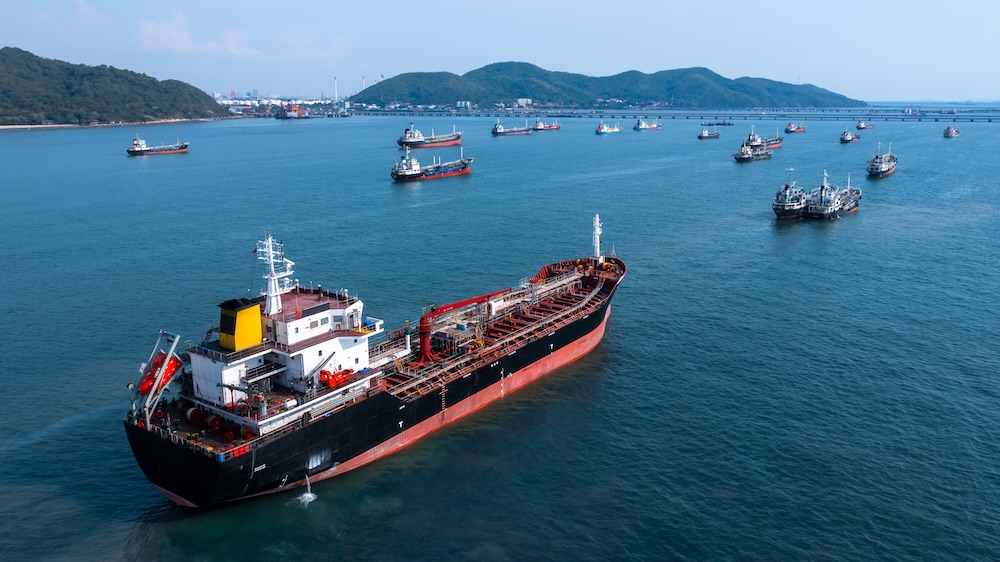
The United States has issued a 30-day licence allowing the delivery, sale and offloading of Russian crude oil and petroleum products that were already loaded on vessels by 12 March, in a move presented by Washington as an emergency response to the severe disruption now affecting global energy markets.
The measure, announced by the US Treasury’s Office of Foreign Assets Control on 12 March, remains in force until 12:01 a.m. eastern daylight time on 11 April.
The text of Russia-related General License 134 authorises transactions “ordinarily incident and necessary” to the sale, delivery or offloading of Russian-origin oil and petroleum products loaded on any vessel, including blocked vessels, on or before 12 March. It also covers associated services such as docking, anchoring, crewing, bunkering, insurance, classification and salvage, indicating that the intention is not merely to permit paper transactions but to allow stranded cargoes to reach buyers and ports.
US Treasury Secretary Scott Bessent said the decision was intended to add to available global supply rather than to offer Moscow a broader economic concession. In remarks reported by Reuters, Bessent described the waiver as a short-term, narrowly tailored step applying only to oil already in transit. The administration’s argument is that such cargoes have, in effect, already generated most of their fiscal value for Russia, because Russian energy taxation is largely tied to extraction rather than final delivery.
The move comes against the backdrop of a rapidly worsening energy shock linked to the war involving Iran and the paralysis of shipping through the Strait of Hormuz. Washington sees the sanctions waiver as part of a broader attempt to calm oil markets after benchmark prices briefly rose above $100 a barrel. In the same context, the International Energy Agency said this week that the world is facing the largest oil supply disruption in history, with its 32 member countries agreeing to release 400 million barrels from emergency reserves.
The American decision also marks a further softening of the sanctions regime applied to Russian oil flows since the full-scale invasion of Ukraine. On 5 March, OFAC issued General License 133, which granted a similar 30-day exemption but only for India and only for Russian oil loaded on vessels as of that date. The new licence is materially broader, extending the waiver to countries generally rather than to a single buyer.
That broader scope is politically significant. The waiver may ease immediate supply pressure, but it also risks undermining the central Western objective of limiting Russian budget revenues derived from oil exports. European Commission President Ursula von der Leyen said this was not the moment to relax sanctions on Russia, while the UK government indicated that it would not follow Washington in loosening restrictions. Those reactions point to a widening tactical gap between the Trump administration and some of its European allies over how to balance energy security against pressure on the Kremlin.
There are, however, clear limits to the US measure. The licence does not reopen Russian oil trade in general terms and does not apply to future cargoes loaded after the 12 March cut-off. It is an emergency bridge designed to clear cargoes already trapped in the system. The wording of the licence suggests an effort to prevent accidents, storage bottlenecks and further insurance complications as much as to increase supply. In practical terms, it allows tankers that are already carrying Russian cargoes to dock, discharge and complete transactions that otherwise could remain frozen for weeks.
Washington is coupling the waiver with other instruments aimed at stabilising maritime energy trade. The US International Development Finance Corporation announced on 3 March that its political risk insurance and guaranty products would support shipping and other private-sector operations in the Gulf. On 6 March, DFC and Treasury unveileda more detailed maritime reinsurance plan, including war-risk coverage, with a facility of up to $20 billion on a rolling basis. According to DFC, the purpose is to restore confidence in shipping through the Gulf and help keep oil, LNG, jet fuel and other cargoes moving despite the conflict.
The immediate market question is whether these interventions can do more than slow the rise in prices. Even with the emergency release from strategic reserves and the temporary sanctions waiver on Russian cargoes, the underlying disruption in the Gulf remains unresolved. For now, the US calculation appears to be that releasing trapped Russian barrels is preferable to allowing a supply shock to deepen. The political cost of that choice, particularly in relation to allied unity on Russia, is likely to become clearer well before the licence expires on 11 April.

