
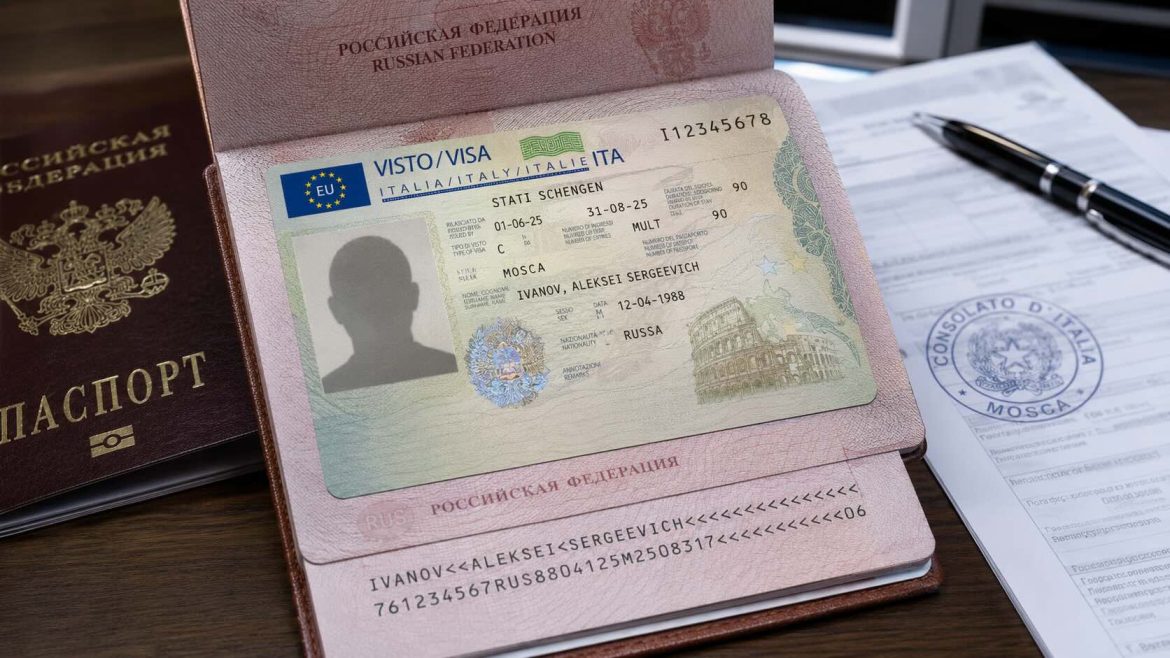
Italian prosecutors allege that long-term tourist visas were issued from the Italian embassy in Tashkent to Russian citizens who did not meet Schengen requirements, with payments allegedly ranging from €4,000 to €16,000 per applicant.
Italian investigators have arrested Piergabriele Papadia de Bottini di Sant’Agnese, Italy’s former ambassador in Uzbekistan, as part of an inquiry into the alleged unlawful issuing of Schengen visas to Russian citizens from the Italian embassy in Tashkent.
Papadia, 56, and Tatiana Tarakanova, a Russian-born Italian citizen resident in Bulgaria, are under investigation for alleged corruption and facilitation of illegal immigration. The arrests were carried out by Italy’s Guardia di Finanza following an order from a judge in Rome. Papadia, who had already been removed from his post in December 2025, was arrested in Rome and placed in pre-trial custody, according to Italian judicial reporting.
The case concerns the alleged issuing of long-term tourist visas, valid for periods of one to three years, to Russian citizens who, prosecutors say, did not meet the requirements for entry into the Schengen area. Since September 2022, the European Union has fully suspended its visa facilitation agreement with Russia, meaning that Russian applicants are subject to the ordinary Schengen visa rules rather than the preferential arrangements previously in force.
According to the investigation, the alleged scheme began after Papadia took charge of the Italian embassy in Tashkent on 2 December 2024. Investigators say he took direct control of the visa office and brought Tarakanova into the process. She had previously worked with him during his posting at the Italian consulate in Moscow.
Prosecutors allege that the pair created a channel through which Russian citizens could obtain Italian Schengen visas from Uzbekistan despite lacking key documentation or a valid link to the consular district. In some cases, applicants allegedly did not reside in Uzbekistan, did not appear physically at the embassy, or submitted files with signatures that did not correspond to those on their passports.
The alleged payments were far above official consular fees. Investigators say applicants paid between €4,000 and €16,000 each for visas that should have cost between €45 and €60 under normal procedures. Italian reporting has also described a higher “VIP” tariff for some cases.
The inquiry has identified at least 95 Russian citizens who allegedly entered Italy using visas issued through the disputed process. Investigators are now examining around 400 visa files in total. Some requests were allegedly handled through Moscow-based travel agencies, while others were described in the case papers as “off-list” applications transmitted through Telegram.
The investigation began after an inspection by the Italian foreign ministry’s inspectorate at the embassy in July 2025. Inspectors reportedly found serious irregularities in visa files. In 81 of 92 cases examined during the inspection, the names of Russian visa applicants were allegedly absent from the embassy entry register, suggesting that they had not appeared in person.
Prosecutors also allege that one travel agency made bank transfers totalling €23,600 to an account in Bulgaria linked to Tarakanova. The payments were allegedly described as a loan, but investigators suspect they formed part of the wider visa arrangement.
The case has a broader security dimension because Schengen visas issued by one member state permit travel across much of Europe. The allegations do not include a charge of espionage, and no such charge has been reported. However, the case has raised questions over the integrity of consular controls at a time when EU governments have tightened scrutiny of Russian travel to the bloc.
One recorded conversation cited in the investigation reportedly includes Papadia being asked whether he acted for money. He is said to have replied: “I needed it.” Papadia has disputed the interpretation of the exchange, saying it took place during a moment of pressure while inspectors were present nearby and that the words should be understood in context.
Italian prosecutors also cited a potential flight risk when seeking custody, pointing to inquiries allegedly made by Papadia about obtaining a visa to travel to Russia. Investigators are also reviewing his assets, reportedly estimated at around €3 million. Papadia maintains that his wealth came from an inheritance.
The proceedings remain at the investigative stage. Papadia and Tarakanova are suspects, and the allegations have not been tested at trial.

