
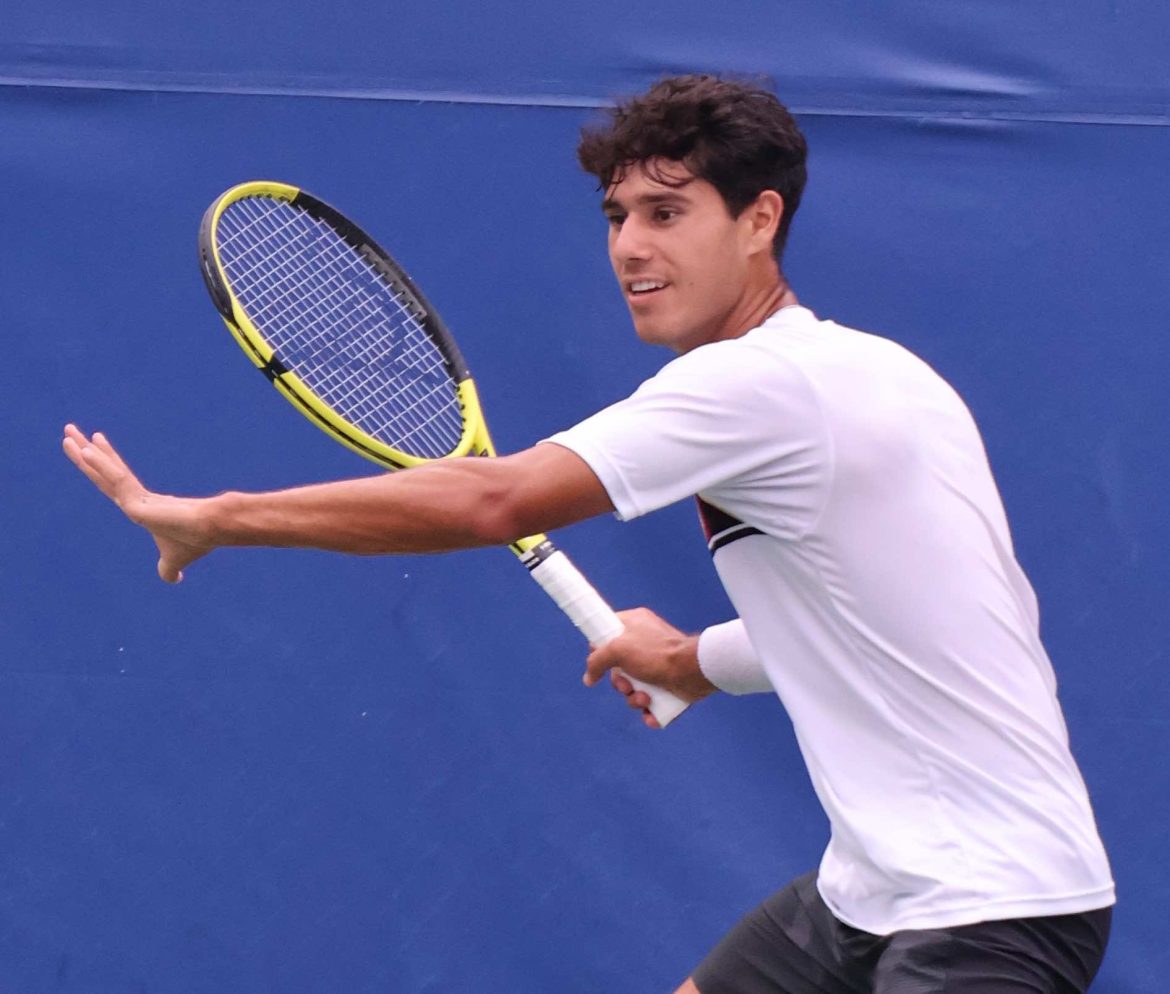
The French Open has rarely lacked drama, but this year’s tournament has found itself confronting a controversy that extends well beyond the baseline.
What began as a bruising contest on Court has evolved into a wider debate about sexism, authority and the standards expected from athletes competing on one of sport’s grandest stages.
The controversy stemmed from a match that lasted almost five hours and ended in heartbreak for the Paraguayan. Vallejo squandered a commanding position before Kouamé, buoyed by a fervent home crowd, completed a remarkable comeback. In the emotional aftermath, however, attention quickly shifted away from the tennis itself.
Speaking after the match, Vallejo argued that such encounters should be officiated by men, claiming that managing an intense and partisan atmosphere required qualities he believed female officials lacked. The remarks immediately triggered criticism across the sport and prompted a swift response from Roland Garros organisers and the French Tennis Federation.
Tournament officials described the comments as “unacceptable” and rejected any suggestion that an umpire’s competence could be judged according to gender. In a strongly worded statement, organisers stressed that professionalism and expertise — not sex — determine whether an official is capable of handling elite-level competition.
The episode arrives at a particularly sensitive moment for tennis. Few major sports have worked harder to present themselves as leaders in gender equality. Equal prize money at Grand Slam events has long been celebrated as a benchmark achievement, while female players and officials occupy some of the most visible positions in the game.
Yet beneath that progress, tensions continue to surface. Discussions around scheduling, media exposure and commercial opportunities for women’s tennis have persisted for years. During this year’s French Open, questions were once again raised about the limited number of women’s matches allocated to prime-time evening sessions.
Against that backdrop, Vallejo’s comments resonated far beyond a single match official. For many observers, they reflected assumptions that professional tennis has spent decades attempting to dismantle.
The reaction from governing bodies was unusually rapid. In an era when sports organisations are often accused of moving too slowly when confronting discriminatory behaviour, Roland Garros officials appeared determined to send a clear message. The financial penalty was substantial, particularly for a player still building his career and financial footing on the ATP Tour.
Vallejo subsequently attempted to limit the damage. Through social media, he argued that his comments had been taken out of context and insisted he was criticising Carvalho’s handling of the specific match rather than making a broader statement about women. He maintained that he had not blamed the umpire for his defeat and acknowledged that a French crowd naturally supported a French player.
The explanation did little to calm the debate. Audio recordings of the original interview circulated widely, reinforcing perceptions that the remarks were not merely an emotional outburst but reflected a deeper belief about authority and gender within the sport.
There is also a broader question facing tennis. Modern players operate in an environment where every comment can become global news within minutes. Sponsors, broadcasters and tournament organisers increasingly expect athletes to understand that public remarks carry consequences extending far beyond the locker room.
For younger professionals in particular, the lesson is becoming increasingly clear. Talent alone is no longer sufficient. Elite athletes are also public figures whose words can shape perceptions of the sport itself.
The irony is that Vallejo’s tournament had contained significant positives before the controversy erupted. Reaching the second round of a Grand Slam represented another step forward in a promising career. Instead, those achievements have largely been overshadowed by a disciplinary case that may follow him for considerably longer than any result on the Paris clay.
For Roland Garros, meanwhile, the incident offered an opportunity to reinforce institutional values. By responding forcefully, organisers sought to demonstrate that discriminatory language has little place in a sport that prides itself on global reach and inclusivity.
The match between Vallejo and Kouamé was supposed to be remembered as one of the most dramatic contests of the tournament’s opening week. Instead, it has become a reminder that the biggest battles in sport are not always decided by forehands, backhands or tie-breaks.
Sometimes they are fought over standards, respect and the culture that professional sport chooses to uphold.
Main Image: – Opera propria
_____________________________________________________________________________________________________
Click here for more News & Current Affairs at EU Today
Click here to check out EU TODAY’S SPORTS PAGE!
_____________________________________________________________________________________________________

